



Więcej o książce
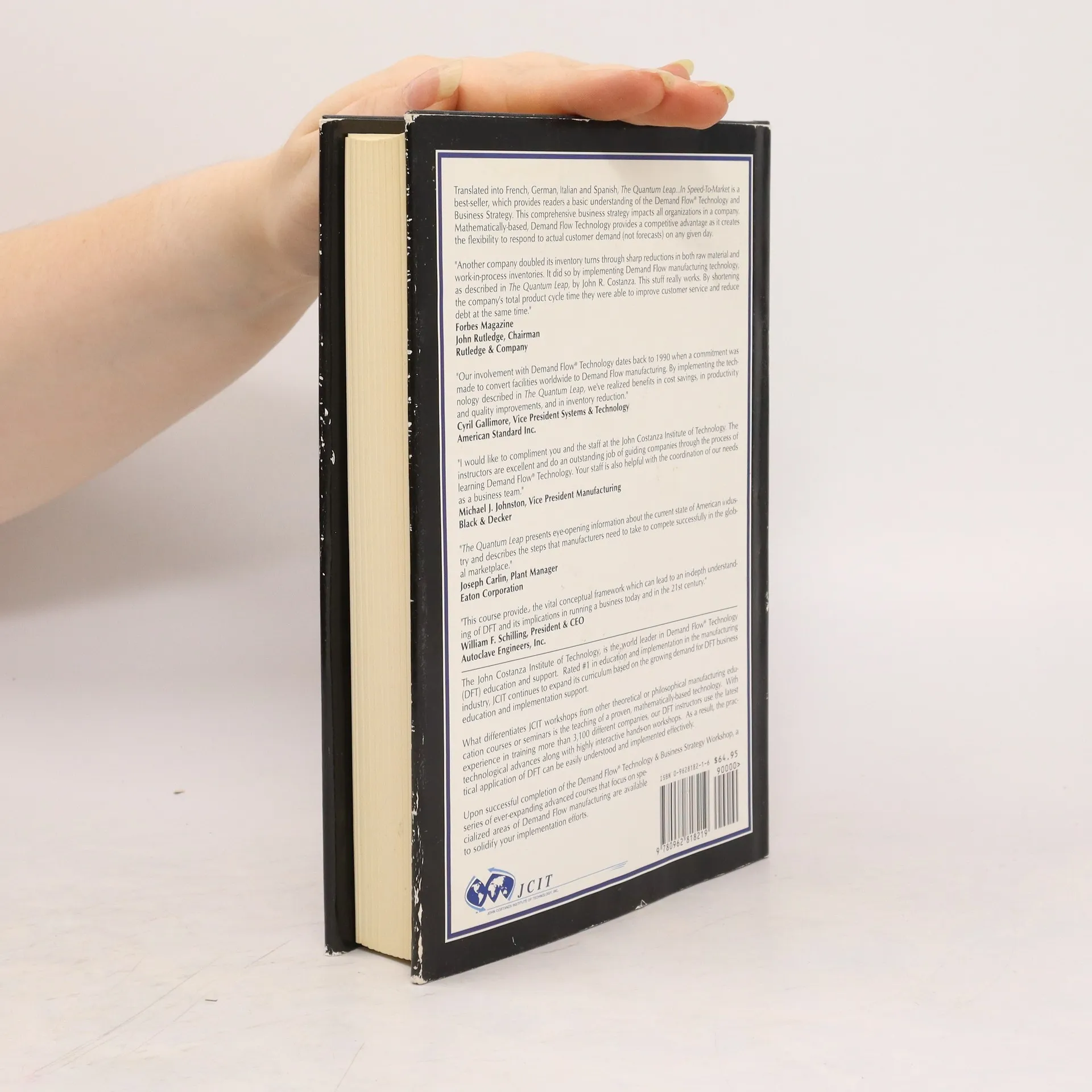
A comprehensive new business strategy, moves companies from schedulized manufacturing to flow manufacturing based upon the Demand Flow Technology (DFT). This revolutionary business strategy allows manufacturers to adjust product volume and mix every day in the direction of actual sales. The strategic business advantages of DFT forces engineering towards process design to improve their speed-to-market by bringing new products to the market ahead of the competition as well as meeting customer demand. DFT strategically will maximize manufacturing and financial assets. This strategy impacts all organizations in a company. In the mathematically-based Demand Flow Technology, work is defined using linear and Takt techniques to design mixed-model flow lines and processes. Companies no longer use MRP systems to schedule fabricated items and subassemblies, nor do they issue material based upon production work orders. The end result is an ongoing sequence of products in a flow process that replenishes from other internal processes and external suppliers based upon actual customer demand. This book defines the DFT business, design and manufacturing techniques and compares them to traditional functional manufacturing. As such, it is a blueprint on how to become more competitive in the global marketplace and grow into the 21st century
Zakup książki
The Quantum Leap-- in Speed-to-market, John R. Costanza
- Język

- Rok wydania
- 1996
- Oprawa
- (twarda)
Metody płatności
Brakuje nam tutaj Twojej recenzji.
- Tytuł
- The Quantum Leap-- in Speed-to-market
- Język
- angielski
- Autorzy
- John R. Costanza
- Rok wydania
- 1996
- Oprawa
- twarda
- Liczba stron
- 352
- ISBN10
- 0962818216
- ISBN13
- 9780962818219
- Seria
- Tagi
- Ocena
- 4 z 5
- Opis
- A comprehensive new business strategy, moves companies from schedulized manufacturing to flow manufacturing based upon the Demand Flow Technology (DFT). This revolutionary business strategy allows manufacturers to adjust product volume and mix every day in the direction of actual sales. The strategic business advantages of DFT forces engineering towards process design to improve their speed-to-market by bringing new products to the market ahead of the competition as well as meeting customer demand. DFT strategically will maximize manufacturing and financial assets. This strategy impacts all organizations in a company. In the mathematically-based Demand Flow Technology, work is defined using linear and Takt techniques to design mixed-model flow lines and processes. Companies no longer use MRP systems to schedule fabricated items and subassemblies, nor do they issue material based upon production work orders. The end result is an ongoing sequence of products in a flow process that replenishes from other internal processes and external suppliers based upon actual customer demand. This book defines the DFT business, design and manufacturing techniques and compares them to traditional functional manufacturing. As such, it is a blueprint on how to become more competitive in the global marketplace and grow into the 21st century