



Parametry
- 407 stron
- 15 godzin czytania
Więcej o książce
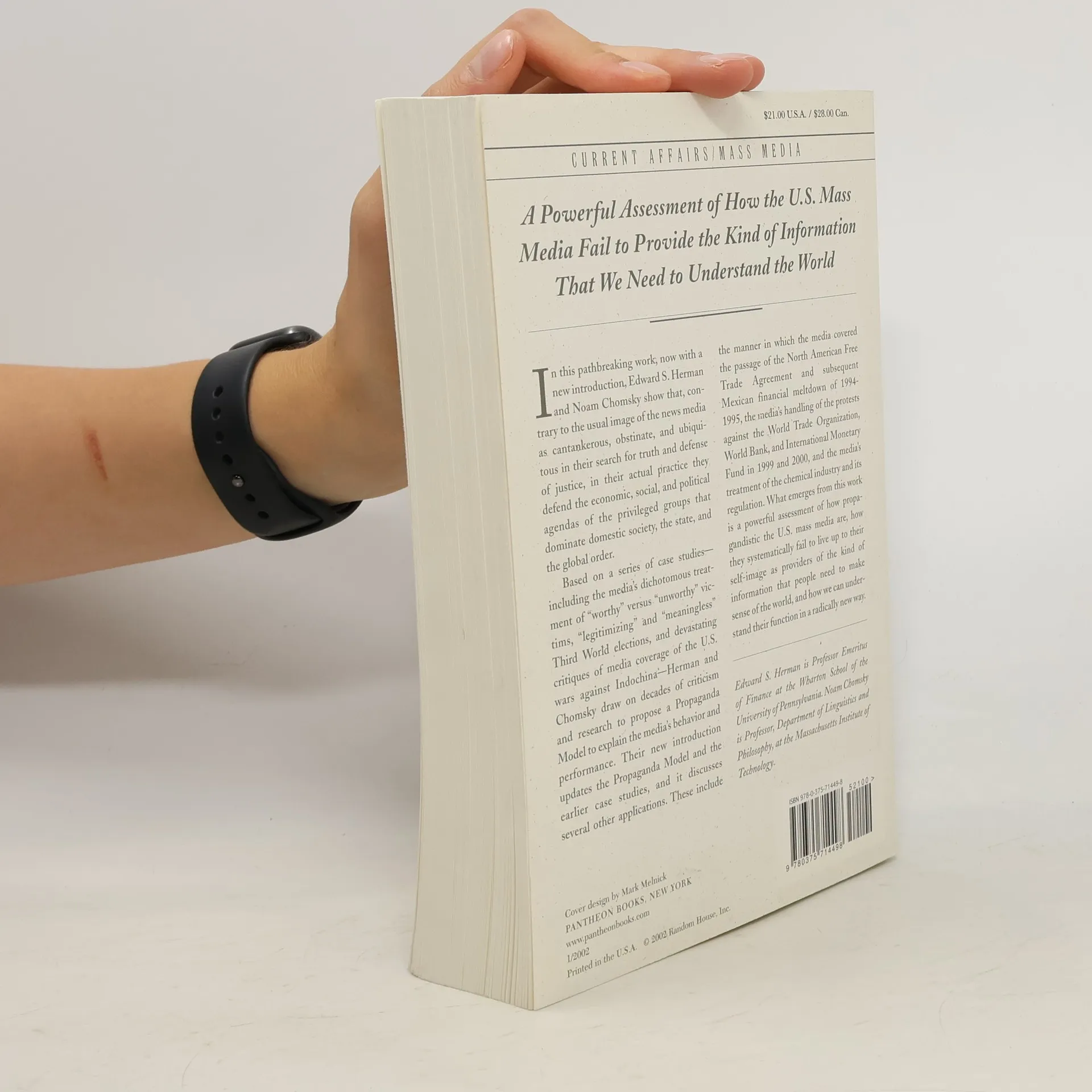
This work presents a compelling critique of the news media's role in obscuring errors and deceptions, rooted in the economics of publishing, by renowned scholars Edward S. Herman and Noam Chomsky. They argue that, contrary to the perception of the media as diligent seekers of truth, the actual practice often serves the interests of privileged groups that dominate society and the global order. Through various case studies, including the media's biased treatment of “worthy” versus “unworthy” victims and the portrayal of Third World elections, Herman and Chomsky develop a Propaganda Model to explain media behavior. Their updated introduction revisits the Propaganda Model and earlier case studies, examining the media's coverage of the North American Free Trade Agreement and the 1994-1995 Mexican financial crisis, as well as protests against the World Trade Organization and the regulation of the chemical industry. The analysis reveals a stark portrayal of U.S. mass media as propagandistic, highlighting their failure to fulfill their self-proclaimed role as essential information providers. This work invites readers to understand the media's function in a fundamentally new light.


Zakup książki
Manufacturing consent : the political economy of the mass media, Edward S. Herman, Noam Chomsky
- Język

- Rok wydania
- 2002
- Oprawa
- (miękka)
Metody płatności
Brakuje nam tutaj Twojej recenzji.
- Tytuł
- Manufacturing consent : the political economy of the mass media
- Język
- angielski
- Autorzy
- Edward S. Herman, Noam Chomsky
- Wydawca
- Pantheon Books
- Rok wydania
- 2002
- Oprawa
- miękka
- Liczba stron
- 407
- ISBN10
- 0375714499
- ISBN13
- 9780375714498
- Seria
- Kategorie
- Ocena
- 4,25 z 5
- Opis
- This work presents a compelling critique of the news media's role in obscuring errors and deceptions, rooted in the economics of publishing, by renowned scholars Edward S. Herman and Noam Chomsky. They argue that, contrary to the perception of the media as diligent seekers of truth, the actual practice often serves the interests of privileged groups that dominate society and the global order. Through various case studies, including the media's biased treatment of “worthy” versus “unworthy” victims and the portrayal of Third World elections, Herman and Chomsky develop a Propaganda Model to explain media behavior. Their updated introduction revisits the Propaganda Model and earlier case studies, examining the media's coverage of the North American Free Trade Agreement and the 1994-1995 Mexican financial crisis, as well as protests against the World Trade Organization and the regulation of the chemical industry. The analysis reveals a stark portrayal of U.S. mass media as propagandistic, highlighting their failure to fulfill their self-proclaimed role as essential information providers. This work invites readers to understand the media's function in a fundamentally new light.