

Więcej o książce
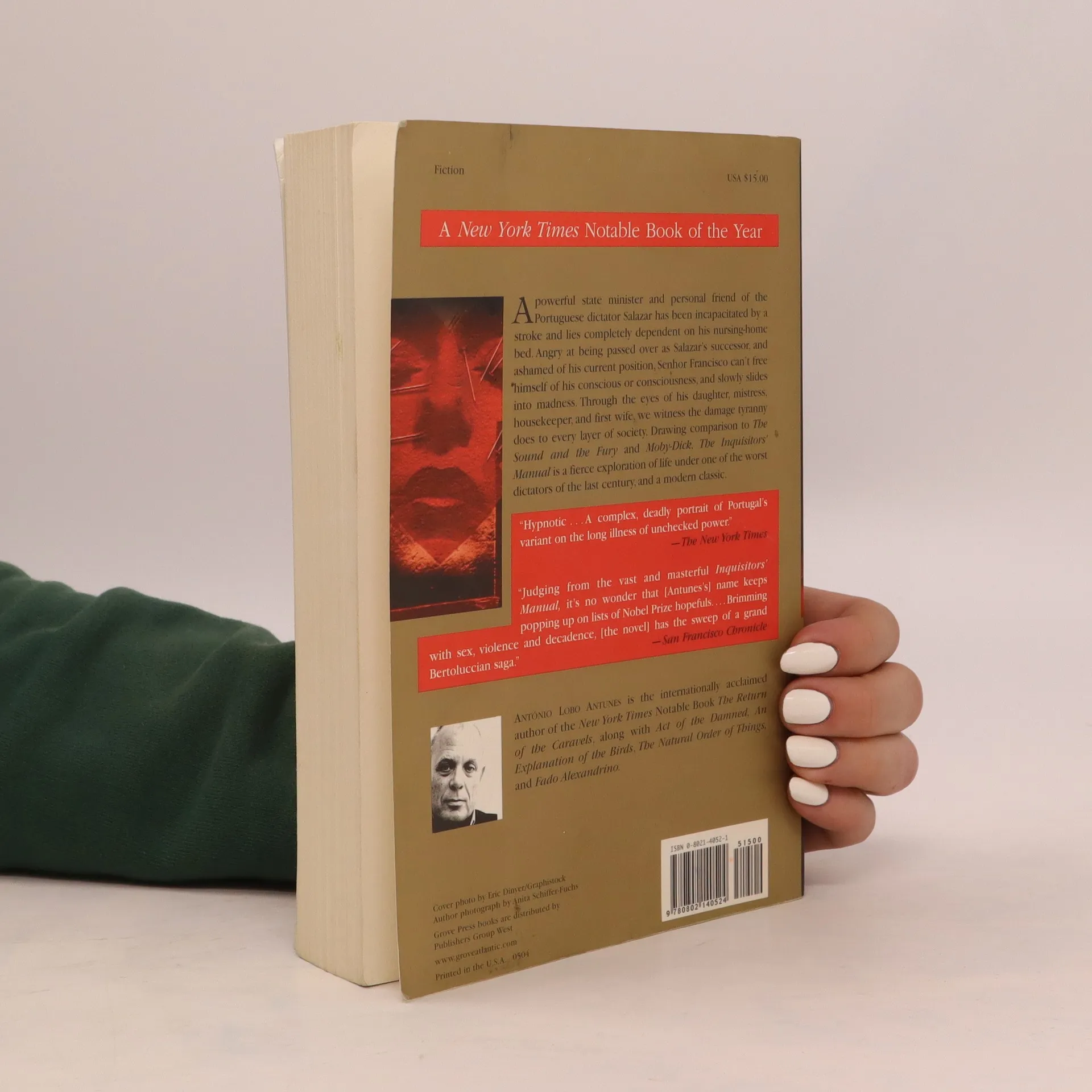
António Lobo Antunes' eleventh novel intricately explores the decline of a family and society under four decades of totalitarianism. The protagonist, Senhor Francisco, a powerful state minister and confidant of Salazar, anticipates becoming prime minister after Salazar's stroke in 1968. However, he is passed over for Marcelo Caetano, prompting him to retreat to his farm in Setúbal, where he plots a coup with other disgruntled ex-ministers and old army officers. Ultimately, it is younger officers who execute the peaceful Revolution of the Flowers in 1974, ending the dictatorship. Paranoid and isolated, Francisco accuses his farm workers of communism and drives them away, left alone to defend his crumbling estate against imagined threats. The narrative begins with Francisco in a nursing home, paralyzed and reflecting on his life. His only true love was his wife Isabel, who left him when their son João was young. Francisco's relationships with various women fail to fill the void left by Isabel. He becomes obsessed with a shop girl, Milá, who resembles her, creating a farcical illusion of a family life. As the regime collapses, the fallout affects all around him, including Milá and her mother, who return to despair, and his children, who face their own struggles. Isabel, too, is left alone, a casualty of love rather than politics. In contrast, Titina, the housekeeper, emerges as a symbol of hope. Unattractive and uneducated, sh


Zakup książki
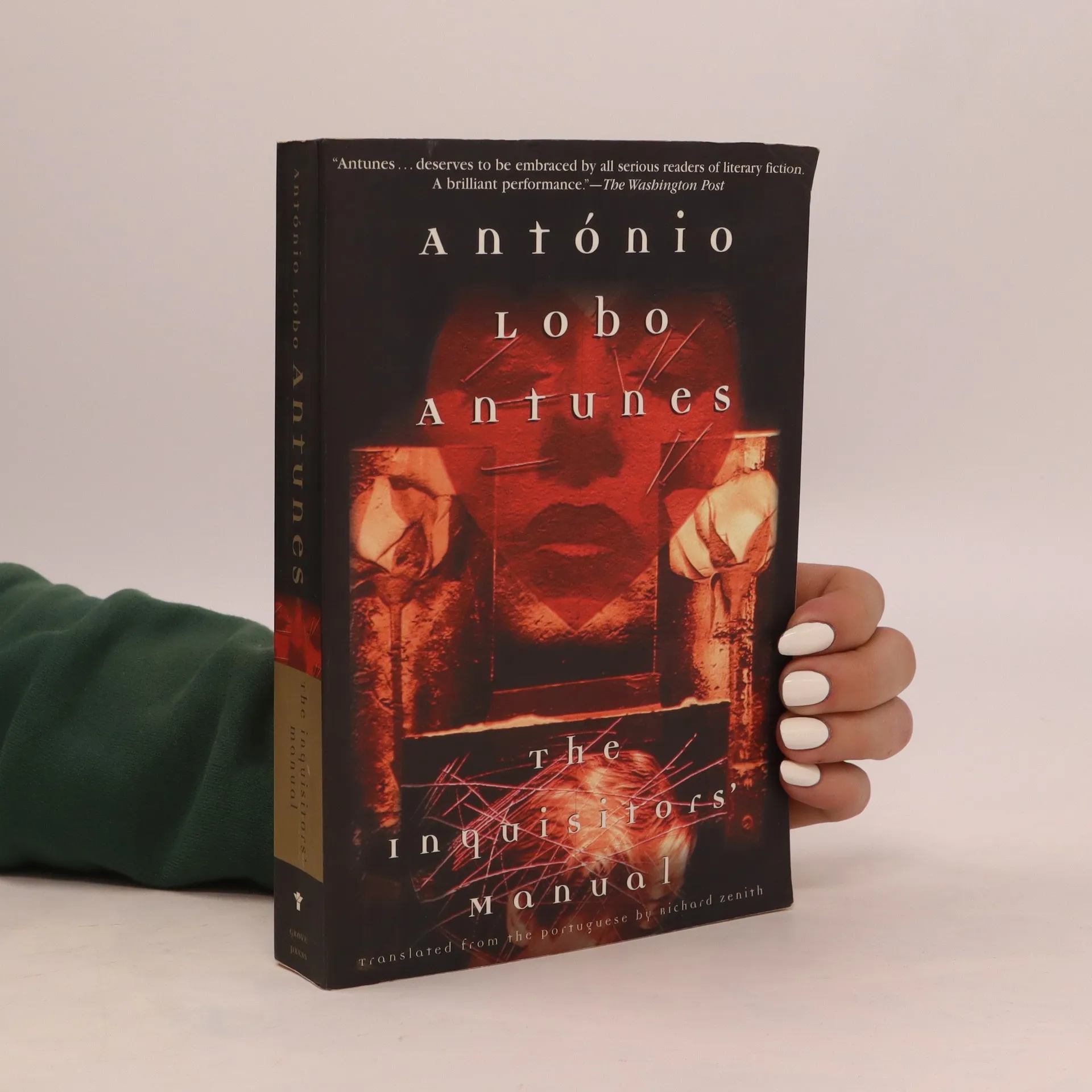
The Inquisitors' Manual, Antonio Lobo Antunes
- Język

- Rok wydania
- 2004
- Oprawa
- (miękka)
Metody płatności
Brakuje nam tutaj Twojej recenzji.
- Tytuł
- The Inquisitors' Manual
- Język
- angielski
- Autorzy
- Antonio Lobo Antunes
- Wydawca
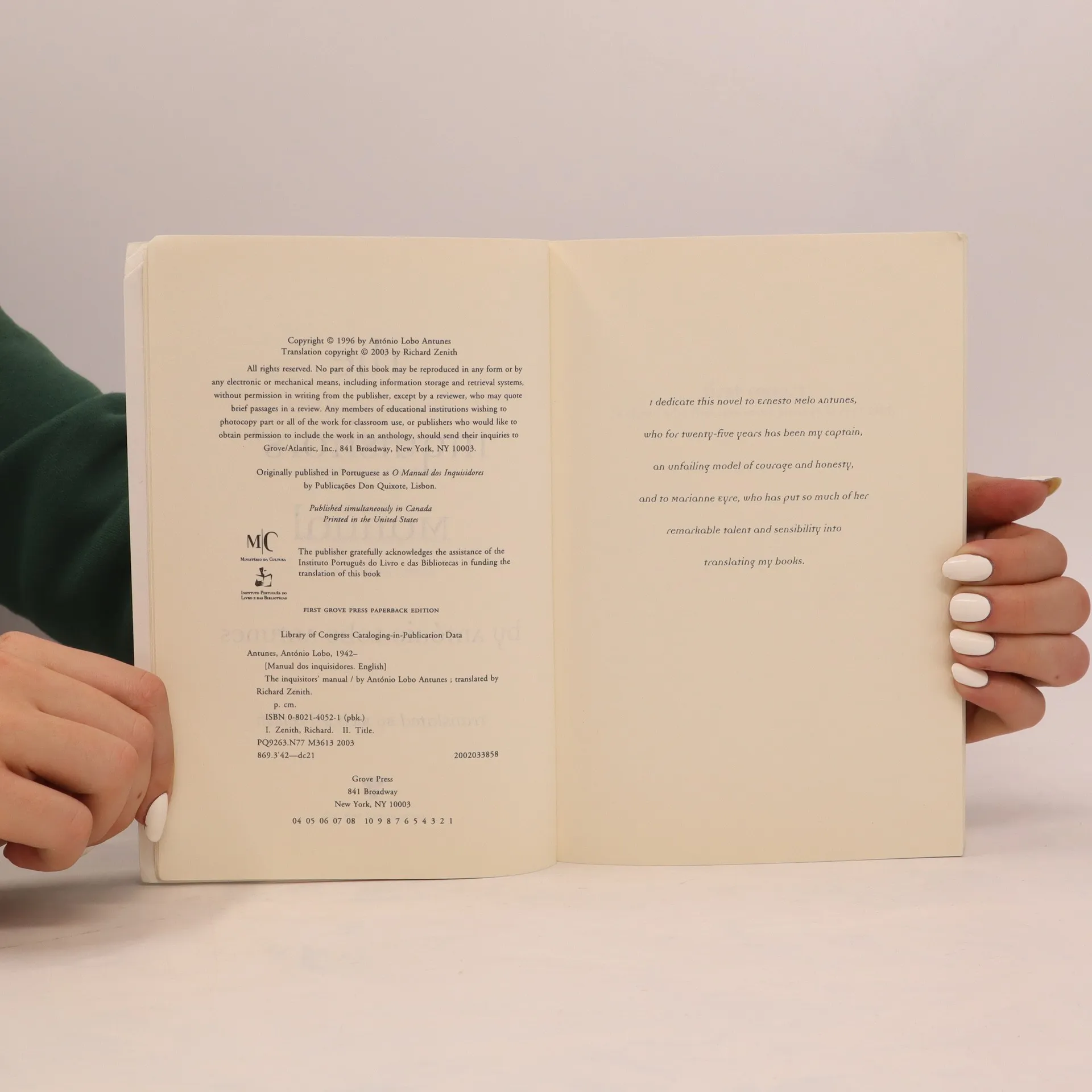
- Grove Press
- Rok wydania
- 2004
- Oprawa
- miękka
- ISBN10
- 0802140521
- ISBN13
- 9780802140524
- Seria
- Kategorie
- Oryginalna nazwa
- O manual dos inquisidores
- Ocena
- 4,2 z 5
- Opis
- António Lobo Antunes' eleventh novel intricately explores the decline of a family and society under four decades of totalitarianism. The protagonist, Senhor Francisco, a powerful state minister and confidant of Salazar, anticipates becoming prime minister after Salazar's stroke in 1968. However, he is passed over for Marcelo Caetano, prompting him to retreat to his farm in Setúbal, where he plots a coup with other disgruntled ex-ministers and old army officers. Ultimately, it is younger officers who execute the peaceful Revolution of the Flowers in 1974, ending the dictatorship. Paranoid and isolated, Francisco accuses his farm workers of communism and drives them away, left alone to defend his crumbling estate against imagined threats. The narrative begins with Francisco in a nursing home, paralyzed and reflecting on his life. His only true love was his wife Isabel, who left him when their son João was young. Francisco's relationships with various women fail to fill the void left by Isabel. He becomes obsessed with a shop girl, Milá, who resembles her, creating a farcical illusion of a family life. As the regime collapses, the fallout affects all around him, including Milá and her mother, who return to despair, and his children, who face their own struggles. Isabel, too, is left alone, a casualty of love rather than politics. In contrast, Titina, the housekeeper, emerges as a symbol of hope. Unattractive and uneducated, sh