



Parametry
Więcej o książce
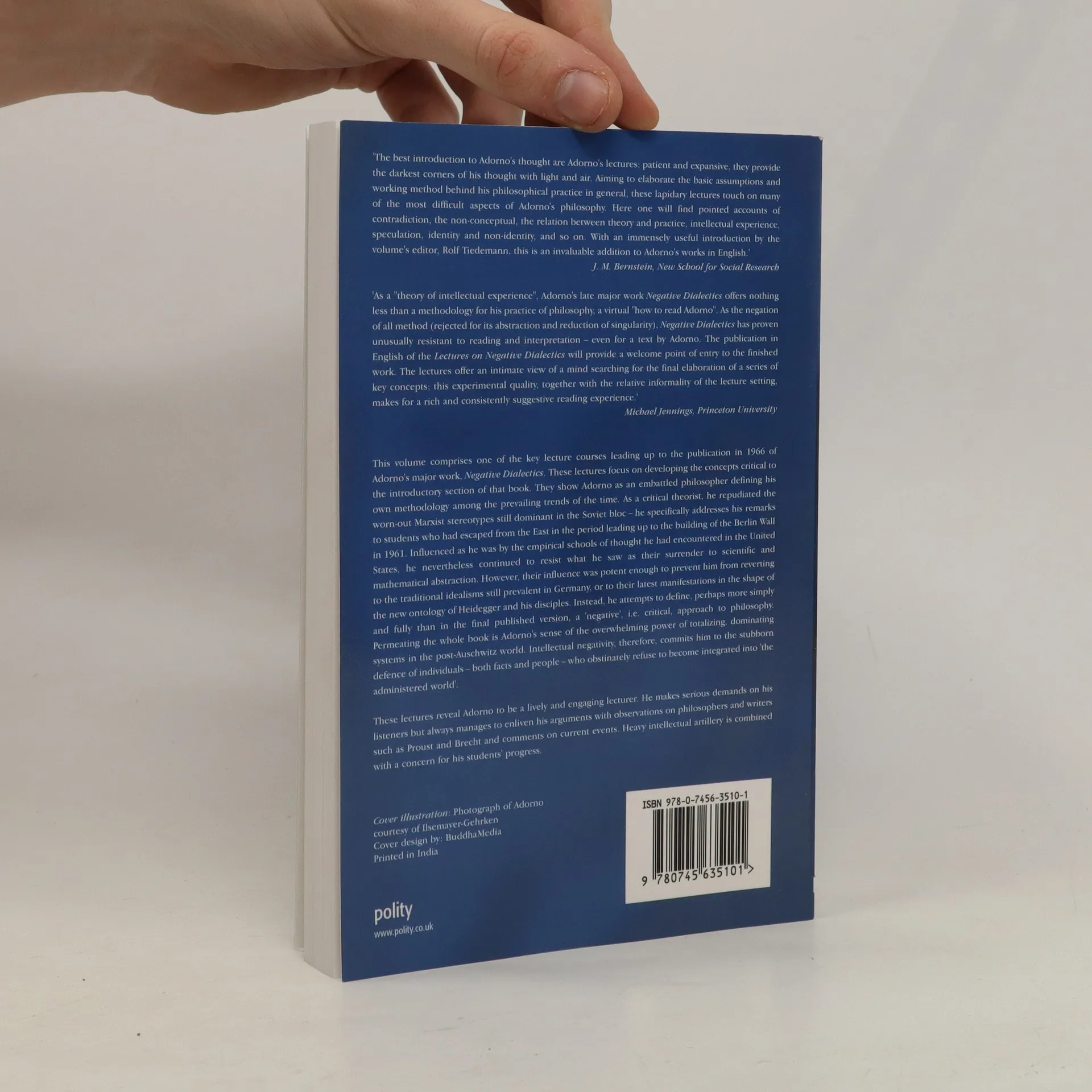
This volume features key lectures leading to Adorno's 1966 work, Negative Dialectics, focusing on essential concepts from its introductory section. It showcases Adorno as a philosopher navigating his methodology amidst contemporary trends. As a critical theorist, he rejects outdated Marxist stereotypes prevalent in the Soviet bloc, addressing students who fled East before the Berlin Wall's construction in 1961. While influenced by empirical thought from the U.S., he resists its tendency toward scientific abstraction, avoiding a return to traditional idealisms in Germany or the new ontology of Heidegger and his followers. Adorno seeks to articulate a 'negative', critical approach to philosophy, emphasizing the pervasive power of totalizing systems in the post-Auschwitz world. His intellectual negativity leads to a steadfast defense of individuals—both facts and people—who resist integration into 'the administered world.' The lectures reveal Adorno as an engaging speaker, demanding yet lively, interspersing his arguments with insights on philosophers and writers like Proust and Brecht, alongside reflections on current events. This blend of rigorous intellectual discourse and concern for student engagement characterizes his teaching style.

Zakup książki
Lectures on Negative Dialectics, Theodor W. Adorno
- Język

- Rok wydania
- 2008
- Oprawa
- (miękka)
Metody płatności
Brakuje nam tutaj Twojej recenzji.
- Tytuł
- Lectures on Negative Dialectics
- Język
- angielski
- Autorzy
- Theodor W. Adorno
- Wydawca
- Polity
- Rok wydania
- 2008
- Oprawa
- miękka
- ISBN10
- 0745635105
- ISBN13
- 9780745635101
- Seria
- Ocena
- 4,35 z 5
- Opis
- This volume features key lectures leading to Adorno's 1966 work, Negative Dialectics, focusing on essential concepts from its introductory section. It showcases Adorno as a philosopher navigating his methodology amidst contemporary trends. As a critical theorist, he rejects outdated Marxist stereotypes prevalent in the Soviet bloc, addressing students who fled East before the Berlin Wall's construction in 1961. While influenced by empirical thought from the U.S., he resists its tendency toward scientific abstraction, avoiding a return to traditional idealisms in Germany or the new ontology of Heidegger and his followers. Adorno seeks to articulate a 'negative', critical approach to philosophy, emphasizing the pervasive power of totalizing systems in the post-Auschwitz world. His intellectual negativity leads to a steadfast defense of individuals—both facts and people—who resist integration into 'the administered world.' The lectures reveal Adorno as an engaging speaker, demanding yet lively, interspersing his arguments with insights on philosophers and writers like Proust and Brecht, alongside reflections on current events. This blend of rigorous intellectual discourse and concern for student engagement characterizes his teaching style.