

Więcej o książce
Richard Lewontin, a prominent evolutionary biologist and critic, combines his scientific insights with his critical perspective in this concise and accessible account of biology's relevance to human affairs. He addresses common misconceptions that hinder our understanding of biology and evolution, emphasizing that genes, organisms, and environments should not be viewed as separate entities. Instead, he illustrates that an organism is the result of both genetic and environmental influences, rejecting the idea that genes solely determine an organism's traits. Lewontin argues that organisms, shaped by their circumstances, actively create, modify, and choose their environments. This work is a brilliant, passionate critique that serves as a primer on the complexities of biological processes, reminding us that living things are far more intricate than they appear. It does not propose a radical new methodology or theory but rather encourages a deeper appreciation of the interconnectedness of biological factors.


Zakup książki
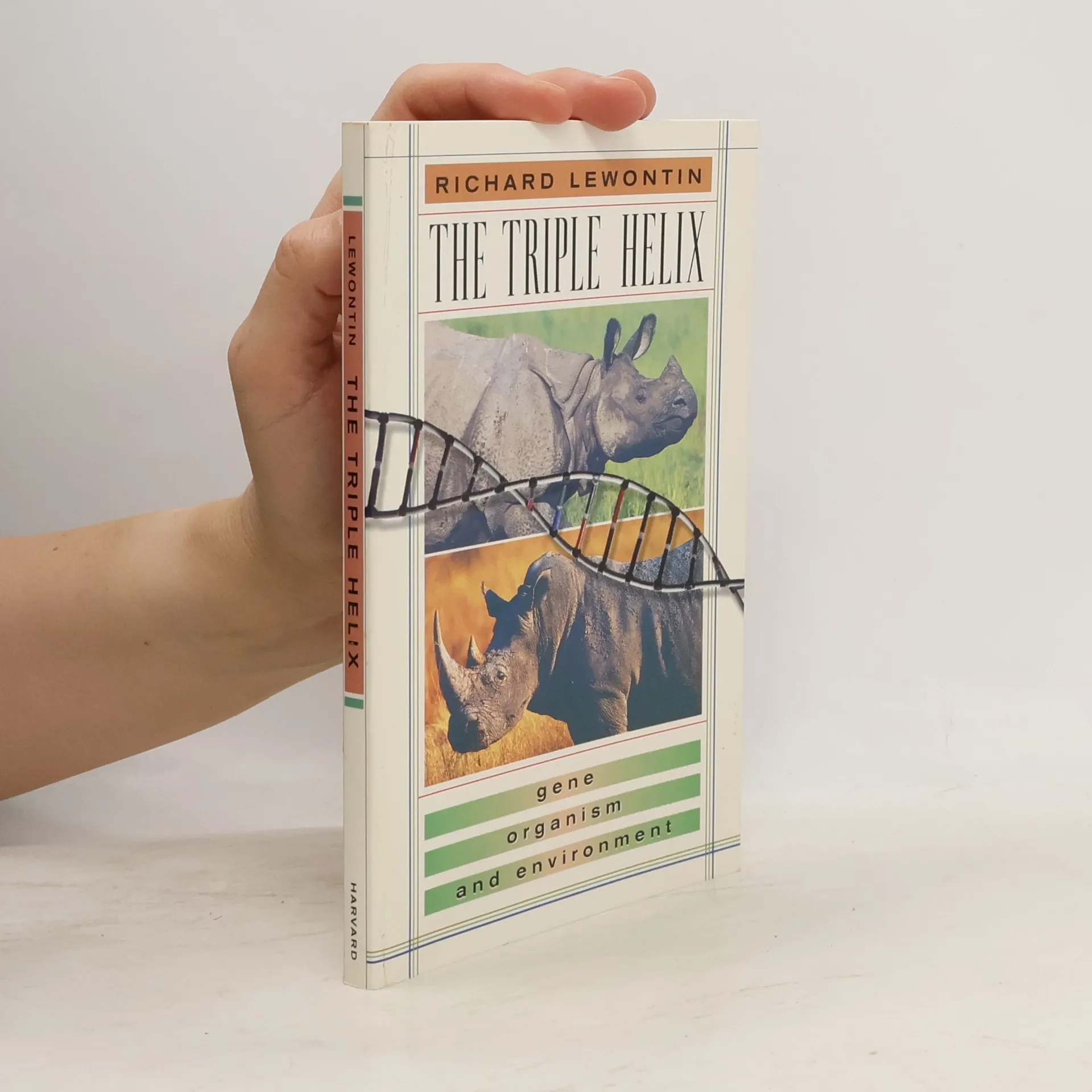
The Triple Helix, Richard C. Lewontin
- Język

- Rok wydania
- 2000
- Oprawa
- (miękka)
Metody płatności
Brakuje nam tutaj Twojej recenzji.
- Tytuł
- The Triple Helix
- Podtytuł
- Gene, Organism, and Environment
- Język
- angielski
- Autorzy
- Richard C. Lewontin
- Wydawca
- Harvard University Press
- Rok wydania
- 2000
- Oprawa
- miękka
- Liczba stron
- 144
- ISBN10
- 0674006771
- ISBN13
- 9780674006775
- Seria
- Tagi
- Nauki przyrodnicze, Nauka, Ewolucja, Genetyka
- Ocena
- 4 z 5
- Opis
- Richard Lewontin, a prominent evolutionary biologist and critic, combines his scientific insights with his critical perspective in this concise and accessible account of biology's relevance to human affairs. He addresses common misconceptions that hinder our understanding of biology and evolution, emphasizing that genes, organisms, and environments should not be viewed as separate entities. Instead, he illustrates that an organism is the result of both genetic and environmental influences, rejecting the idea that genes solely determine an organism's traits. Lewontin argues that organisms, shaped by their circumstances, actively create, modify, and choose their environments. This work is a brilliant, passionate critique that serves as a primer on the complexities of biological processes, reminding us that living things are far more intricate than they appear. It does not propose a radical new methodology or theory but rather encourages a deeper appreciation of the interconnectedness of biological factors.