



Więcej o książce
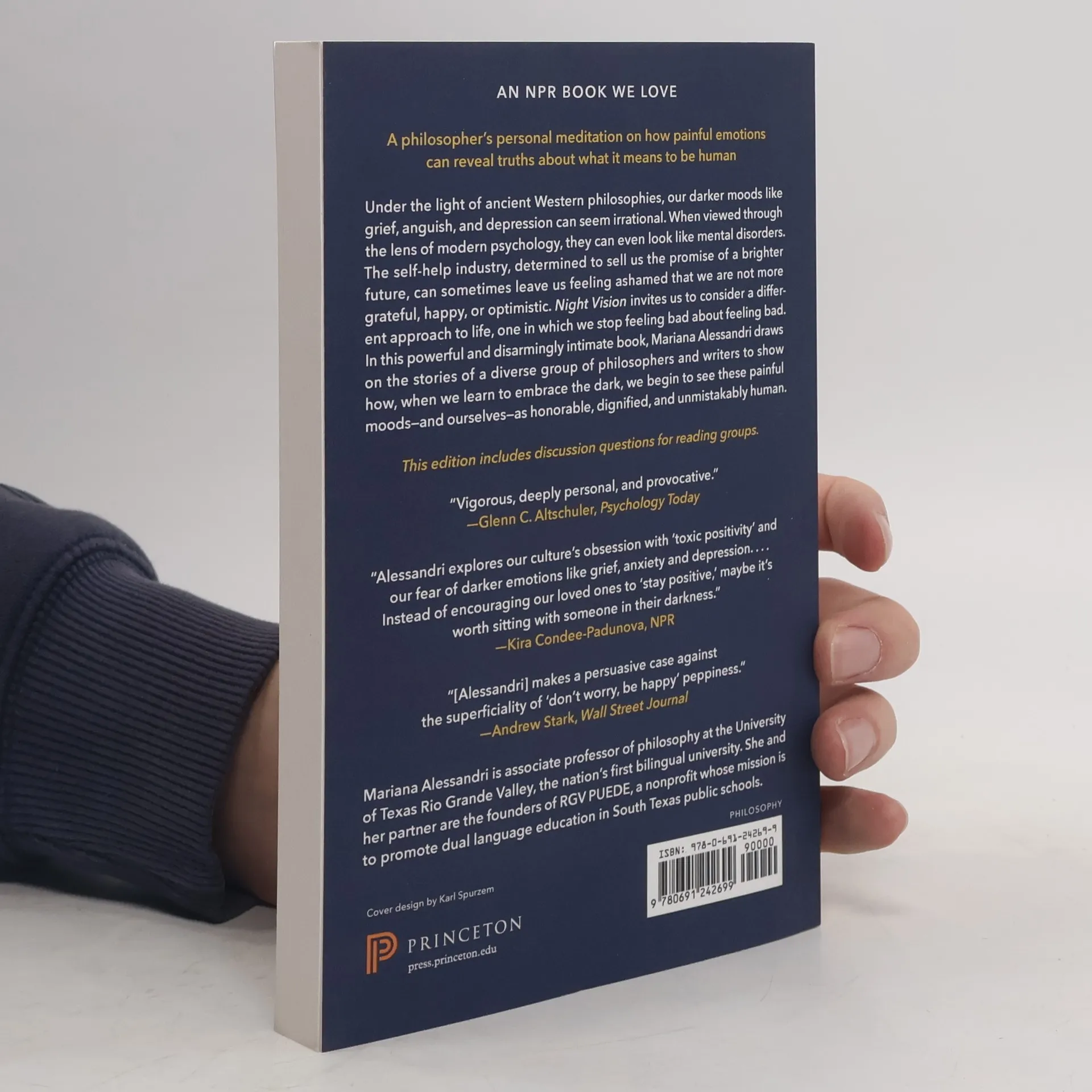
A philosopher’s personal meditation on how painful emotions can reveal truths about what it means to be truly human. Under the lens of ancient Western philosophies, darker moods like grief, anguish, and depression may seem irrational, while modern psychology often categorizes them as mental disorders. The self-help industry, eager to promote a brighter future, can leave us feeling ashamed for not being more grateful or optimistic. This work invites readers to adopt a different perspective, encouraging us to stop feeling bad about feeling bad. In this powerful and intimate exploration, Existentialist philosopher Mariana Alessandri draws from the experiences of various nineteenth- and twentieth-century thinkers, illustrating that our suffering signifies our tenderness, perceptiveness, and intelligence. Figures like Audre Lorde, María Lugones, Miguel de Unamuno, C. S. Lewis, Gloria Anzaldúa, and Søren Kierkegaard embraced their anger, sadness, and anxiety, allowing their eyes to adjust to the dark. Alessandri teaches readers how to cultivate “night vision,” revealing new dimensions to their painful emotions, such as wit, warmth, connection, and clarity. By learning to embrace the dark, we can view these moods—and ourselves—as honorable, dignified, and undeniably human.


Zakup książki
Night Vision, Mariana Alessandri
- Język

- Rok wydania
- 2024
- Oprawa
- (miękka)
Metody płatności
Brakuje nam tutaj Twojej recenzji.
- Tytuł
- Night Vision
- Język
- angielski
- Autorzy
- Mariana Alessandri
- Wydawca
- Princeton University Press
- Rok wydania
- 2024
- Oprawa
- miękka
- Liczba stron
- 224
- ISBN10
- 0691242690
- ISBN13
- 9780691242699
- Seria
- Ocena
- 3,9 z 5
- Opis
- A philosopher’s personal meditation on how painful emotions can reveal truths about what it means to be truly human. Under the lens of ancient Western philosophies, darker moods like grief, anguish, and depression may seem irrational, while modern psychology often categorizes them as mental disorders. The self-help industry, eager to promote a brighter future, can leave us feeling ashamed for not being more grateful or optimistic. This work invites readers to adopt a different perspective, encouraging us to stop feeling bad about feeling bad. In this powerful and intimate exploration, Existentialist philosopher Mariana Alessandri draws from the experiences of various nineteenth- and twentieth-century thinkers, illustrating that our suffering signifies our tenderness, perceptiveness, and intelligence. Figures like Audre Lorde, María Lugones, Miguel de Unamuno, C. S. Lewis, Gloria Anzaldúa, and Søren Kierkegaard embraced their anger, sadness, and anxiety, allowing their eyes to adjust to the dark. Alessandri teaches readers how to cultivate “night vision,” revealing new dimensions to their painful emotions, such as wit, warmth, connection, and clarity. By learning to embrace the dark, we can view these moods—and ourselves—as honorable, dignified, and undeniably human.