



Parametry
- 190 stron
- 7 godzin czytania
Więcej o książce
Occasionally, books emerge that clarify pivotal historical moments, serving as essential guides to our current times. This work by Professor Mattias Desmet, a renowned Clinical Psychologist, dissects the societal conditions that enable collective psychosis. By examining our global situation, he identifies 'mass formation'—a form of collective hypnosis—and warns of our proximity to totalitarian behaviors within democratic frameworks. Totalitarianism does not arise by chance; it stems from a collective psychosis that has followed a predictable historical pattern, gaining momentum with each generation, from the Jacobins to the Nazis and Stalinists, paralleling technological progress. Desmet reveals how governments and mass media exploit fear, loneliness, and isolation to demoralize populations, leading them to act against their own interests with dire consequences. Building on Hannah Arendt's foundational work, he critiques the cultural 'groupthink' that intensified during the Covid crisis. He highlights the dangers of our current societal landscape, media habits, and reliance on manipulative technologies, while proposing straightforward solutions—both individual and collective—to safeguard our freedoms. This analysis illustrates how, amid loneliness and anxiety, we risk surrendering our liberties to censorship and a dominant crisis narrative that marginalizes dissenting voices.



Zakup książki
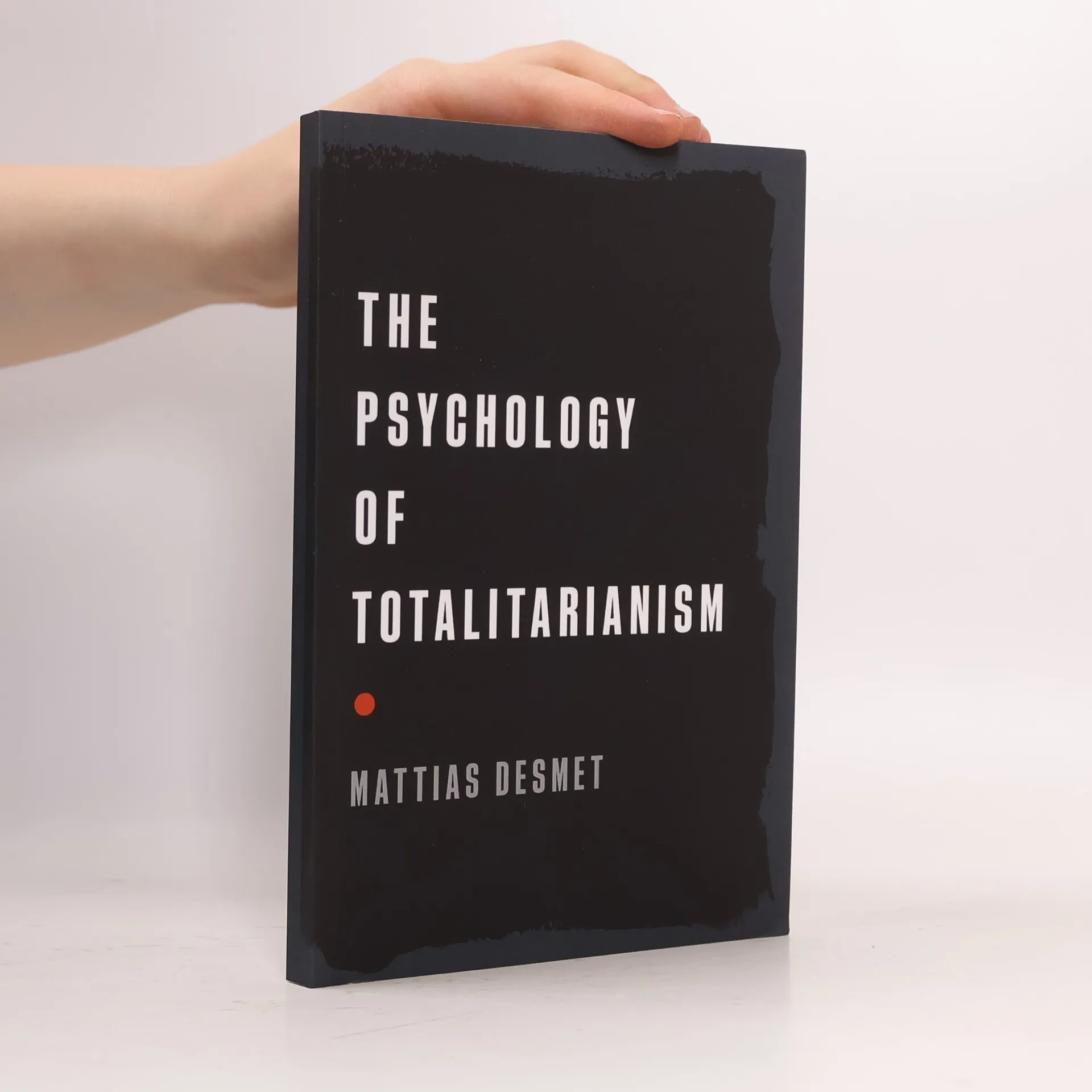
The Psychology of Totalitarianism, Mattias Desmet
- Język

- Rok wydania
- 2022
- Oprawa
- (miękka)
Metody płatności
Brakuje nam tutaj Twojej recenzji.
- Tytuł
- The Psychology of Totalitarianism
- Język
- angielski
- Autorzy
- Mattias Desmet
- Wydawca
- Chelsea Green Publishing
- Rok wydania
- 2022
- Oprawa
- miękka
- Liczba stron
- 190
- ISBN10
- 9314467295
- ISBN13
- 9789314467297
- Seria
- Kategorie
- Tagi
- Tematy historyczne, Tematyka psychologiczna, Tematyka filozoficzna, Polityka, Nauka, Prezenty dla dziadka, Kultura & Społeczeństwo
- Ocena
- 4 z 5
- Opis
- Occasionally, books emerge that clarify pivotal historical moments, serving as essential guides to our current times. This work by Professor Mattias Desmet, a renowned Clinical Psychologist, dissects the societal conditions that enable collective psychosis. By examining our global situation, he identifies 'mass formation'—a form of collective hypnosis—and warns of our proximity to totalitarian behaviors within democratic frameworks. Totalitarianism does not arise by chance; it stems from a collective psychosis that has followed a predictable historical pattern, gaining momentum with each generation, from the Jacobins to the Nazis and Stalinists, paralleling technological progress. Desmet reveals how governments and mass media exploit fear, loneliness, and isolation to demoralize populations, leading them to act against their own interests with dire consequences. Building on Hannah Arendt's foundational work, he critiques the cultural 'groupthink' that intensified during the Covid crisis. He highlights the dangers of our current societal landscape, media habits, and reliance on manipulative technologies, while proposing straightforward solutions—both individual and collective—to safeguard our freedoms. This analysis illustrates how, amid loneliness and anxiety, we risk surrendering our liberties to censorship and a dominant crisis narrative that marginalizes dissenting voices.