



Więcej o książce
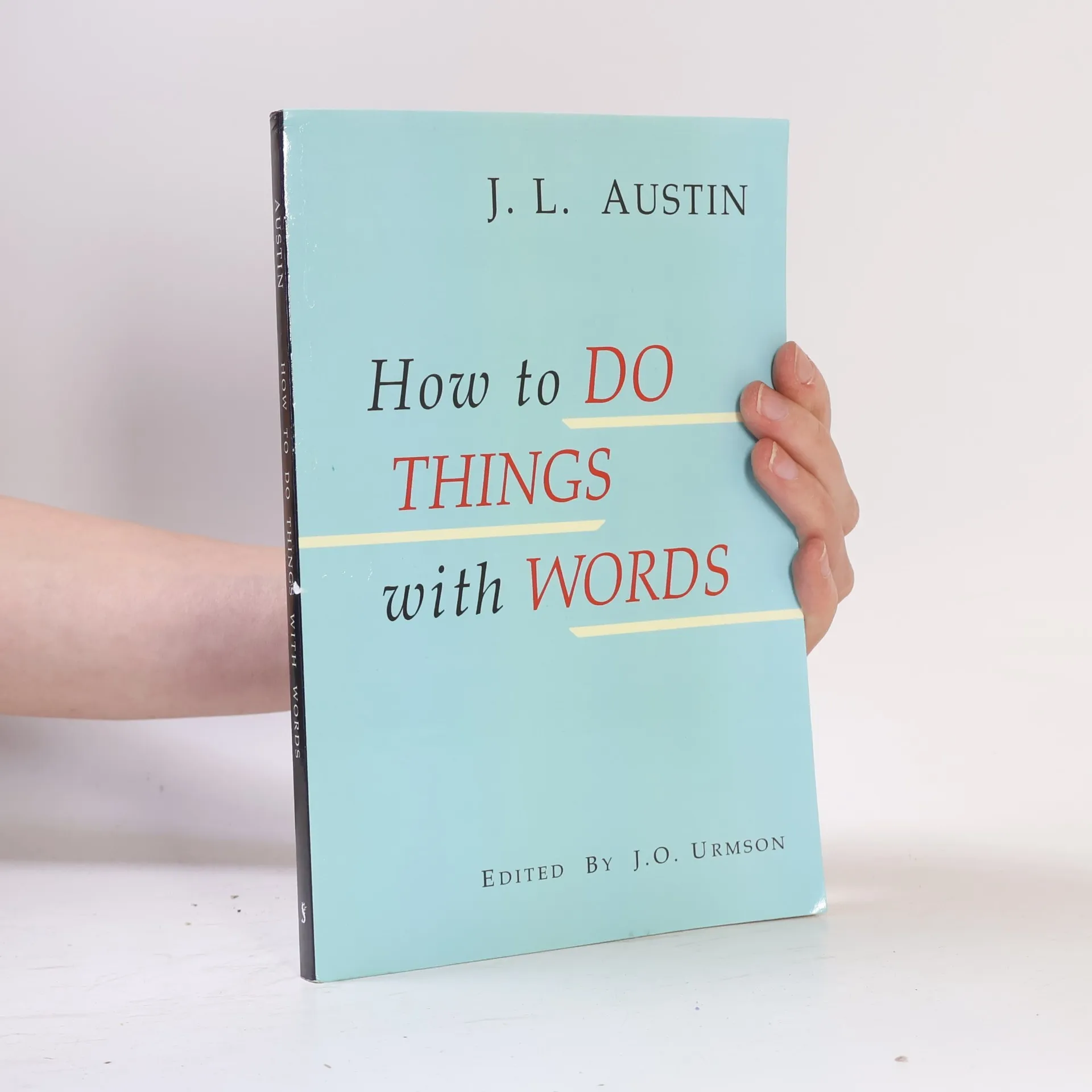
2018 Reprint of 1962 Edition. Full facsimile of the original edition, not reproduced with Optical Recognition software. Reprint of the First Edition. John L. Austin was a British philosopher of language and leading proponent of ordinary language philosophy, perhaps best known for developing the theory of speech acts. Austin pointed out that we use language to do things as well as to assert things, and that the utterance of a statement like "I promise to do so-and-so" is best understood as doing something -- making a promise -- rather than making an assertion about anything. Hence the name of one of his best-known works How to Do Things with Words. Austin, in providing his theory of speech acts, makes a significant challenge to the philosophy of language, far beyond merely elucidating a class of morphological sentence forms that function to do what they name. Austin's work ultimately suggests that all speech and all utterance is the doing of something with words and signs, challenging a metaphysics of language that would posit denotative, propositional assertion as the essence of language and meaning.



Zakup książki
How to Do Things with Words, Paul Austin
- Język

- Rok wydania
- 2018
- Oprawa
- (miękka)
Metody płatności
Brakuje nam tutaj Twojej recenzji.
- Tytuł
- How to Do Things with Words
- Język
- angielski
- Autorzy
- Paul Austin
- Wydawca
- Martino Fine Books
- Rok wydania
- 2018
- Oprawa
- miękka
- Liczba stron
- 178
- ISBN10
- 1684222656
- ISBN13
- 9781684222650
- Seria
- Tagi
- Lingwistyka, Pisanie, Teorie naukowe
- Ocena
- 3,75 z 5
- Opis
- 2018 Reprint of 1962 Edition. Full facsimile of the original edition, not reproduced with Optical Recognition software. Reprint of the First Edition. John L. Austin was a British philosopher of language and leading proponent of ordinary language philosophy, perhaps best known for developing the theory of speech acts. Austin pointed out that we use language to do things as well as to assert things, and that the utterance of a statement like "I promise to do so-and-so" is best understood as doing something -- making a promise -- rather than making an assertion about anything. Hence the name of one of his best-known works How to Do Things with Words. Austin, in providing his theory of speech acts, makes a significant challenge to the philosophy of language, far beyond merely elucidating a class of morphological sentence forms that function to do what they name. Austin's work ultimately suggests that all speech and all utterance is the doing of something with words and signs, challenging a metaphysics of language that would posit denotative, propositional assertion as the essence of language and meaning.