

Więcej o książce
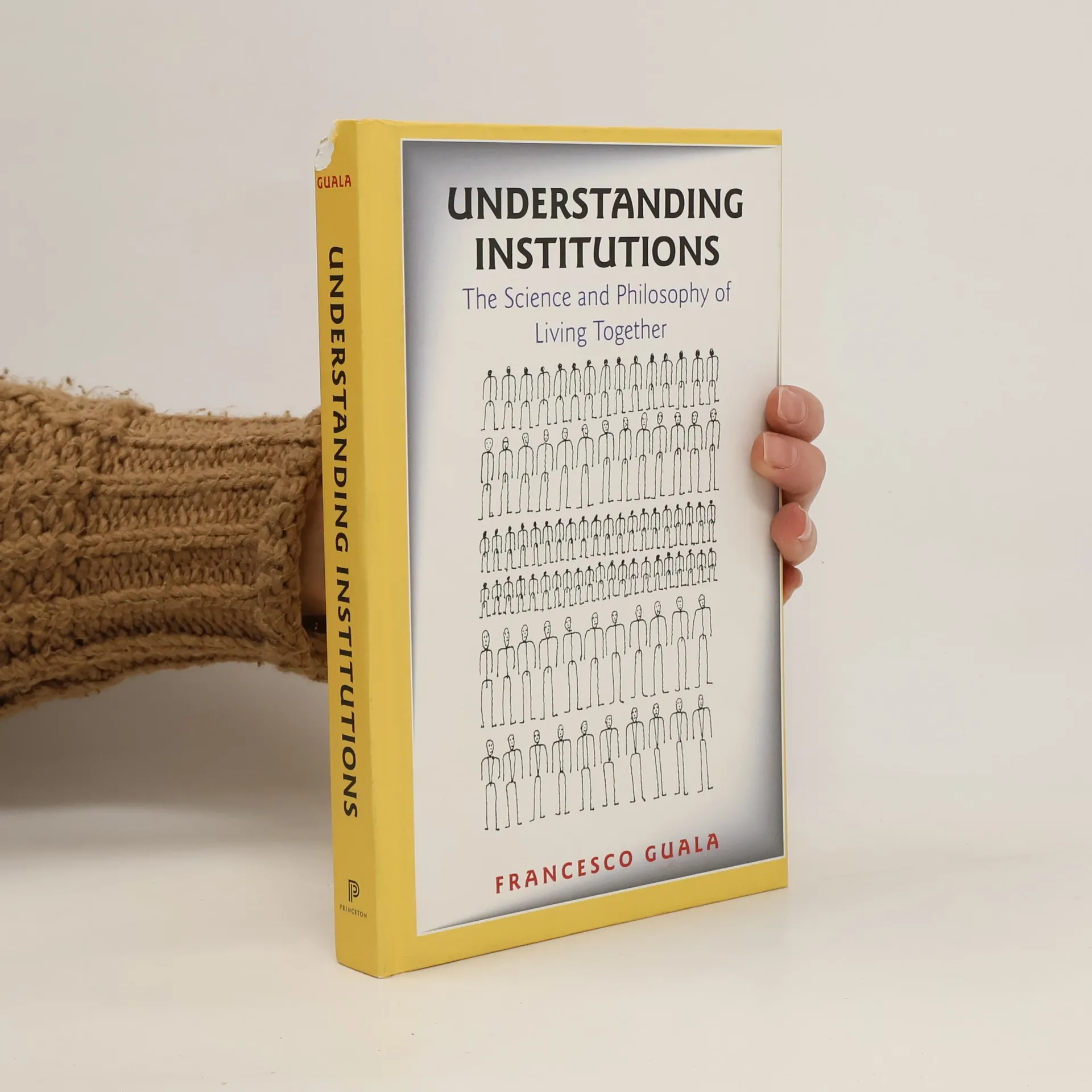
Understanding Institutions presents a unified theory of social institutions, integrating insights from philosophers and social scientists. Francesco Guala combines elements from three influential perspectives: institutions as equilibria of strategic games, regulative rules, and constitutive rules. He elucidates key institutions such as money, private property, and marriage, offering a much-needed synthesis of equilibrium and rules-based approaches. The theory, grounded in game theory, is articulated in a clear style, making it accessible to a diverse audience of scholars. Guala explores various implications of this unified theory, addressing longstanding issues in social sciences like reflexivity, realism, Verstehen, and fallibilism. He critically examines Ian Hacking's concepts of "looping effects" and "interactive kinds," questioning the possibility of distinguishing between social and natural sciences based on causal and ontological criteria. By focusing on contemporary debates surrounding the definition of marriage, Guala illustrates how these abstract philosophical discussions have significant practical and political implications. Ultimately, the work transcends specific examples to offer new insights into the nature, functioning, and potential of institutions, enriching our understanding of their role in society.


Zakup książki
Understanding Institutions, Francesco Guala
- Język

- Rok wydania
- 2016
- Oprawa
- (twarda)
Metody płatności
Brakuje nam tutaj Twojej recenzji.
- Tytuł
- Understanding Institutions
- Język
- angielski
- Autorzy
- Francesco Guala
- Wydawca
- Princeton University Press
- Rok wydania
- 2016
- Oprawa
- twarda
- Liczba stron
- 256
- ISBN10
- 0691171785
- ISBN13
- 9780691171784
- Seria
- Ocena
- 4,05 z 5
- Opis
- Understanding Institutions presents a unified theory of social institutions, integrating insights from philosophers and social scientists. Francesco Guala combines elements from three influential perspectives: institutions as equilibria of strategic games, regulative rules, and constitutive rules. He elucidates key institutions such as money, private property, and marriage, offering a much-needed synthesis of equilibrium and rules-based approaches. The theory, grounded in game theory, is articulated in a clear style, making it accessible to a diverse audience of scholars. Guala explores various implications of this unified theory, addressing longstanding issues in social sciences like reflexivity, realism, Verstehen, and fallibilism. He critically examines Ian Hacking's concepts of "looping effects" and "interactive kinds," questioning the possibility of distinguishing between social and natural sciences based on causal and ontological criteria. By focusing on contemporary debates surrounding the definition of marriage, Guala illustrates how these abstract philosophical discussions have significant practical and political implications. Ultimately, the work transcends specific examples to offer new insights into the nature, functioning, and potential of institutions, enriching our understanding of their role in society.