

Parametry
- 288 stron
- 11 godzin czytania
Więcej o książce
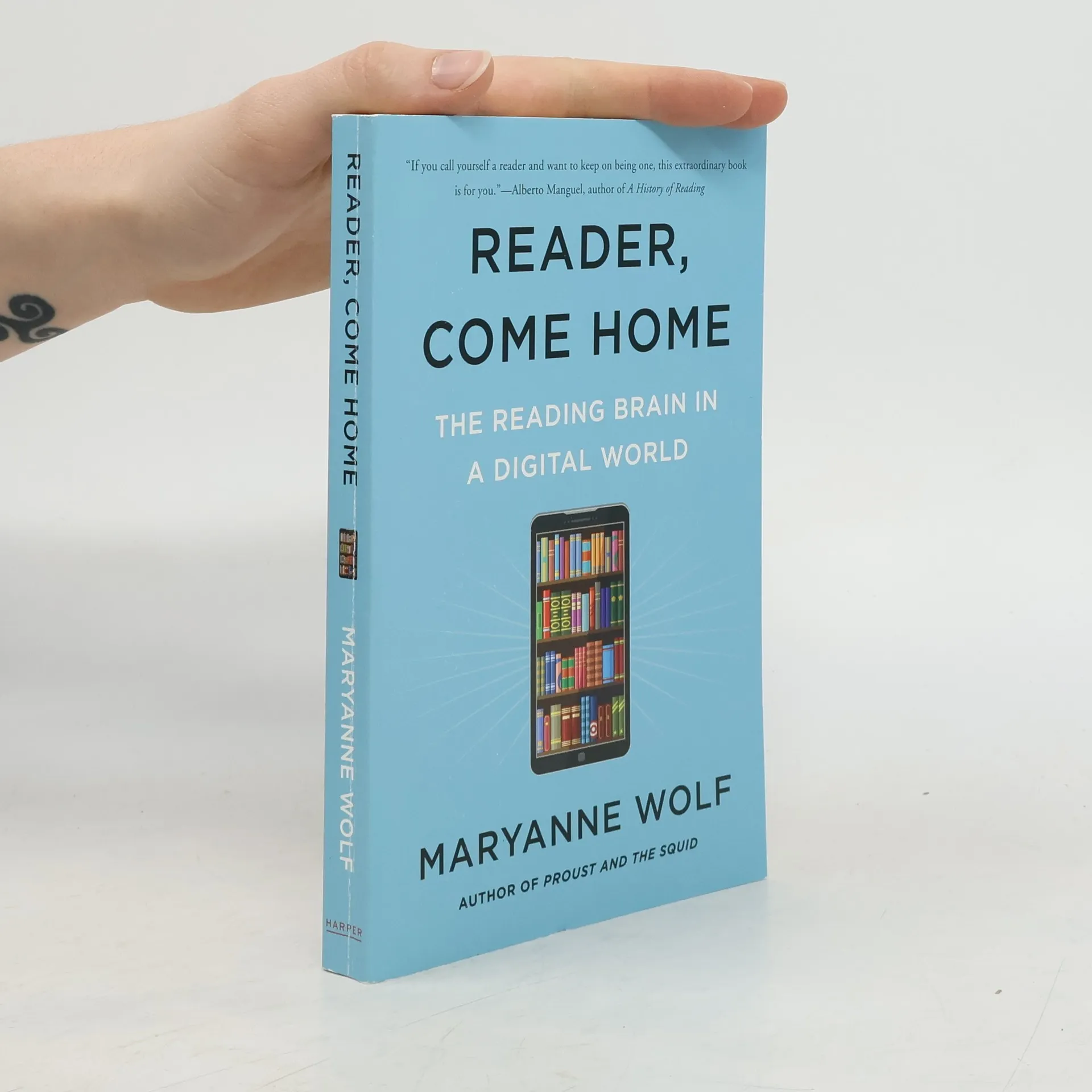
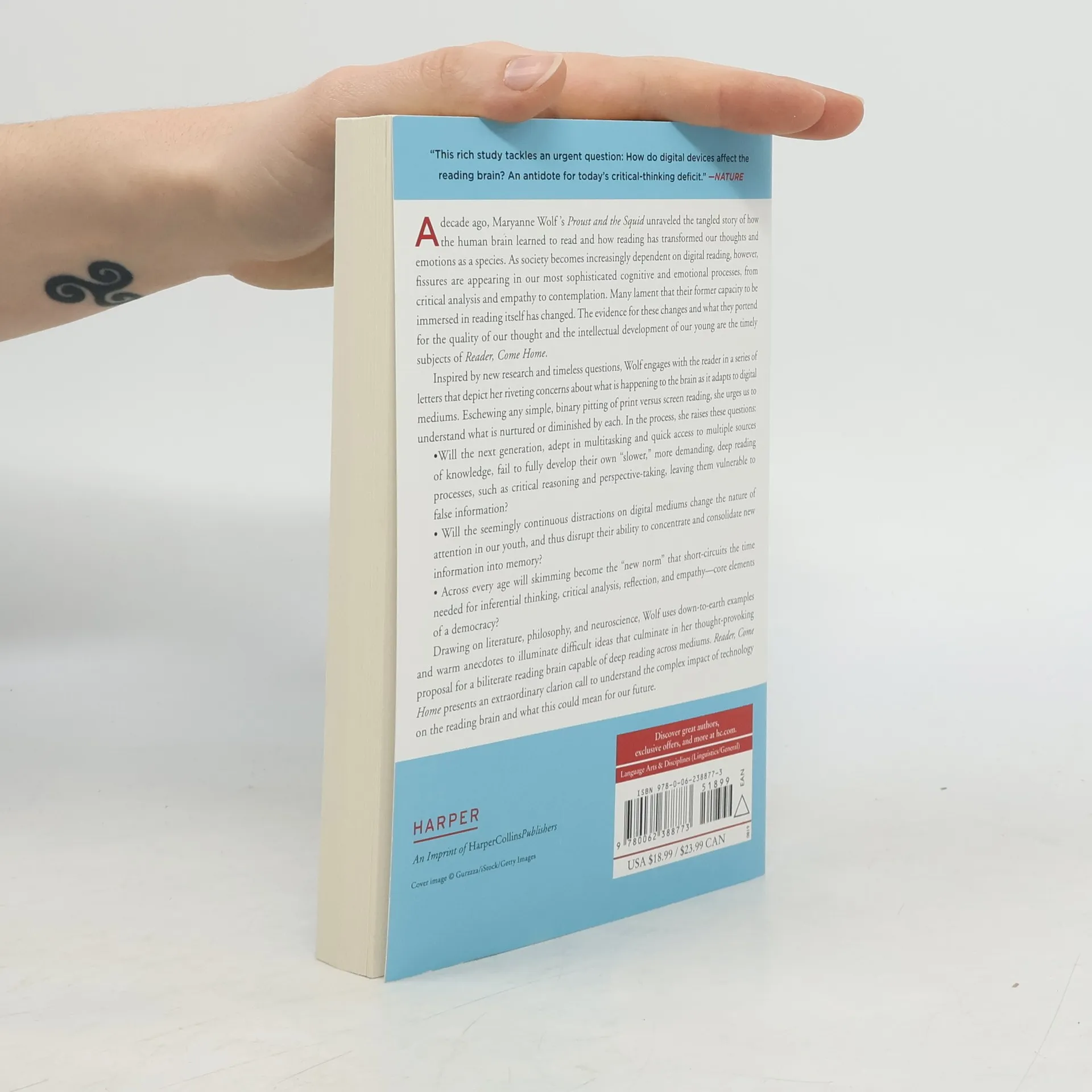
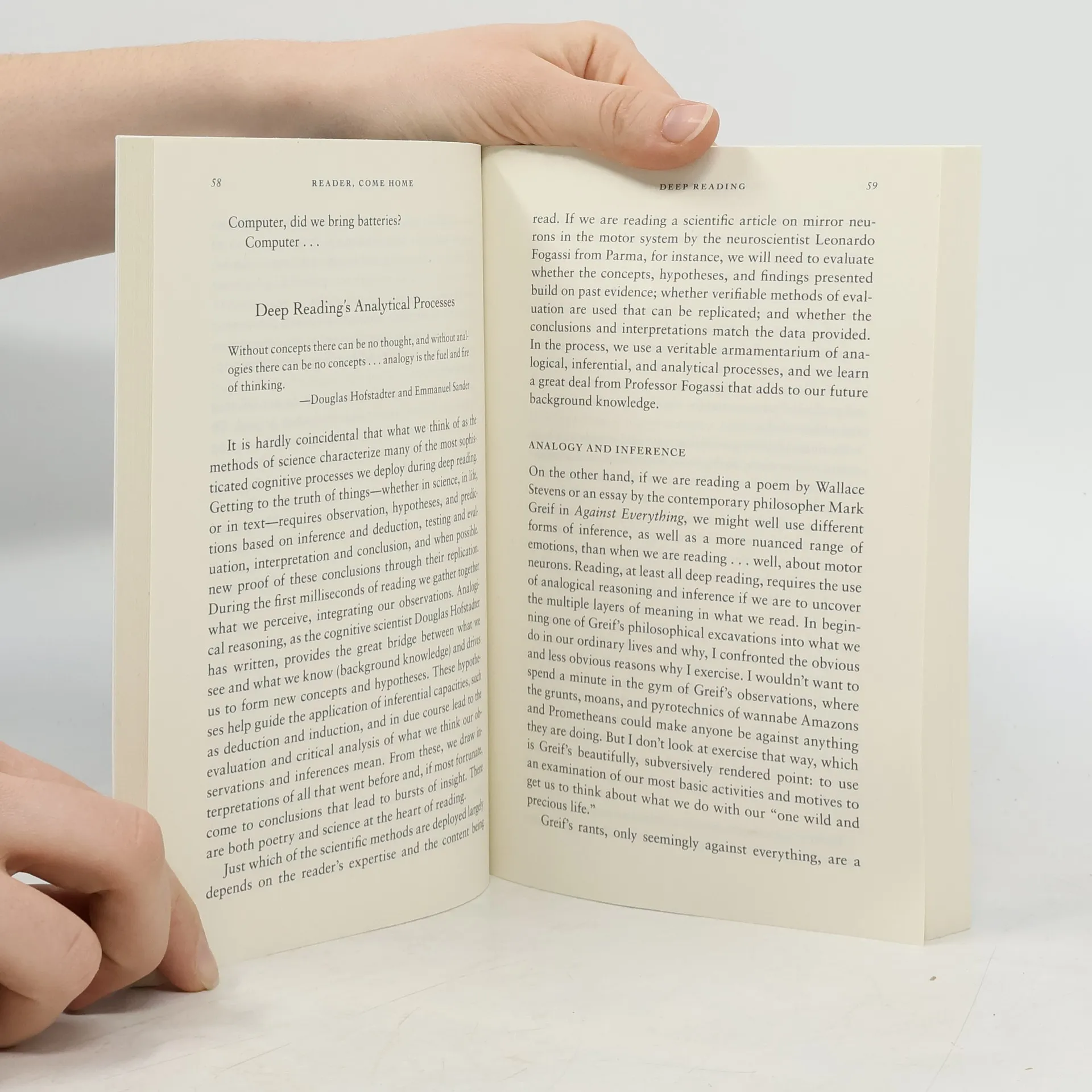
The author of the acclaimed Proust and the Squid presents a lively and informative exploration of the future of the reading brain and its implications for critical thinking, empathy, and reflection in an increasingly digital world. Following her previous work, Maryanne Wolf examines how the evolution of reading, particularly among children and adults, is influenced by digital technology. Through a series of letters to her readers, she expresses her concerns and hopes regarding the changes in our cognitive processes as we adapt to new mediums. Wolf poses challenging questions about the potential impacts on children's ability to engage in "deep reading," critical thinking, and personal reflection amidst distractions and instant access to information. She wonders if these shifts will hinder the development of essential skills like analogy-making and inference-drawing, which are vital for knowledge retention and understanding. Additionally, she explores how digital influences may affect the cognitive processes necessary for a democratic society. Drawing from neuroscience, literature, education, and philosophy, Wolf blends historical and scientific insights with relatable anecdotes to propose a vision for a biliterate reading brain. This work serves as a cautionary yet hopeful guide on the effects of technology on our intellectual capacities and future.


Zakup książki
Reader, Come Home: The Reading Brain in a Digital World, Maryanne Wolf
- Język

- Rok wydania
- 2019
- Oprawa
- (miękka)
Metody płatności
Brakuje nam tutaj Twojej recenzji.
- Tytuł
- Reader, Come Home: The Reading Brain in a Digital World
- Język
- angielski
- Autorzy
- Maryanne Wolf
- Wydawca
- HarperCollins Publishers
- Rok wydania
- 2019
- Oprawa
- miękka
- Liczba stron
- 288
- ISBN10
- 0062388770
- ISBN13
- 9780062388773
- Seria
- Ocena
- 3,95 z 5
- Opis
- The author of the acclaimed Proust and the Squid presents a lively and informative exploration of the future of the reading brain and its implications for critical thinking, empathy, and reflection in an increasingly digital world. Following her previous work, Maryanne Wolf examines how the evolution of reading, particularly among children and adults, is influenced by digital technology. Through a series of letters to her readers, she expresses her concerns and hopes regarding the changes in our cognitive processes as we adapt to new mediums. Wolf poses challenging questions about the potential impacts on children's ability to engage in "deep reading," critical thinking, and personal reflection amidst distractions and instant access to information. She wonders if these shifts will hinder the development of essential skills like analogy-making and inference-drawing, which are vital for knowledge retention and understanding. Additionally, she explores how digital influences may affect the cognitive processes necessary for a democratic society. Drawing from neuroscience, literature, education, and philosophy, Wolf blends historical and scientific insights with relatable anecdotes to propose a vision for a biliterate reading brain. This work serves as a cautionary yet hopeful guide on the effects of technology on our intellectual capacities and future.