



Seria
Więcej o książce
Striving to explore the subject in as simple a manner as possible, this book helps readers understand the elusive concept of entropy. Innovative aspects of the book include the construction of statistical entropy, the derivation of the entropy of classical systems from purely classical assumptions, and a statistical thermodynamics approach to the ideal Fermi and ideal Bose gases. Derivations are worked through step-by-step and important applications are highlighted in over 20 worked examples. Nearly 50 end-of-chapter exercises test readers' understanding. The book also features a glossary giving definitions for all essential terms, a time line showing important developments, and list of books for further study. It is an ideal supplement to undergraduate courses in physics, engineering, chemistry and mathematics.


Zakup książki
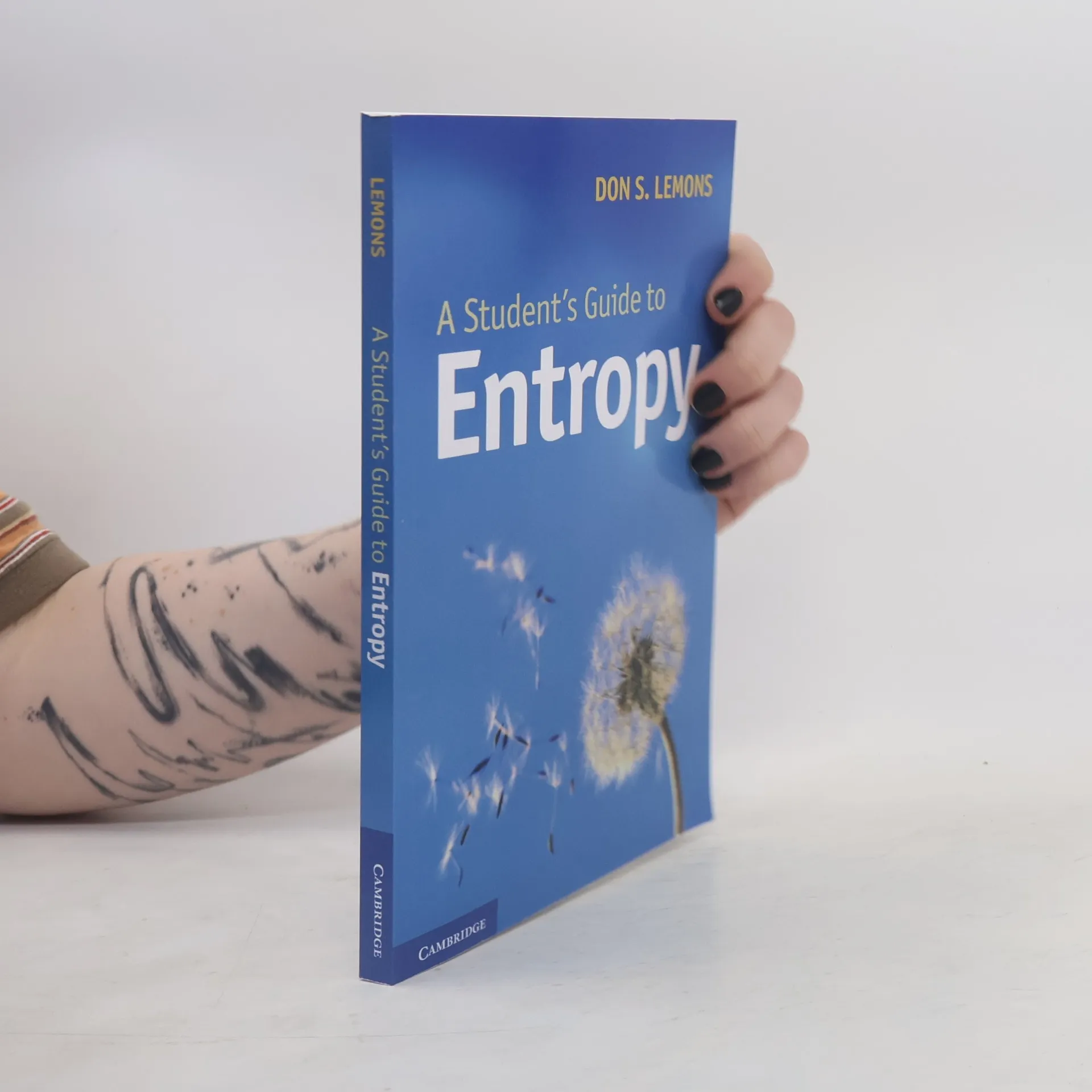
A student's guide to entropy, Don Stephen Lemons
- Język

- Rok wydania
- 2014
- Oprawa
- (miękka)
Metody płatności
Brakuje nam tutaj Twojej recenzji.
- Tytuł
- A student's guide to entropy
- Język
- angielski
- Autorzy
- Don Stephen Lemons
- Wydawca
- Cambridge University Press
- Rok wydania
- 2014
- Oprawa
- miękka
- Liczba stron
- 200
- ISBN10
- 1107653975
- ISBN13
- 9781107653979
- Seria
- A Student's Guide
- Tagi
- Nauki przyrodnicze, Nauka
- Ocena
- 3,9 z 5
- Opis
- Striving to explore the subject in as simple a manner as possible, this book helps readers understand the elusive concept of entropy. Innovative aspects of the book include the construction of statistical entropy, the derivation of the entropy of classical systems from purely classical assumptions, and a statistical thermodynamics approach to the ideal Fermi and ideal Bose gases. Derivations are worked through step-by-step and important applications are highlighted in over 20 worked examples. Nearly 50 end-of-chapter exercises test readers' understanding. The book also features a glossary giving definitions for all essential terms, a time line showing important developments, and list of books for further study. It is an ideal supplement to undergraduate courses in physics, engineering, chemistry and mathematics.