


Seria
Parametry
- 448 stron
- 16 godzin czytania
Więcej o książce
From the winner of the 2017 John W. Campbell Award for Best New Writer, this political science fiction novel ventures into a human future of extraordinary originality. Mycroft Canner, a convict, must wander the world, being as useful as possible to those he encounters. Carlyle Foster, a sensayer, serves as a spiritual counselor in a society that has outlawed public religion, yet acknowledges the complexity of human inner lives. The world they inhabit is as alien to us as our own would be to someone from the 1500s. It represents a hard-won utopia based on technological abundance and complex systems of labeling public discourse. Gender distinctions that seem normal to us are taboo, and most of the population belongs to global clans engaged in economic and cultural competition, managed by subtle central planners. This blend of heaven and hell appears normal to them. In this intricate society, Mycroft and Carlyle discover a wild card: a boy named Bridger, who possesses the uncanny ability to make his wishes come true, seemingly bringing inanimate objects to life.





Zakup książki
Too like the lightning, Ada Palmer
- Język

- Rok wydania
- 2016
- Oprawa
- (miękka)
Metody płatności
Brakuje nam tutaj Twojej recenzji.
- Tytuł
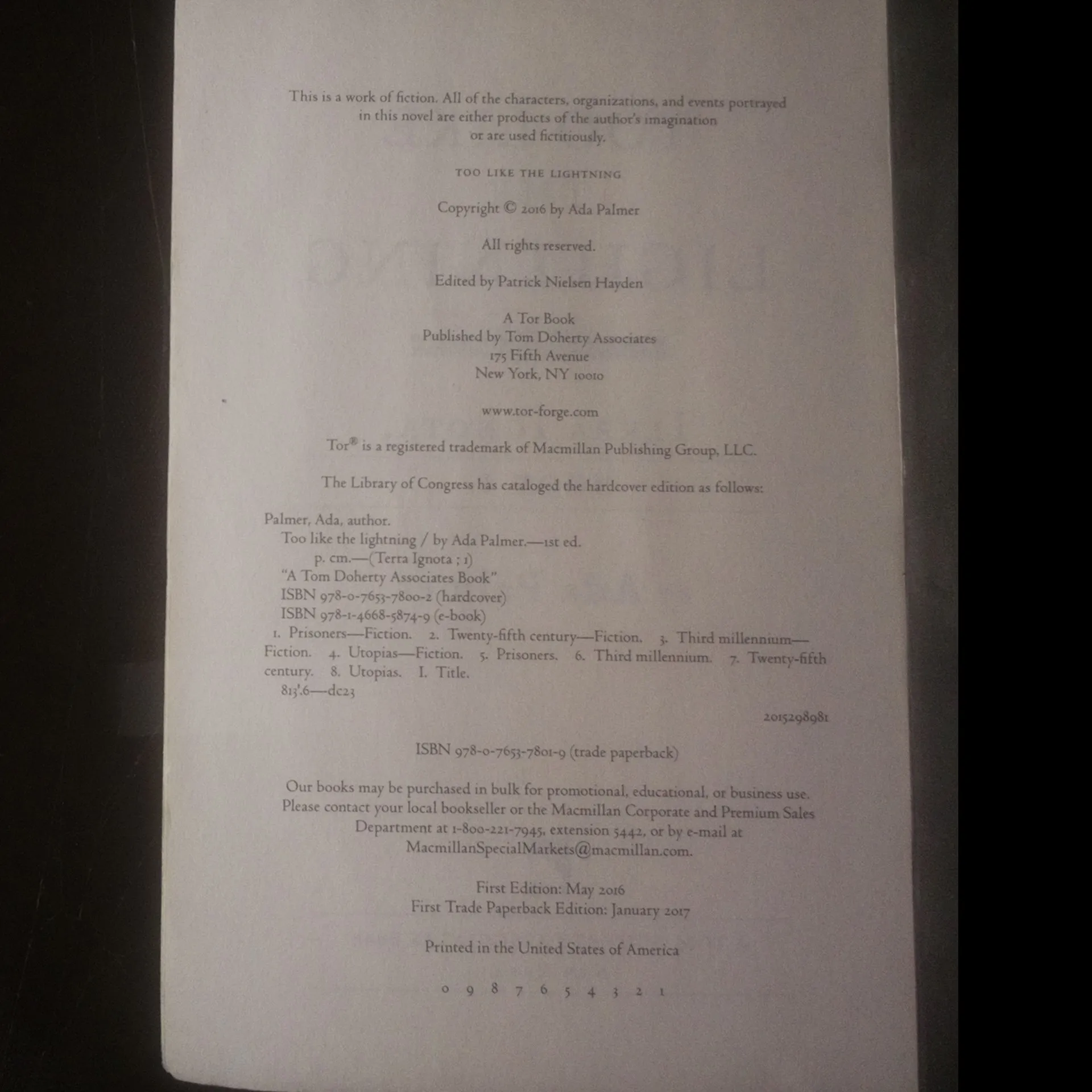
- Too like the lightning
- Język
- angielski
- Autorzy
- Ada Palmer
- Wydawca
- Tor
- Rok wydania
- 2016
- Oprawa
- miękka
- Liczba stron
- 448
- ISBN10
- 0765378019
- ISBN13
- 9780765378019
- Seria
- Terra Ignota
- Ocena
- 3,75 z 5
- Opis
- From the winner of the 2017 John W. Campbell Award for Best New Writer, this political science fiction novel ventures into a human future of extraordinary originality. Mycroft Canner, a convict, must wander the world, being as useful as possible to those he encounters. Carlyle Foster, a sensayer, serves as a spiritual counselor in a society that has outlawed public religion, yet acknowledges the complexity of human inner lives. The world they inhabit is as alien to us as our own would be to someone from the 1500s. It represents a hard-won utopia based on technological abundance and complex systems of labeling public discourse. Gender distinctions that seem normal to us are taboo, and most of the population belongs to global clans engaged in economic and cultural competition, managed by subtle central planners. This blend of heaven and hell appears normal to them. In this intricate society, Mycroft and Carlyle discover a wild card: a boy named Bridger, who possesses the uncanny ability to make his wishes come true, seemingly bringing inanimate objects to life.