



Więcej o książce
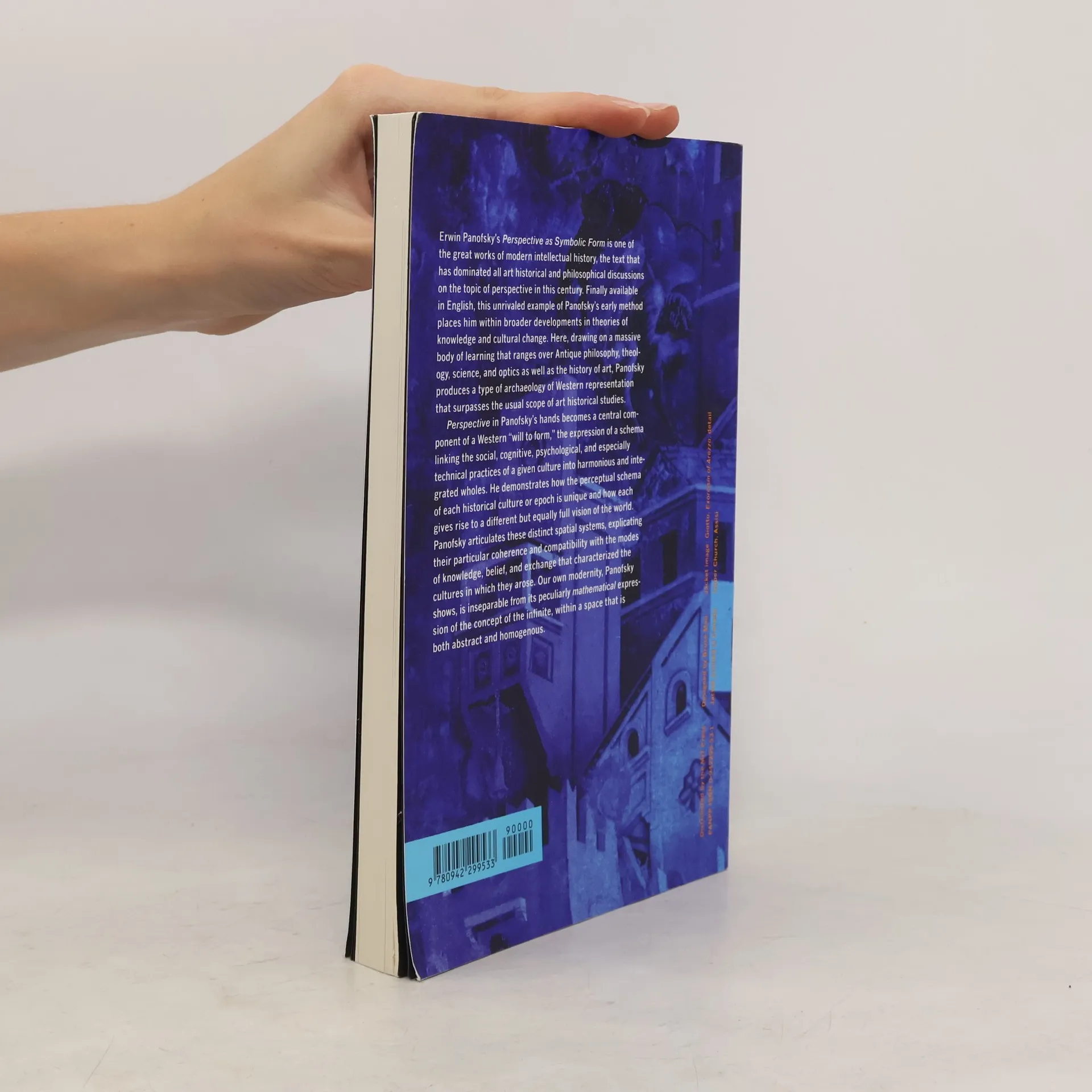
Erwin Panofsky's Perspective as Symbolic Form is a seminal work in modern intellectual history, profoundly influencing art historical and philosophical discussions on perspective. Now available in English, it exemplifies Panofsky's early methodology, linking his insights to broader developments in knowledge and cultural change. Drawing from a vast array of sources, including Antique philosophy, theology, science, and optics, Panofsky conducts an archaeological exploration of Western representation that transcends traditional art historical studies. He posits that perspective is integral to the Western desire to create coherent forms, connecting social, cognitive, psychological, and technical practices into unified wholes. Each historical culture or epoch, however, possesses a distinct perceptual schema, leading to unique yet equally rich visions of the world. Panofsky articulates these varied spatial systems, highlighting their coherence and compatibility with the knowledge, beliefs, and exchanges prevalent in their respective cultures. He argues that modernity is defined by a mathematical interpretation of the infinite, situated within a space that is both continuous and homogeneous.

Zakup książki
Perspectives as Symbolic Form, Erwin Panofsky
- Język

- Rok wydania
- 2016
- Oprawa
- (miękka)
Metody płatności
Brakuje nam tutaj Twojej recenzji.
- Tytuł
- Perspectives as Symbolic Form
- Język
- angielski
- Autorzy
- Erwin Panofsky
- Wydawca
- Zone Books
- Rok wydania
- 2016
- Oprawa
- miękka
- ISBN10
- 0942299531
- ISBN13
- 9780942299533
- Seria
- Kategorie
- Ocena
- 3,9 z 5
- Opis
- Erwin Panofsky's Perspective as Symbolic Form is a seminal work in modern intellectual history, profoundly influencing art historical and philosophical discussions on perspective. Now available in English, it exemplifies Panofsky's early methodology, linking his insights to broader developments in knowledge and cultural change. Drawing from a vast array of sources, including Antique philosophy, theology, science, and optics, Panofsky conducts an archaeological exploration of Western representation that transcends traditional art historical studies. He posits that perspective is integral to the Western desire to create coherent forms, connecting social, cognitive, psychological, and technical practices into unified wholes. Each historical culture or epoch, however, possesses a distinct perceptual schema, leading to unique yet equally rich visions of the world. Panofsky articulates these varied spatial systems, highlighting their coherence and compatibility with the knowledge, beliefs, and exchanges prevalent in their respective cultures. He argues that modernity is defined by a mathematical interpretation of the infinite, situated within a space that is both continuous and homogeneous.