

Więcej o książce
This landmark work, first published by Sierra Club Books in 1988, has established itself as a foundational volume in the ecological canon. In it, noted cultural historian Thomas Berry provides nothing less than a new intellectual-ethical framework for the human community by positing planetary well-being as the measure of all human activity.Drawing on the wisdom of Western philosophy, Asian thought, and Native American traditions, as well as contemporary physics and evolutionary biology, Berry offers a new perspective that recasts our understanding of science, technology, politics, religion, ecology, and education. He shows us why it is important for us to respond to the Earth’s need for planetary renewal, and what we must do to break free of the “technological trance” that drives a misguided dream of progress. Only then, he suggests, can we foster mutually enhancing human-Earth relationships that can heal our traumatized global biosystem.


Zakup książki
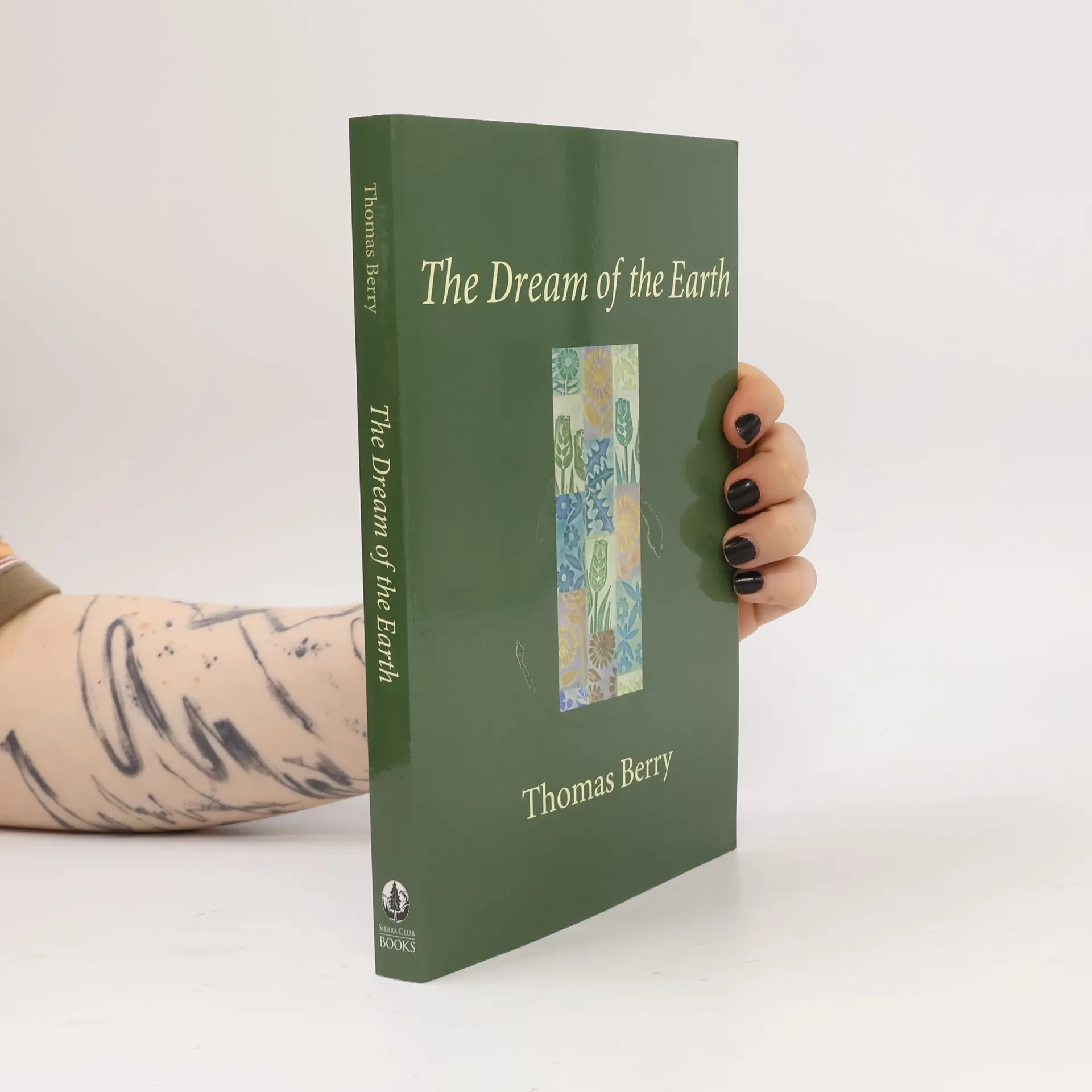
The Dream of the Earth, Thomas Berry
- Język

- Rok wydania
- 1988
- Oprawa
- (miękka)
Metody płatności
Brakuje nam tutaj Twojej recenzji.
- Tytuł
- The Dream of the Earth
- Język
- angielski
- Autorzy
- Thomas Berry
- Wydawca
- Counterpoint
- Rok wydania
- 1988
- Oprawa
- miękka
- Liczba stron
- 264
- ISBN10
- 1578051355
- ISBN13
- 9781578051359
- Seria
- Ocena
- 4,6 z 5
- Opis
- This landmark work, first published by Sierra Club Books in 1988, has established itself as a foundational volume in the ecological canon. In it, noted cultural historian Thomas Berry provides nothing less than a new intellectual-ethical framework for the human community by positing planetary well-being as the measure of all human activity.Drawing on the wisdom of Western philosophy, Asian thought, and Native American traditions, as well as contemporary physics and evolutionary biology, Berry offers a new perspective that recasts our understanding of science, technology, politics, religion, ecology, and education. He shows us why it is important for us to respond to the Earth’s need for planetary renewal, and what we must do to break free of the “technological trance” that drives a misguided dream of progress. Only then, he suggests, can we foster mutually enhancing human-Earth relationships that can heal our traumatized global biosystem.