



Więcej o książce
It's time to reclaim our lives from a world dominated by narcissism, entitlement, and toxic relationships. The phrase "Don't You Know Who I Am?" epitomizes the modern narcissist and reflects a troubling cultural trend. While health campaigns focus on avoiding unhealthy foods and habits, they often overlook the importance of distancing ourselves from toxic individuals. The health benefits of eliminating such people can significantly enhance both physical and mental well-being. We must become vigilant gatekeepers of our minds, bodies, and souls. Narcissism and incivility have become normalized and even rewarded, stemming from deep-rooted insecurities at both personal and societal levels. Paradoxically, we often celebrate these negative traits through social media and consumer culture, with their prevalence evident in leaders across various sectors. Few lives remain untouched by narcissists, whose influence breeds self-doubt, anxiety, and a persistent feeling of inadequacy, making it challenging to establish boundaries. The false hope of change can lead to prolonged cycles of disappointment. A wake-up call is necessary; we must confront the rising tide of narcissism and take back control of our lives.


Zakup książki
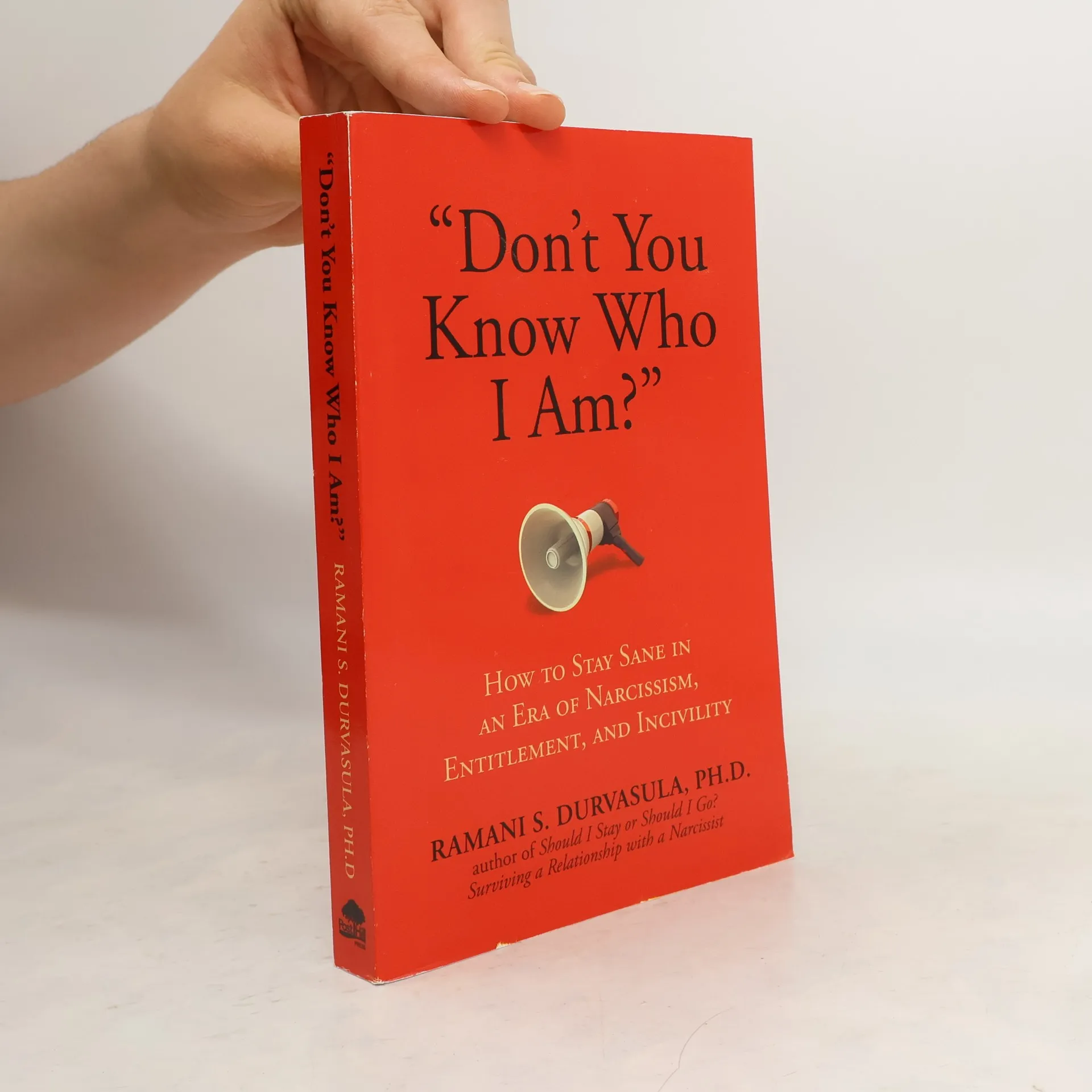
"Don't You Know Who I Am?", Ramani S. Durvasula
- Język

- Rok wydania
- 2021
- Oprawa
- (miękka)
Metody płatności
Brakuje nam tutaj Twojej recenzji.
- Tytuł
- "Don't You Know Who I Am?"
- Język
- angielski
- Autorzy
- Ramani S. Durvasula
- Wydawca
- Post Hill Press
- Rok wydania
- 2021
- Oprawa
- miękka
- Liczba stron
- 400
- ISBN10
- 1642933570
- ISBN13
- 9781642933574
- Seria
- Ocena
- 4,4 z 5
- Opis
- It's time to reclaim our lives from a world dominated by narcissism, entitlement, and toxic relationships. The phrase "Don't You Know Who I Am?" epitomizes the modern narcissist and reflects a troubling cultural trend. While health campaigns focus on avoiding unhealthy foods and habits, they often overlook the importance of distancing ourselves from toxic individuals. The health benefits of eliminating such people can significantly enhance both physical and mental well-being. We must become vigilant gatekeepers of our minds, bodies, and souls. Narcissism and incivility have become normalized and even rewarded, stemming from deep-rooted insecurities at both personal and societal levels. Paradoxically, we often celebrate these negative traits through social media and consumer culture, with their prevalence evident in leaders across various sectors. Few lives remain untouched by narcissists, whose influence breeds self-doubt, anxiety, and a persistent feeling of inadequacy, making it challenging to establish boundaries. The false hope of change can lead to prolonged cycles of disappointment. A wake-up call is necessary; we must confront the rising tide of narcissism and take back control of our lives.