

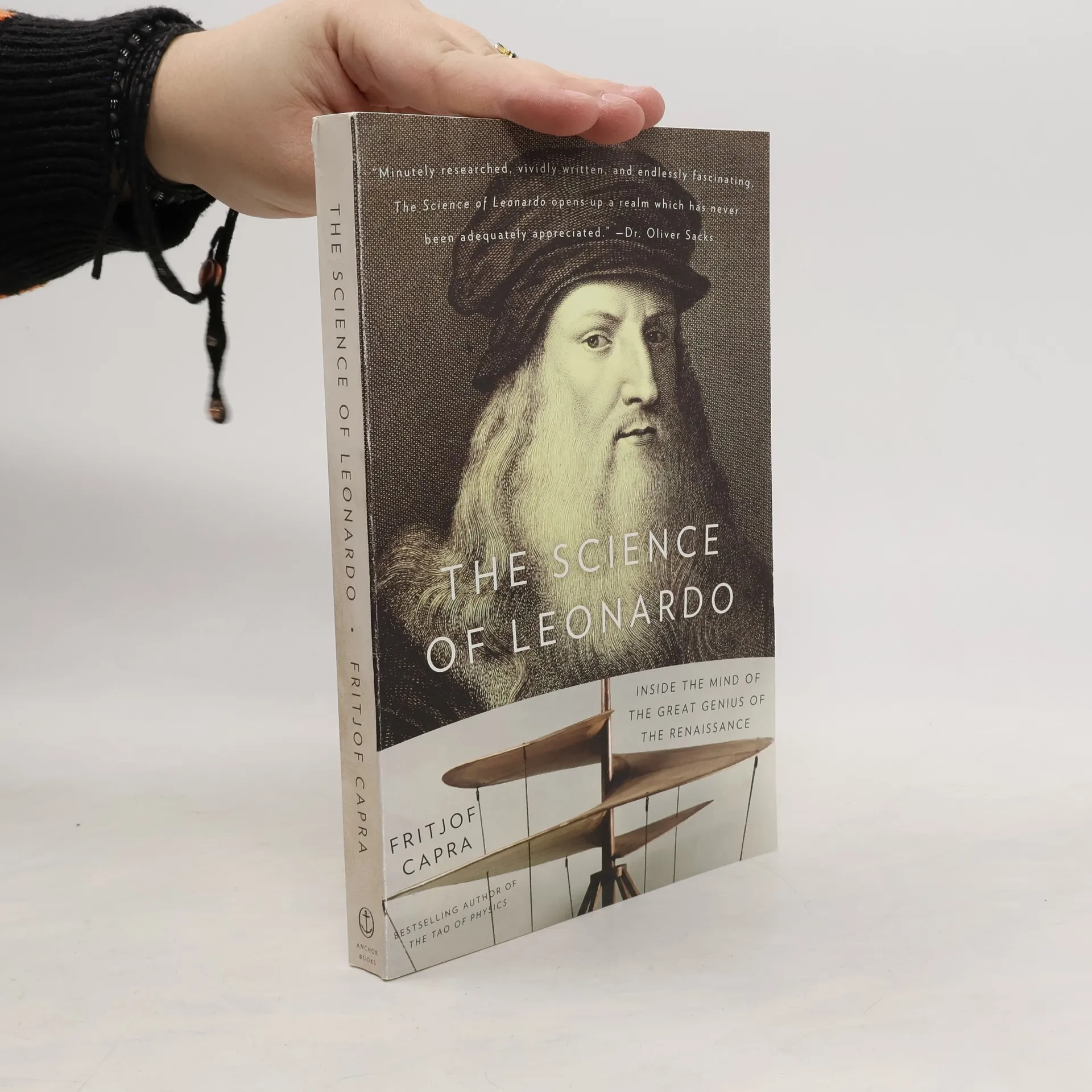


Więcej o książce
Leonardo da Vinci's scientific explorations were virtually unknown during his lifetime, despite their extraordinarily wide range. He studied the flight patterns of birds to create some of the first human flying machines; designed military weapons and defenses; studied optics, hydraulics, and the workings of the human circulatory system; and created designs for rebuilding Milan, employing principles still used by city planners today. Perhaps most importantly, Leonardo pioneered an empirical, systematic approach to the observation of nature-what is known today as the scientific method.Drawing on over 6,000 pages of Leonardo's surviving notebooks, acclaimed scientist and bestselling author Fritjof Capra reveals Leonardo's artistic approach to scientific knowledge and his organic and ecological worldview. In this fascinating portrait of a thinker centuries ahead of his time, Leonardo singularly emerges as the unacknowledged “father of modern science.”



Zakup książki
The Science of Leonardo: Inside the Mind of the Great Genius of the Renaissance, Fritjof Capra
- Język

- Rok wydania
- 2008
- Oprawa
- (miękka)
Metody płatności
Brakuje nam tutaj Twojej recenzji.
- Tytuł
- The Science of Leonardo: Inside the Mind of the Great Genius of the Renaissance
- Język
- angielski
- Autorzy
- Fritjof Capra
- Wydawca
- Anchor
- Rok wydania
- 2008
- Oprawa
- miękka
- Liczba stron
- 329
- ISBN10
- 1400078830
- ISBN13
- 9781400078837
- Seria
- Kategorie
- Ocena
- 3,95 z 5
- Opis
- Leonardo da Vinci's scientific explorations were virtually unknown during his lifetime, despite their extraordinarily wide range. He studied the flight patterns of birds to create some of the first human flying machines; designed military weapons and defenses; studied optics, hydraulics, and the workings of the human circulatory system; and created designs for rebuilding Milan, employing principles still used by city planners today. Perhaps most importantly, Leonardo pioneered an empirical, systematic approach to the observation of nature-what is known today as the scientific method.Drawing on over 6,000 pages of Leonardo's surviving notebooks, acclaimed scientist and bestselling author Fritjof Capra reveals Leonardo's artistic approach to scientific knowledge and his organic and ecological worldview. In this fascinating portrait of a thinker centuries ahead of his time, Leonardo singularly emerges as the unacknowledged “father of modern science.”