


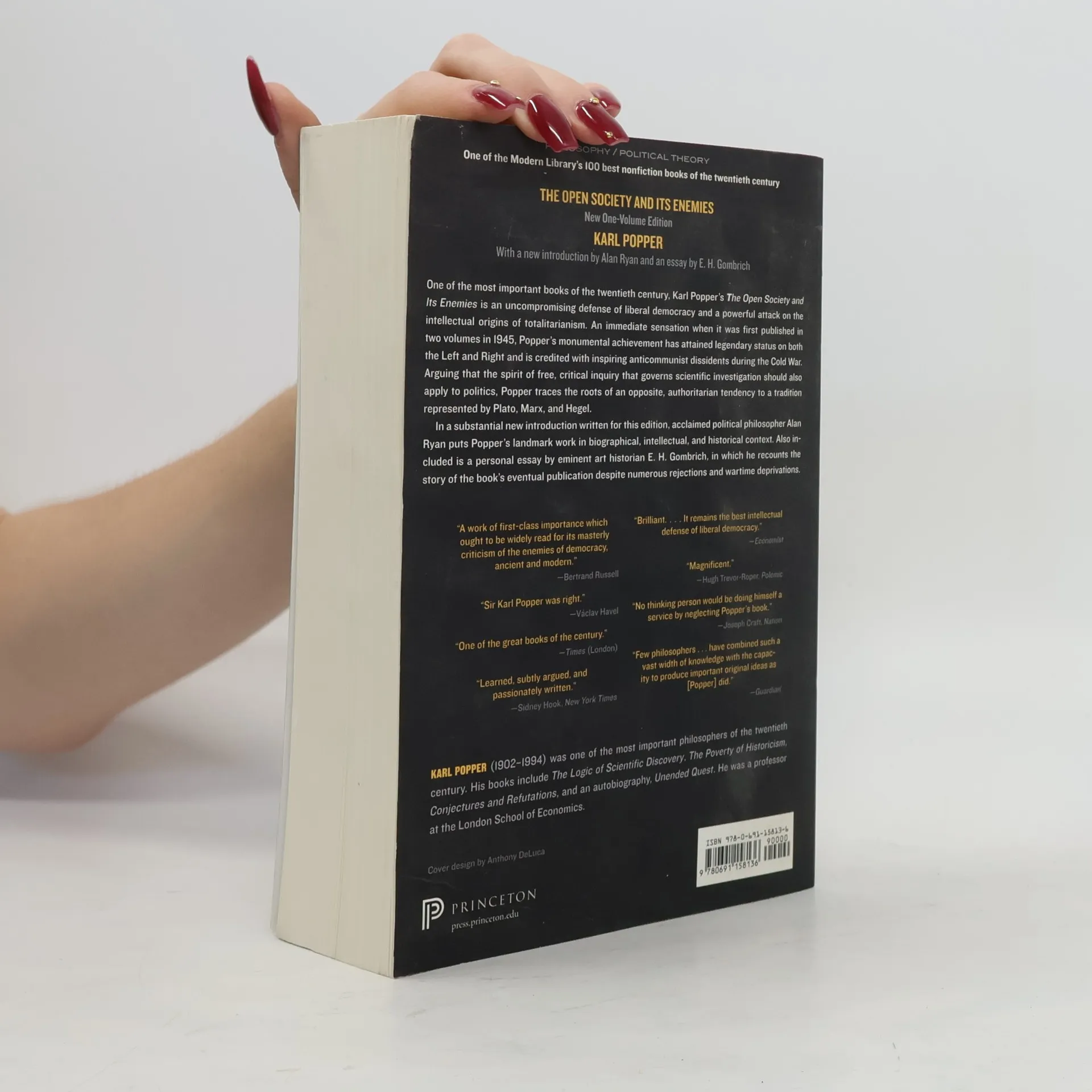

Parametry
- 808 stron
- 29 godzin czytania
Więcej o książce
One of the most significant works of the twentieth century, this book is a staunch defense of liberal democracy and a critical examination of the intellectual foundations of totalitarianism. The author, born in Vienna to a Jewish family in 1902, taught in Austria until 1937, when he emigrated to New Zealand due to the impending Nazi annexation. He later settled in England in 1949. Initially focused on the philosophy of science, he redirected his efforts toward political philosophy during and after World War II, aiming to uncover the intellectual roots of German and Soviet totalitarianism. The book, published in two volumes in 1945, quickly became a sensation and is regarded as a monumental achievement, influencing both the Left and Right and inspiring anti-communist dissidents during the Cold War. The author argues that the principles of free, critical inquiry in science should also apply to politics, linking authoritarian tendencies to philosophical traditions represented by figures like Plato, Marx, and Hegel. This edition features a substantial new introduction by acclaimed political philosopher Alan Ryan, providing biographical, intellectual, and historical context, along with a personal essay by eminent art historian E.H. Gombrich, recounting the book's challenging path to publication amidst numerous rejections and wartime hardships.





Zakup książki
The Open Society and Its Enemies, Karl R. Popper
- Język

- Rok wydania
- 2013
- Oprawa
- (miękka)
Metody płatności
Brakuje nam tutaj Twojej recenzji.
- Tytuł
- The Open Society and Its Enemies
- Język
- angielski
- Autorzy
- Karl R. Popper
- Wydawca
- Princeton University Press
- Rok wydania
- 2013
- Oprawa
- miękka
- Liczba stron
- 808
- ISBN13
- 9780691158136
- Seria
- Kategorie
- Ocena
- 4,15 z 5
- Opis
- One of the most significant works of the twentieth century, this book is a staunch defense of liberal democracy and a critical examination of the intellectual foundations of totalitarianism. The author, born in Vienna to a Jewish family in 1902, taught in Austria until 1937, when he emigrated to New Zealand due to the impending Nazi annexation. He later settled in England in 1949. Initially focused on the philosophy of science, he redirected his efforts toward political philosophy during and after World War II, aiming to uncover the intellectual roots of German and Soviet totalitarianism. The book, published in two volumes in 1945, quickly became a sensation and is regarded as a monumental achievement, influencing both the Left and Right and inspiring anti-communist dissidents during the Cold War. The author argues that the principles of free, critical inquiry in science should also apply to politics, linking authoritarian tendencies to philosophical traditions represented by figures like Plato, Marx, and Hegel. This edition features a substantial new introduction by acclaimed political philosopher Alan Ryan, providing biographical, intellectual, and historical context, along with a personal essay by eminent art historian E.H. Gombrich, recounting the book's challenging path to publication amidst numerous rejections and wartime hardships.