





Więcej o książce
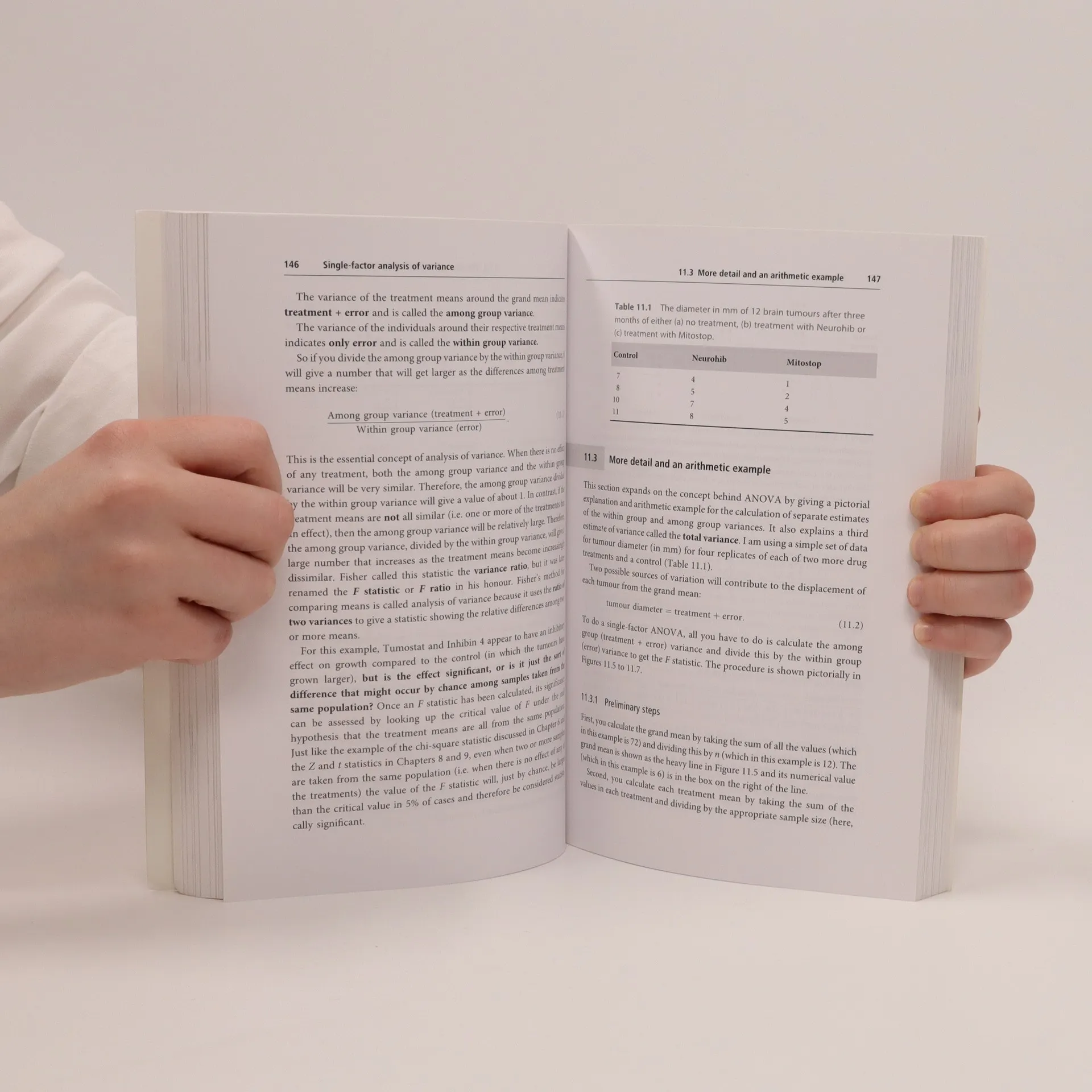
An understanding of statistics and experimental design is essential for life science studies, but many students lack a mathematical background and some even dread taking an introductory statistics course. Using a refreshingly clear and encouraging reader-friendly approach, this book helps students understand how to choose, carry out, interpret and report the results of complex statistical analyses, critically evaluate the design of experiments and proceed to more advanced material. Taking a straightforward conceptual approach, it is specifically designed to foster understanding, demystify difficult concepts and encourage the unsure. Even complex topics are explained clearly, using a pictorial approach with a minimum of formulae and terminology. Examples of tests included throughout are kept simple by using small data sets. In addition, end-of-chapter exercises, new to this edition, allow self-testing. Handy diagnostic tables help students choose the right test for their work and remain a useful refresher tool for postgraduates.
Zakup książki
Statistics Explained: An Introductory Guide for Life Scientists, Steve McKillup
- Język

- Rok wydania
- 2012
- Oprawa
- (miękka)
Metody płatności
Brakuje nam tutaj Twojej recenzji.
- Tytuł
- Statistics Explained: An Introductory Guide for Life Scientists
- Język
- angielski
- Autorzy
- Steve McKillup
- Wydawca
- Cambridge University Press
- Rok wydania
- 2012
- Oprawa
- miękka
- ISBN10
- 0521183286
- ISBN13
- 9780521183284
- Seria
- Tagi
- Nauka
- Ocena
- 4,35 z 5
- Opis
- An understanding of statistics and experimental design is essential for life science studies, but many students lack a mathematical background and some even dread taking an introductory statistics course. Using a refreshingly clear and encouraging reader-friendly approach, this book helps students understand how to choose, carry out, interpret and report the results of complex statistical analyses, critically evaluate the design of experiments and proceed to more advanced material. Taking a straightforward conceptual approach, it is specifically designed to foster understanding, demystify difficult concepts and encourage the unsure. Even complex topics are explained clearly, using a pictorial approach with a minimum of formulae and terminology. Examples of tests included throughout are kept simple by using small data sets. In addition, end-of-chapter exercises, new to this edition, allow self-testing. Handy diagnostic tables help students choose the right test for their work and remain a useful refresher tool for postgraduates.