


Ocena książki
Więcej o książce
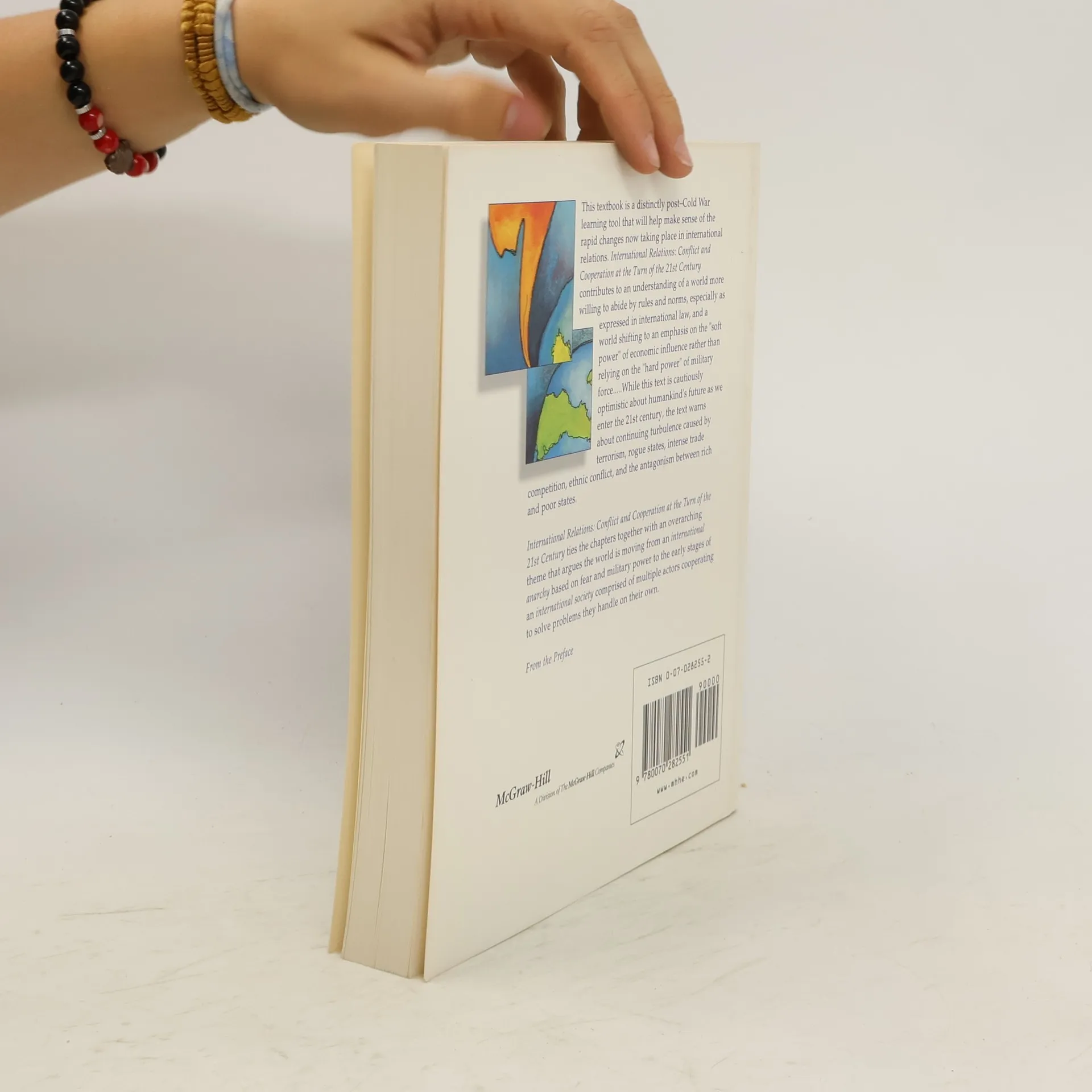
This text is a distinctly post-Cold War learning tool that will help make sense of the rapid changes now taking place in international relations. The author's goal is to contribute to an understanding of a world more willing to abide by rules and norms, especially as expressed in international law, and a world shifting to an emphasis on the "soft power" of economic influence rather than relying on the "hard power" of military force. While this text is cautiously optimistic about humankind's future as we enter the 21st century, it warns about continuing turbulence caused by terrorism, rogue states, intense trade competition, ethnic conflict, and the antogonism between rich and poor states. The chapters are tied together with an overarching theme that argues the world is moving from an international anarchy based on fear and military power to the early stages of an international society comprised of multiple actors cooperating to solve problems they handle on their own.
Zakup książki
International Relations. Conflict and Cooperation at the Turn of the 21st Century, Conway W. Henderson
- Język

- Rok wydania
- 1998
- Oprawa
- (miękka)
Metody płatności
Brakuje nam tutaj Twojej recenzji.
- Tytuł
- International Relations. Conflict and Cooperation at the Turn of the 21st Century
- Język
- angielski
- Autorzy
- Conway W. Henderson
- Wydawca
- McGraw-Hill
- Rok wydania
- 1998
- Oprawa
- miękka
- Liczba stron
- 532
- ISBN10
- 0070282552
- ISBN13
- 9780070282551
- Seria
- Ocena
- 4,25 z 5
- Opis
- This text is a distinctly post-Cold War learning tool that will help make sense of the rapid changes now taking place in international relations. The author's goal is to contribute to an understanding of a world more willing to abide by rules and norms, especially as expressed in international law, and a world shifting to an emphasis on the "soft power" of economic influence rather than relying on the "hard power" of military force. While this text is cautiously optimistic about humankind's future as we enter the 21st century, it warns about continuing turbulence caused by terrorism, rogue states, intense trade competition, ethnic conflict, and the antogonism between rich and poor states. The chapters are tied together with an overarching theme that argues the world is moving from an international anarchy based on fear and military power to the early stages of an international society comprised of multiple actors cooperating to solve problems they handle on their own.