




Więcej o książce
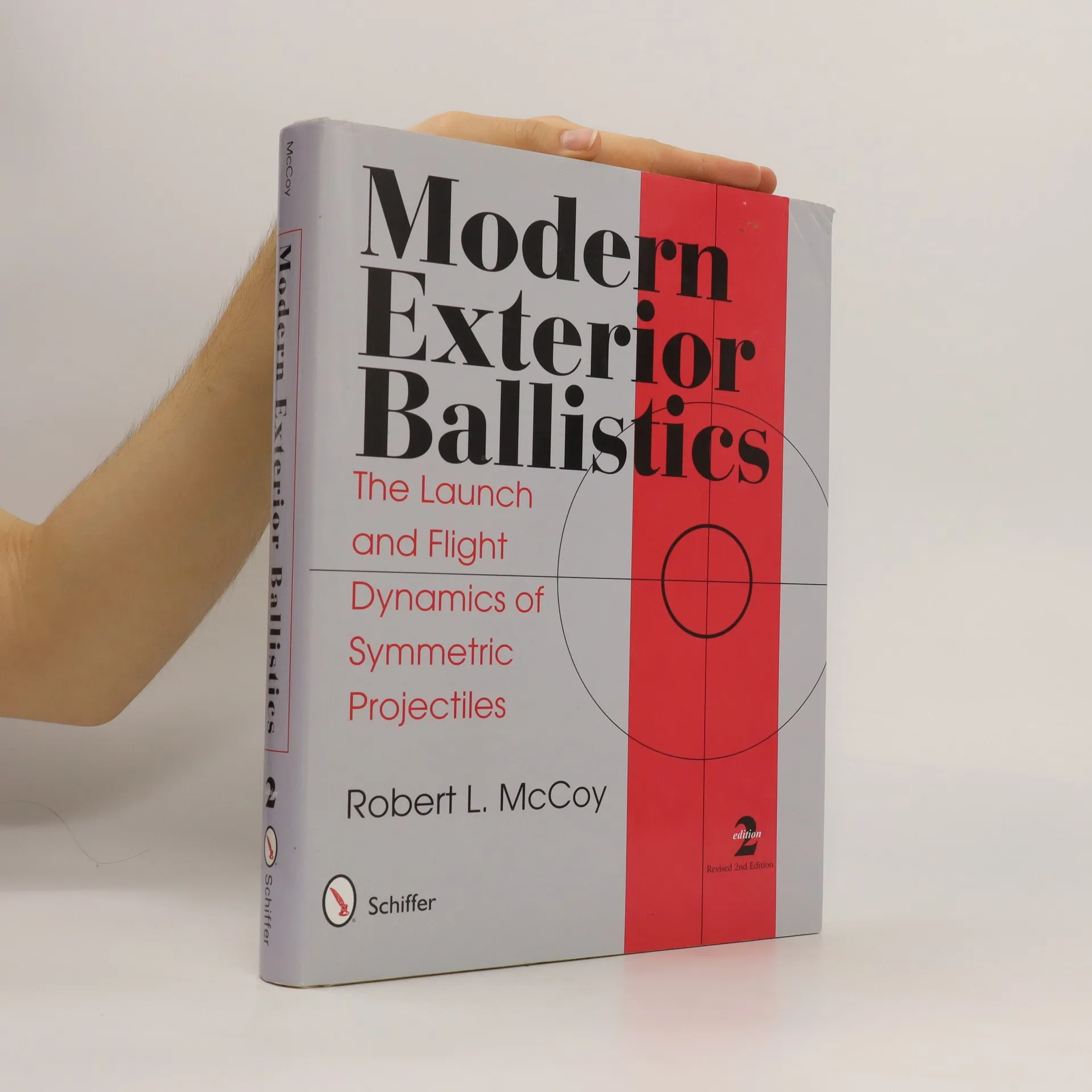
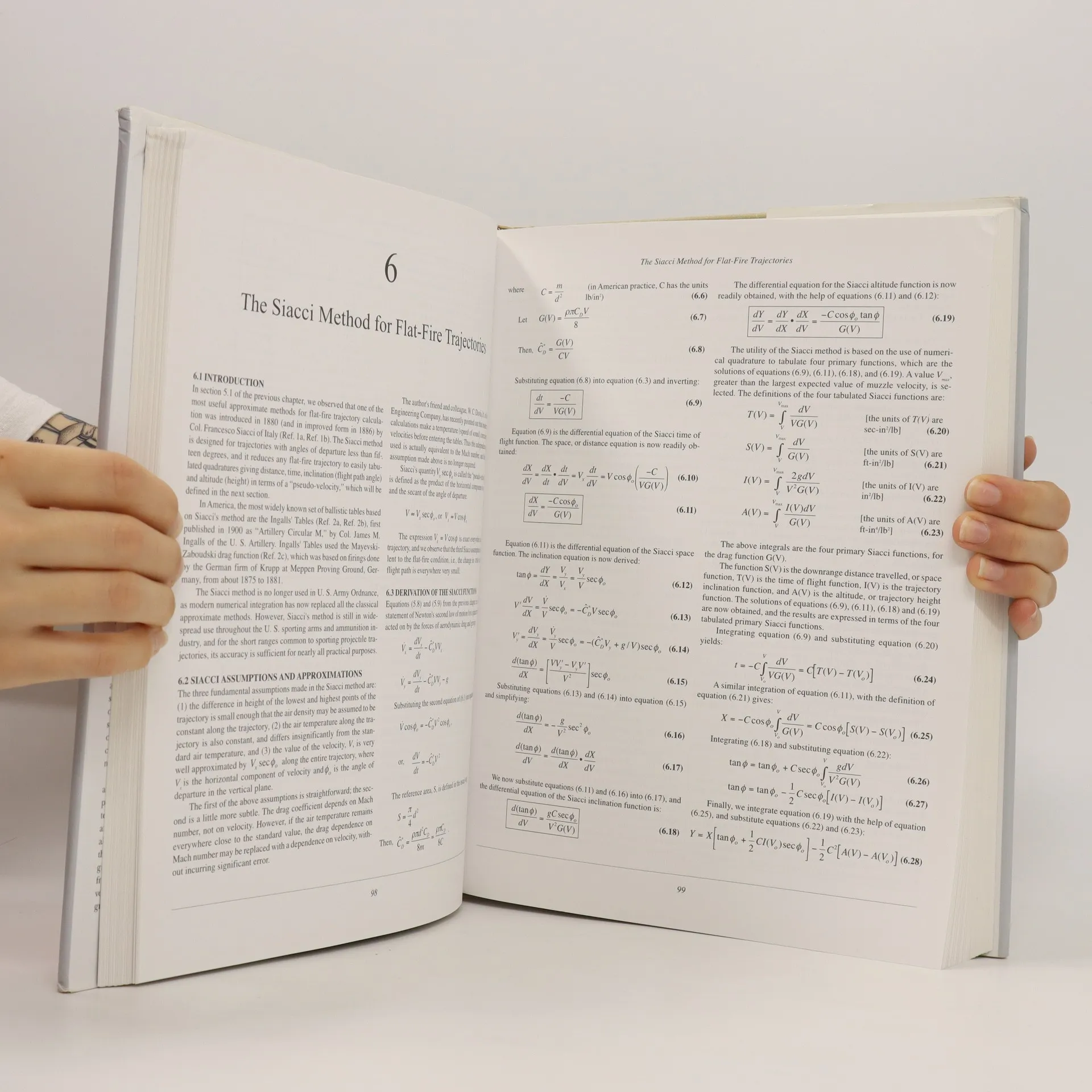
This comprehensive text covers the basic free flight dynamics of symmetric projectiles, offering a historical overview from the 19th century through World War II to the modern era. It discusses early ballistic firing tables, wind tunnel experiments, the development of free flight spark ranges, and the creation of ENIAC, the first supercomputer for computing artillery trajectories. The content is geared toward readers with an undergraduate background in mathematics, physics, or engineering. The book develops fundamental principles of ballistic science, starting with vacuum point mass trajectories and incorporating drag effects, wind actions, flat fire approximations, Coriolis effects, and modified point mass trajectories. It includes analytical methods, variable changes, numerical solutions, and a chapter on the Siacci Method, which historically computes flat fire trajectories and is relevant in the sporting arms industry. Subsequent chapters provide a detailed analysis of symmetric projectile motion, including angular and swerving motion, mass asymmetry, in-bore yaw, crosswinds, and aerodynamic jump. Nonlinear aerodynamic forces and moments are also examined. The final chapter reviews experimental methods for measuring projectile flight dynamics. The author enriches the text with specific examples and a valuable collection of data on projectiles, complemented by a unique set of flow field shadow graphs illustrating projecti
Zakup książki
Modern Exterior Ballistics, Robert L. McCoy
- Język

- Rok wydania
- 2012
- Oprawa
- (twarda)
Metody płatności
Brakuje nam tutaj Twojej recenzji.
- Tytuł
- Modern Exterior Ballistics
- Język
- angielski
- Autorzy
- Robert L. McCoy
- Wydawca
- Schiffer Pub Limited
- Rok wydania
- 2012
- Oprawa
- twarda
- Liczba stron
- 328
- ISBN10
- 0764338250
- ISBN13
- 9780764338250
- Seria
- Tagi
- Kryminalistyka
- Ocena
- 4 z 5
- Opis
- This comprehensive text covers the basic free flight dynamics of symmetric projectiles, offering a historical overview from the 19th century through World War II to the modern era. It discusses early ballistic firing tables, wind tunnel experiments, the development of free flight spark ranges, and the creation of ENIAC, the first supercomputer for computing artillery trajectories. The content is geared toward readers with an undergraduate background in mathematics, physics, or engineering. The book develops fundamental principles of ballistic science, starting with vacuum point mass trajectories and incorporating drag effects, wind actions, flat fire approximations, Coriolis effects, and modified point mass trajectories. It includes analytical methods, variable changes, numerical solutions, and a chapter on the Siacci Method, which historically computes flat fire trajectories and is relevant in the sporting arms industry. Subsequent chapters provide a detailed analysis of symmetric projectile motion, including angular and swerving motion, mass asymmetry, in-bore yaw, crosswinds, and aerodynamic jump. Nonlinear aerodynamic forces and moments are also examined. The final chapter reviews experimental methods for measuring projectile flight dynamics. The author enriches the text with specific examples and a valuable collection of data on projectiles, complemented by a unique set of flow field shadow graphs illustrating projecti