

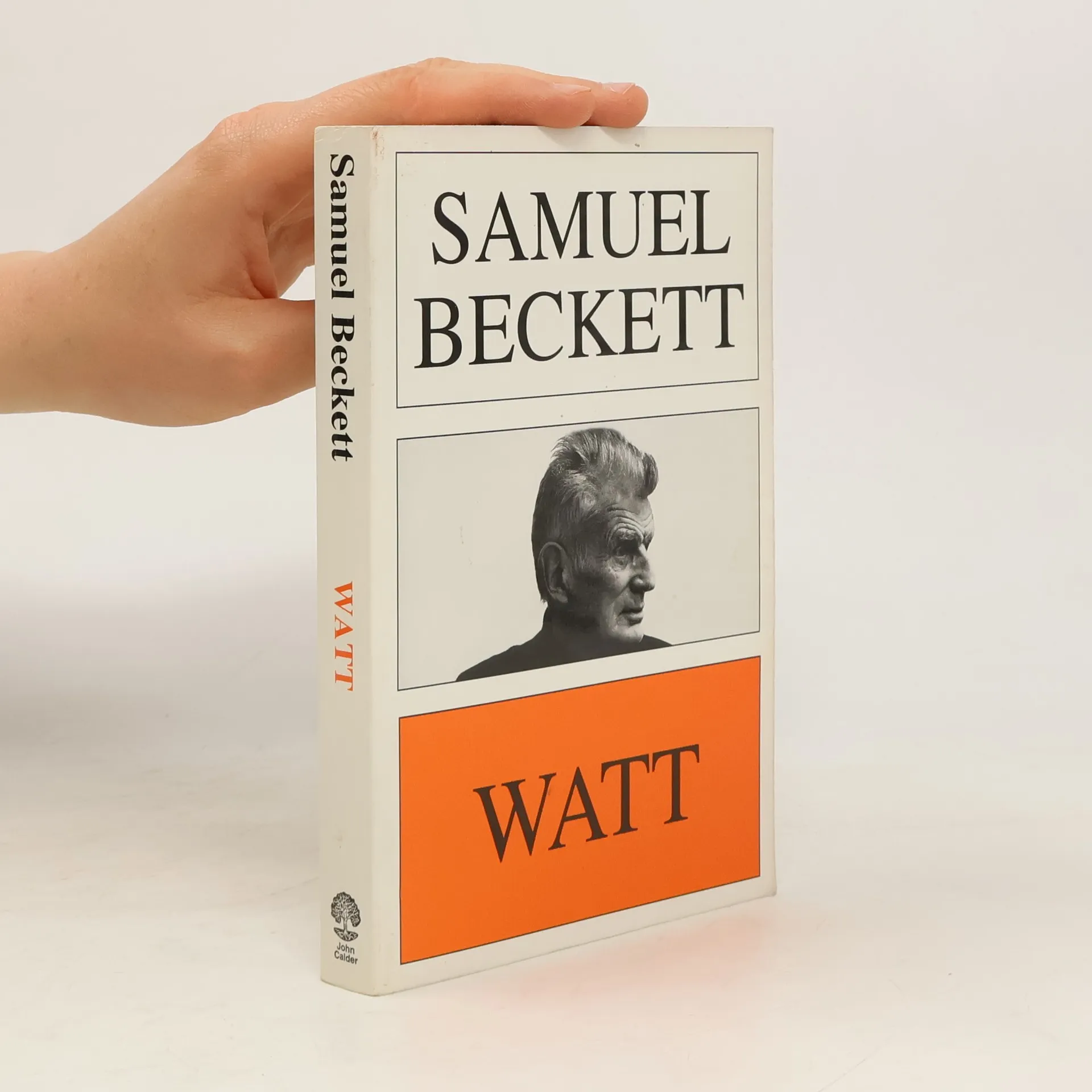
Więcej o książce
Fiction. WATT was the beginning of Samuel Becket's post-war literary career, the fruition of the years in hiding in the Vaucluse mountains from the Gestapo, which also largely inspired WAITING FOR GODOT. But it remains, unlike the work that followed it, extremely Irish, a philosophical novel full of the grim humour that was already his trade-mark in such earlier fictions as MORE PRICKS THAN KICKS and MURPHY. The perambulations of WATT, especially in the home of the eccentric Mr. Knott, and the sketching of logic to elicit meaning, must be among the most comic inventions of modern literature. First published by the libertine Olympia Press in 1953, it has established itself as one of the most quoted and best-loved of Becket's novels. The typographical oddities and omissions are as Beckett left the text.





Zakup książki
Watt, Samuel Beckett
- Język

- Rok wydania
- 1963
- Oprawa
- (miękka)
Metody płatności
Brakuje nam tutaj Twojej recenzji.
- Tytuł
- Watt
- Język
- angielski
- Autorzy
- Samuel Beckett
- Wydawca
- Riverrun Press
- Rok wydania
- 1963
- Oprawa
- miękka
- Liczba stron
- 256
- ISBN10
- 0714506109
- ISBN13
- 9780714506104
- Seria
- Tagi
- Tematy historyczne, XX wiek, Literatura brytyjska, Irlandia, Literatura irlandzka, Nagroda Nobla
- Pierwsze wydanie
- 1953
- Oryginalna nazwa
- Watt
- Ocena
- 3,95 z 5
- Opis
- Fiction. WATT was the beginning of Samuel Becket's post-war literary career, the fruition of the years in hiding in the Vaucluse mountains from the Gestapo, which also largely inspired WAITING FOR GODOT. But it remains, unlike the work that followed it, extremely Irish, a philosophical novel full of the grim humour that was already his trade-mark in such earlier fictions as MORE PRICKS THAN KICKS and MURPHY. The perambulations of WATT, especially in the home of the eccentric Mr. Knott, and the sketching of logic to elicit meaning, must be among the most comic inventions of modern literature. First published by the libertine Olympia Press in 1953, it has established itself as one of the most quoted and best-loved of Becket's novels. The typographical oddities and omissions are as Beckett left the text.