

Więcej o książce
Instructors appreciate this text for its ease of teaching, while students benefit from its clear explanations and examples. The sixth edition maintains effective instructional techniques, introducing each section with Motivation, Mathematical Background, and Orientation to engage students with upcoming problems. Each part concludes with an Epilogue that includes Trade-Offs, Important Relationships and Formulas, and Advanced Methods, enhancing understanding and providing insights into more advanced topics. Helpful appendices, such as "Getting Started with MATLAB" and "Getting Started with Mathcad," serve as excellent references. The text features numerous new or revised problems drawn from real engineering practice, including exciting areas like bioengineering. The expanded coverage of engineering disciplines is particularly evident in the problems, which now encompass biotechnology and biomedical engineering. New examples and case studies across all engineering fields enable students to apply their skills effectively. Additionally, the text incorporates the use of software packages, specifically MATLAB(R), Excel(R) with VBA, and Mathcad(R), including guidance on developing MATLAB(R) m-files and VBA macros, making it a comprehensive resource for engineering students.


Zakup książki
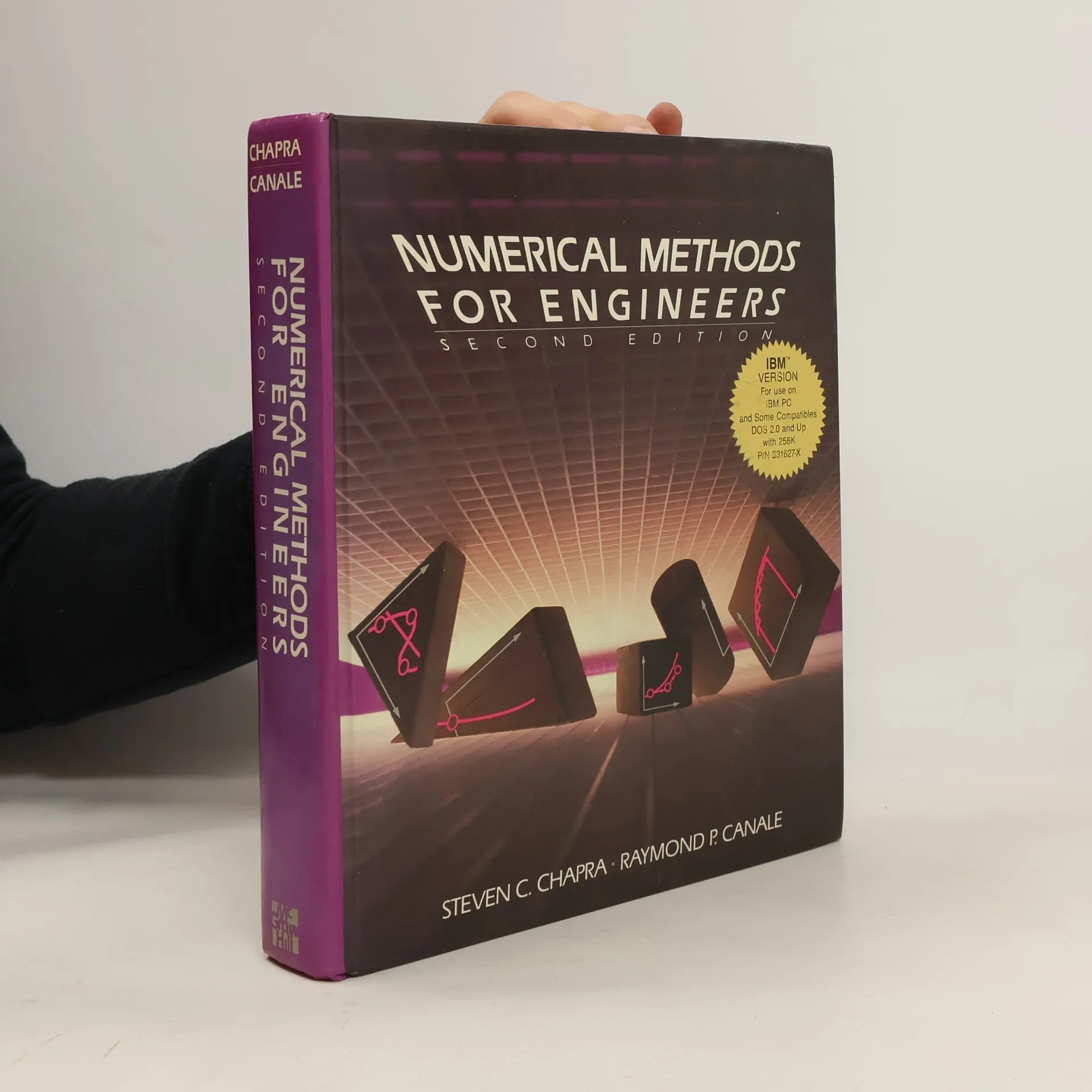
Numerical Methods for Engineers, Steven C. Chapra, Raymond P. Canale
- Język

- Rok wydania
- 1988
- Oprawa
- (twarda)
Metody płatności
Brakuje nam tutaj Twojej recenzji.
- Tytuł
- Numerical Methods for Engineers
- Podtytuł
- Second Edition
- Język
- angielski
- Autorzy
- Steven C. Chapra, Raymond P. Canale
- Wydawca
- McGraw-Hill College
- Rok wydania
- 1988
- Oprawa
- twarda
- Liczba stron
- 812
- ISBN10
- 0070799849
- ISBN13
- 9780070799844
- Seria
- Kategorie
- Ocena
- 3,95 z 5
- Opis
- Instructors appreciate this text for its ease of teaching, while students benefit from its clear explanations and examples. The sixth edition maintains effective instructional techniques, introducing each section with Motivation, Mathematical Background, and Orientation to engage students with upcoming problems. Each part concludes with an Epilogue that includes Trade-Offs, Important Relationships and Formulas, and Advanced Methods, enhancing understanding and providing insights into more advanced topics. Helpful appendices, such as "Getting Started with MATLAB" and "Getting Started with Mathcad," serve as excellent references. The text features numerous new or revised problems drawn from real engineering practice, including exciting areas like bioengineering. The expanded coverage of engineering disciplines is particularly evident in the problems, which now encompass biotechnology and biomedical engineering. New examples and case studies across all engineering fields enable students to apply their skills effectively. Additionally, the text incorporates the use of software packages, specifically MATLAB(R), Excel(R) with VBA, and Mathcad(R), including guidance on developing MATLAB(R) m-files and VBA macros, making it a comprehensive resource for engineering students.