



Parametry
Więcej o książce
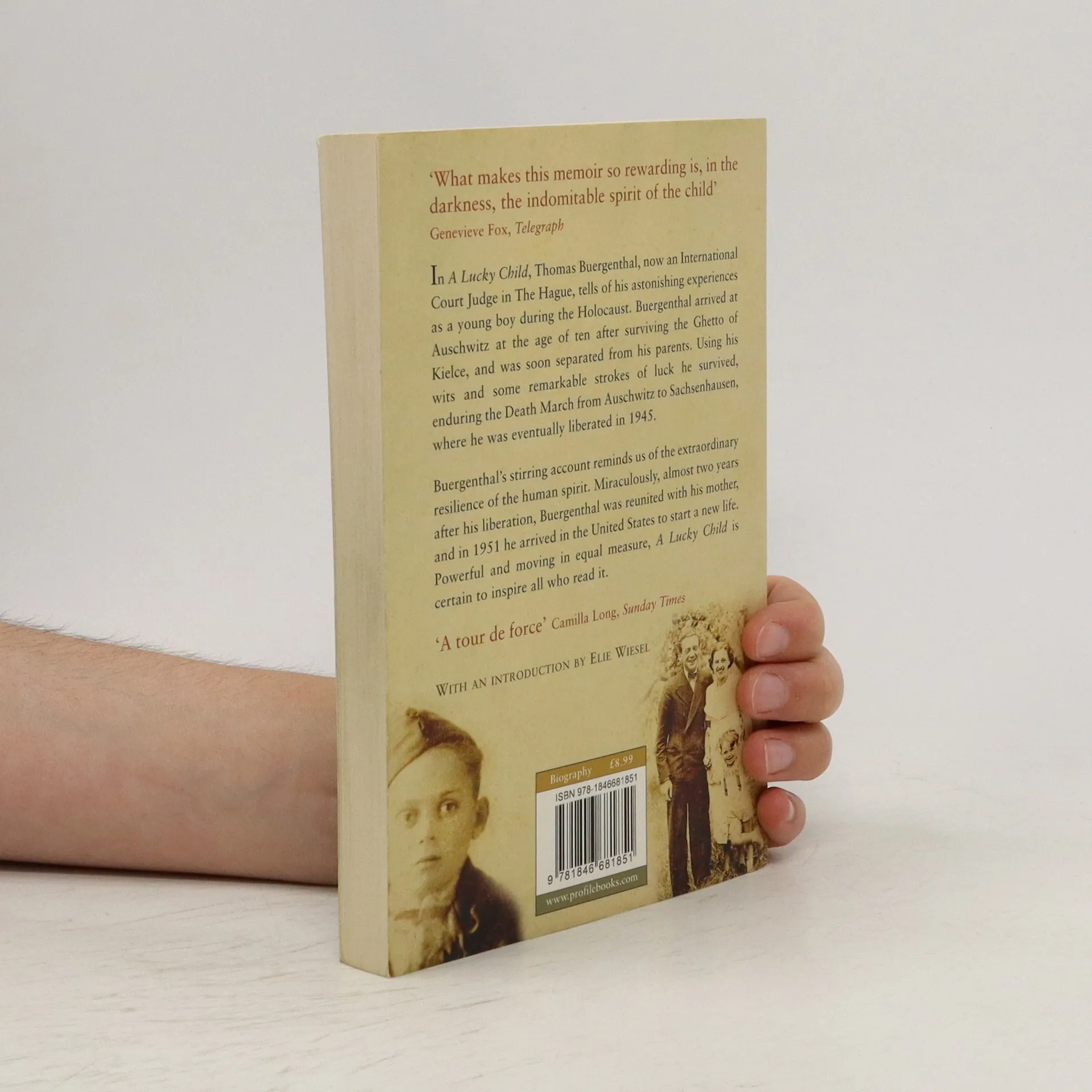
At the age of ten Thomas Buergenthal arrived at Auschwitz after surviving the Ghetto of Kielce and two labour camps, and was soon separated from his parents. Using his wits and some remarkable strokes of luck, he managed to survive until he was liberated from Sachsenhausen in 1945. After experiencing the turmoil of Europe's post-war years - from the Battle of Berlin, to a Jewish orphanage in Poland - Buergenthal went to America in the 1950s at the age of seventeen. He eventually became one of the world's leading experts on international law and human rights. His story of survival and his determination to use law and justice to prevent further genocide is an epic and inspirational journey through 20th Century history. His book is both a special historical document and a great literary achievement, comparable only to Primo Levi's masterpieces.




Zakup książki
A Lucky Child, Thomas Buergenthal
- Język

- Rok wydania
- 2010
- Oprawa
- (miękka)
Metody płatności
Brakuje nam tutaj Twojej recenzji.
- Tytuł
- A Lucky Child
- Język
- angielski
- Autorzy
- Thomas Buergenthal
- Wydawca
- Profile Books(GB)
- Rok wydania
- 2010
- Oprawa
- miękka
- ISBN10
- 1846681855
- ISBN13
- 9781846681851
- Seria
- Kategorie
- Tagi
- Niemcy, Fikcja wojenna, II Wojna Światowa, Wspomnienia, Rodzicielstwo, Żydzi, Holokaust, Szczęście, Dzieciństwo, Przetrwanie, Oparte na faktach, Obozy koncentracyjne, Getto, Historie wojen
- Pierwsze wydanie
- 2006
- Oryginalna nazwa
- A lucky child
- Ocena
- 4,15 z 5
- Opis
- At the age of ten Thomas Buergenthal arrived at Auschwitz after surviving the Ghetto of Kielce and two labour camps, and was soon separated from his parents. Using his wits and some remarkable strokes of luck, he managed to survive until he was liberated from Sachsenhausen in 1945. After experiencing the turmoil of Europe's post-war years - from the Battle of Berlin, to a Jewish orphanage in Poland - Buergenthal went to America in the 1950s at the age of seventeen. He eventually became one of the world's leading experts on international law and human rights. His story of survival and his determination to use law and justice to prevent further genocide is an epic and inspirational journey through 20th Century history. His book is both a special historical document and a great literary achievement, comparable only to Primo Levi's masterpieces.