

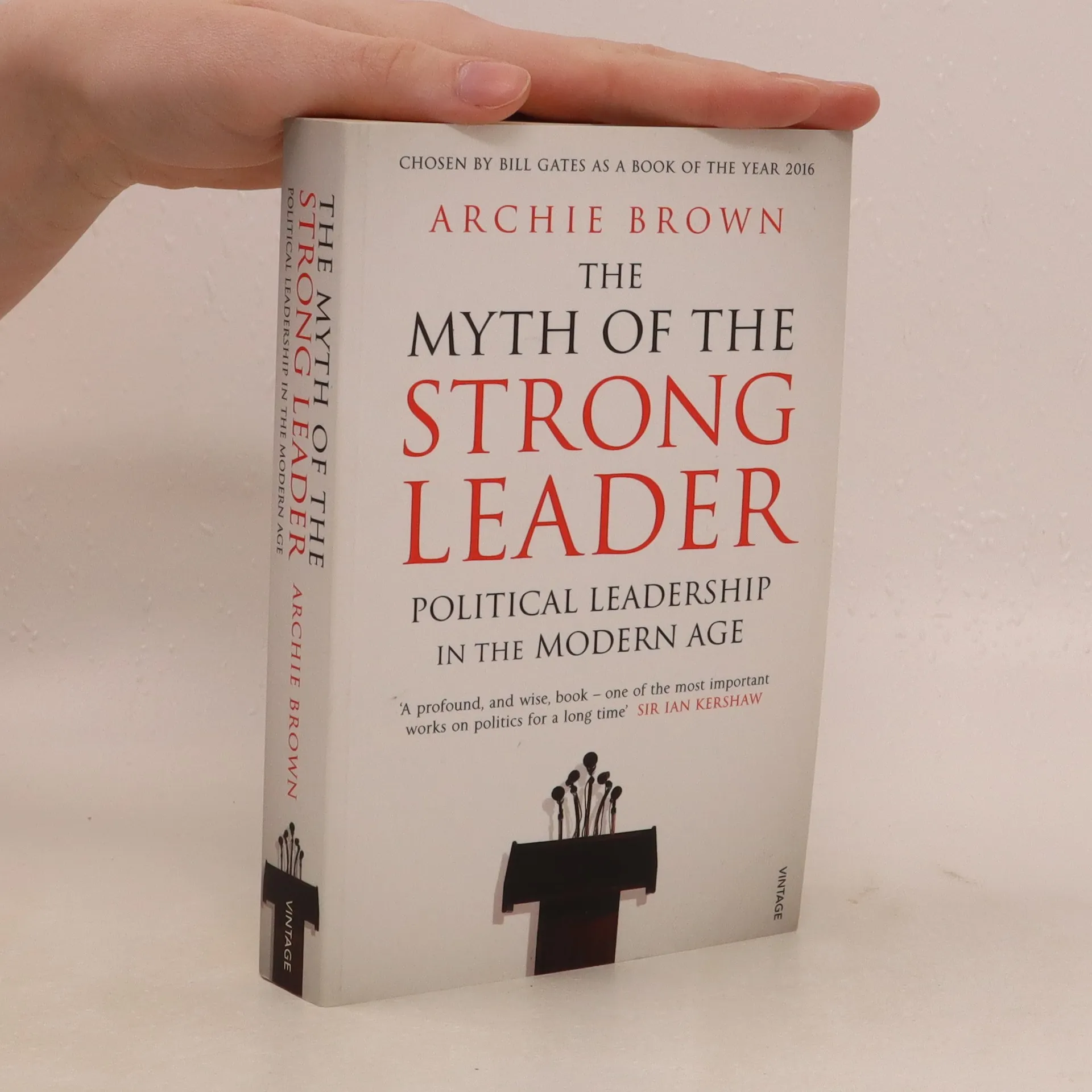



Więcej o książce
CHOSEN BY BILL GATES AS A BOOK OF THE YEAR 2016 Archie Brown challenges the widespread belief that 'strong leaders', dominate individual wielders of power, are the most successful and admirable. Within authoritarian regimes, a collective leadership is a lesser evil compared with a personal dictatorship. Within democracies, although 'strong leaders' are seldom as strong or independent as they purport to be, the idea that just one person is entitled to take the big decisions is harmful and should be resisted. Examining Franklin D. Roosevelt and Mikhail Gorbachev, Deng Xiaoping and Nelson Mandela, Margaret Thatcher and Tony Blair amongst many others, this landmark study pinpoints different types and qualities of leadership. Overturning the popular notion of the strong leader, it makes us rethink preconceptions about what it means to lead.


Zakup książki
The myth of the strong leader, Archie Brown
- Język

- Rok wydania
- 2015
- Oprawa
- (miękka)
Metody płatności
Brakuje nam tutaj Twojej recenzji.
- Tytuł
- The myth of the strong leader
- Język
- angielski
- Autorzy
- Archie Brown
- Wydawca
- Vintage
- Rok wydania
- 2015
- Oprawa
- miękka
- ISBN10
- 0099554852
- ISBN13
- 9780099554851
- Seria
- Kategorie
- Tagi
- Tematy historyczne, Biznes, Tematyka filozoficzna, Polityka, XX wiek, Prezenty dla dziadka, Przywództwo, Demokracja
- Ocena
- 3,75 z 5
- Opis
- CHOSEN BY BILL GATES AS A BOOK OF THE YEAR 2016 Archie Brown challenges the widespread belief that 'strong leaders', dominate individual wielders of power, are the most successful and admirable. Within authoritarian regimes, a collective leadership is a lesser evil compared with a personal dictatorship. Within democracies, although 'strong leaders' are seldom as strong or independent as they purport to be, the idea that just one person is entitled to take the big decisions is harmful and should be resisted. Examining Franklin D. Roosevelt and Mikhail Gorbachev, Deng Xiaoping and Nelson Mandela, Margaret Thatcher and Tony Blair amongst many others, this landmark study pinpoints different types and qualities of leadership. Overturning the popular notion of the strong leader, it makes us rethink preconceptions about what it means to lead.