

Więcej o książce
Armed with the insights of the scientific revolution, the men of the Enlightenment set out to free mankind from its age-old cocoon of pessimism and superstition and establish a more reasonable world of experiment and progress. Yet by the 1760s, this optimism about man and society had almost evaporated. In the works of Rousseau, Kant and Goethe, there was discernible a new inner voice, and an awareness of individual uniqueness which had eluded their more self-confident predecessors. The stage was set for the revolutionary crisis and the rise of Romanticism. In this book, Norman Hampson follows through certain dominant themes in the Enlightenment, and describes the contemporary social and political climate, in which ideas could travel from the salons of Paris to the court of Catherine the Great - but less easily from a master to his servant. On such vexed issues as the role of ideas in the "rise of the middle class" he provides a new and realistic approach linking intellectual and social history.


Zakup książki
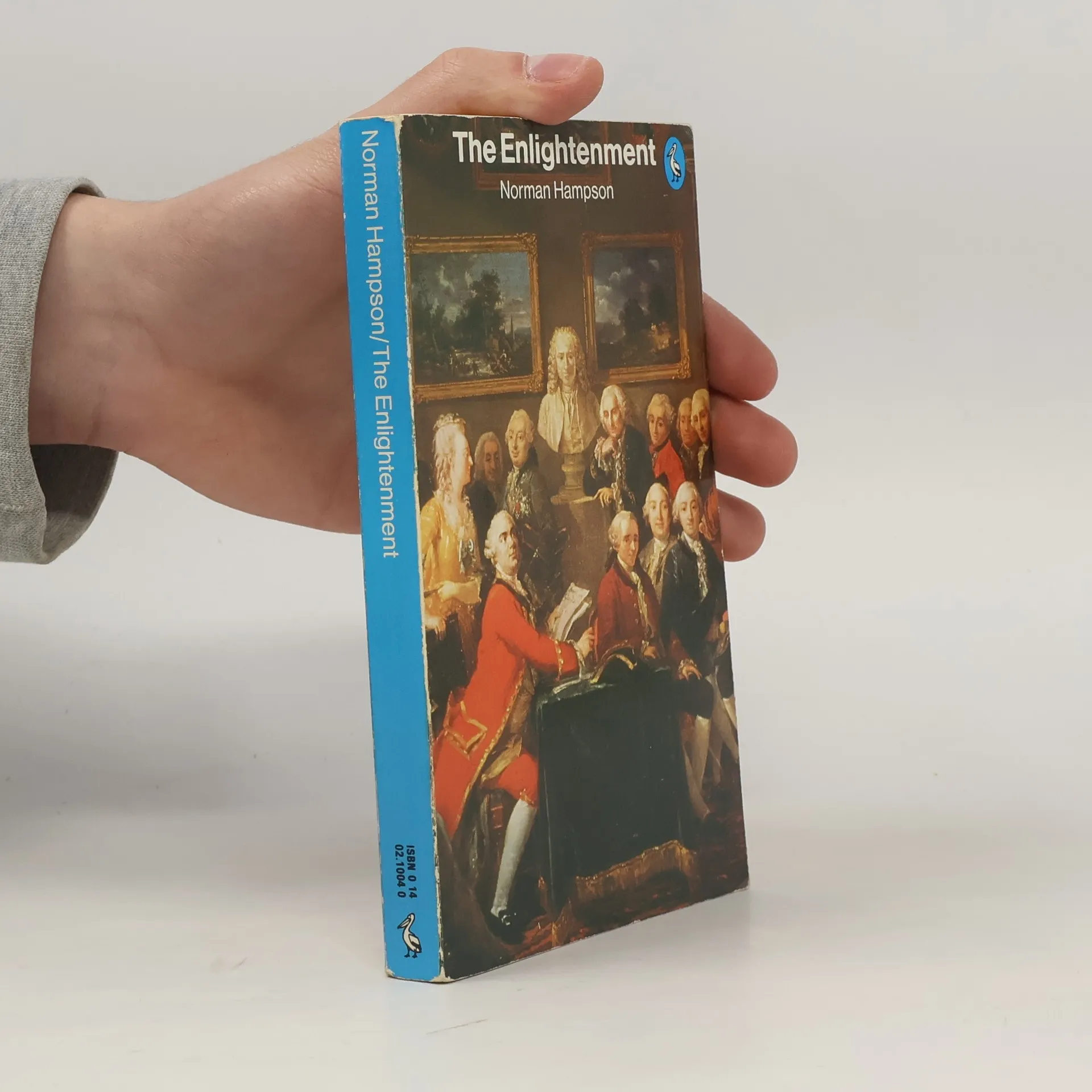
The Enlightenment, Norman Hampson
- Język

- Rok wydania
- 1982
- Oprawa
- (miękka)
Metody płatności
Brakuje nam tutaj Twojej recenzji.
- Tytuł
- The Enlightenment
- Język
- angielski
- Autorzy
- Norman Hampson
- Wydawca
- Penguin
- Rok wydania
- 1982
- Oprawa
- miękka
- Liczba stron
- 304
- ISBN10
- 0140210040
- ISBN13
- 9780140210040
- Seria
- Kategorie
- Ocena
- 3,65 z 5
- Opis
- Armed with the insights of the scientific revolution, the men of the Enlightenment set out to free mankind from its age-old cocoon of pessimism and superstition and establish a more reasonable world of experiment and progress. Yet by the 1760s, this optimism about man and society had almost evaporated. In the works of Rousseau, Kant and Goethe, there was discernible a new inner voice, and an awareness of individual uniqueness which had eluded their more self-confident predecessors. The stage was set for the revolutionary crisis and the rise of Romanticism. In this book, Norman Hampson follows through certain dominant themes in the Enlightenment, and describes the contemporary social and political climate, in which ideas could travel from the salons of Paris to the court of Catherine the Great - but less easily from a master to his servant. On such vexed issues as the role of ideas in the "rise of the middle class" he provides a new and realistic approach linking intellectual and social history.