


Parametry
- 352 strony
- 13 godzin czytania
Więcej o książce
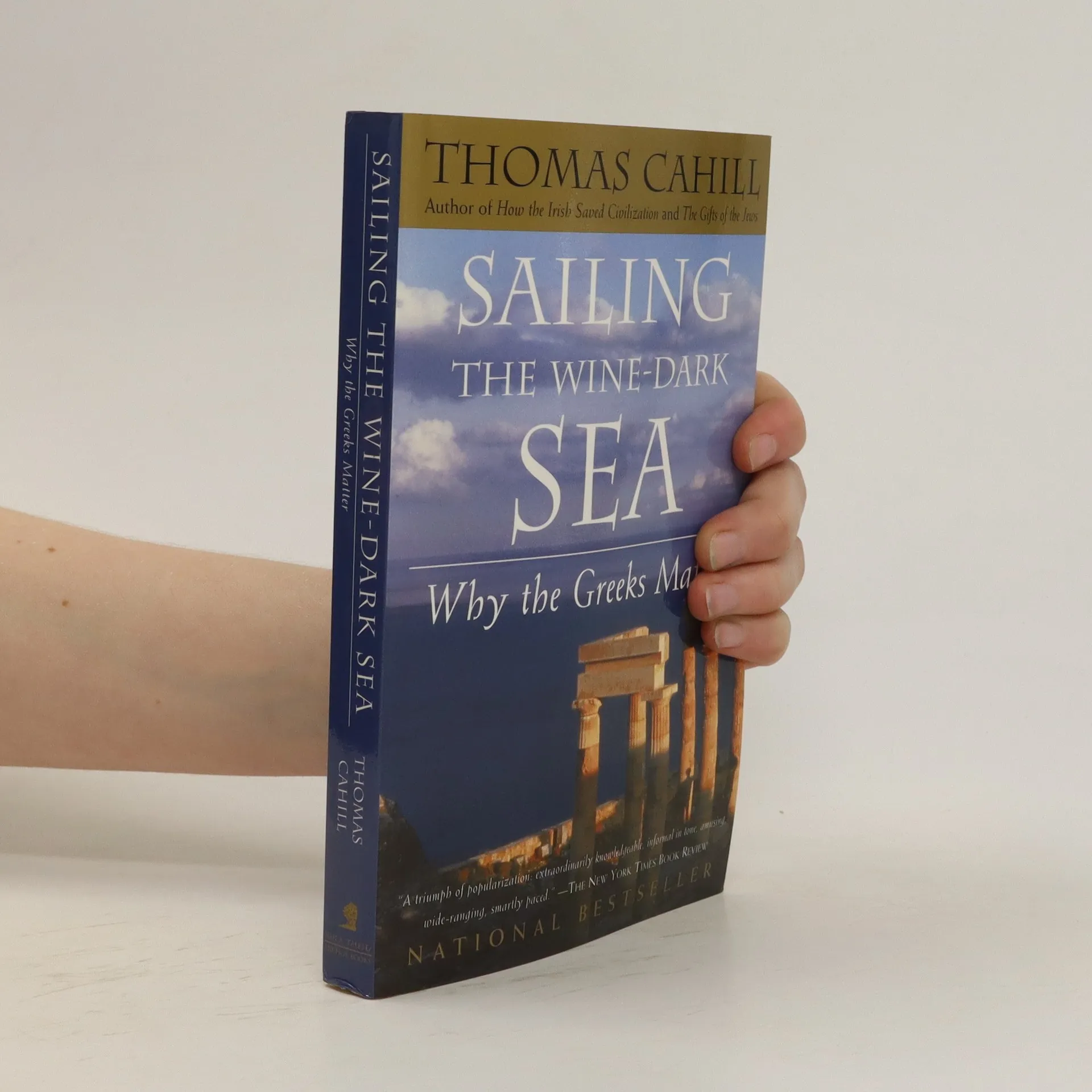
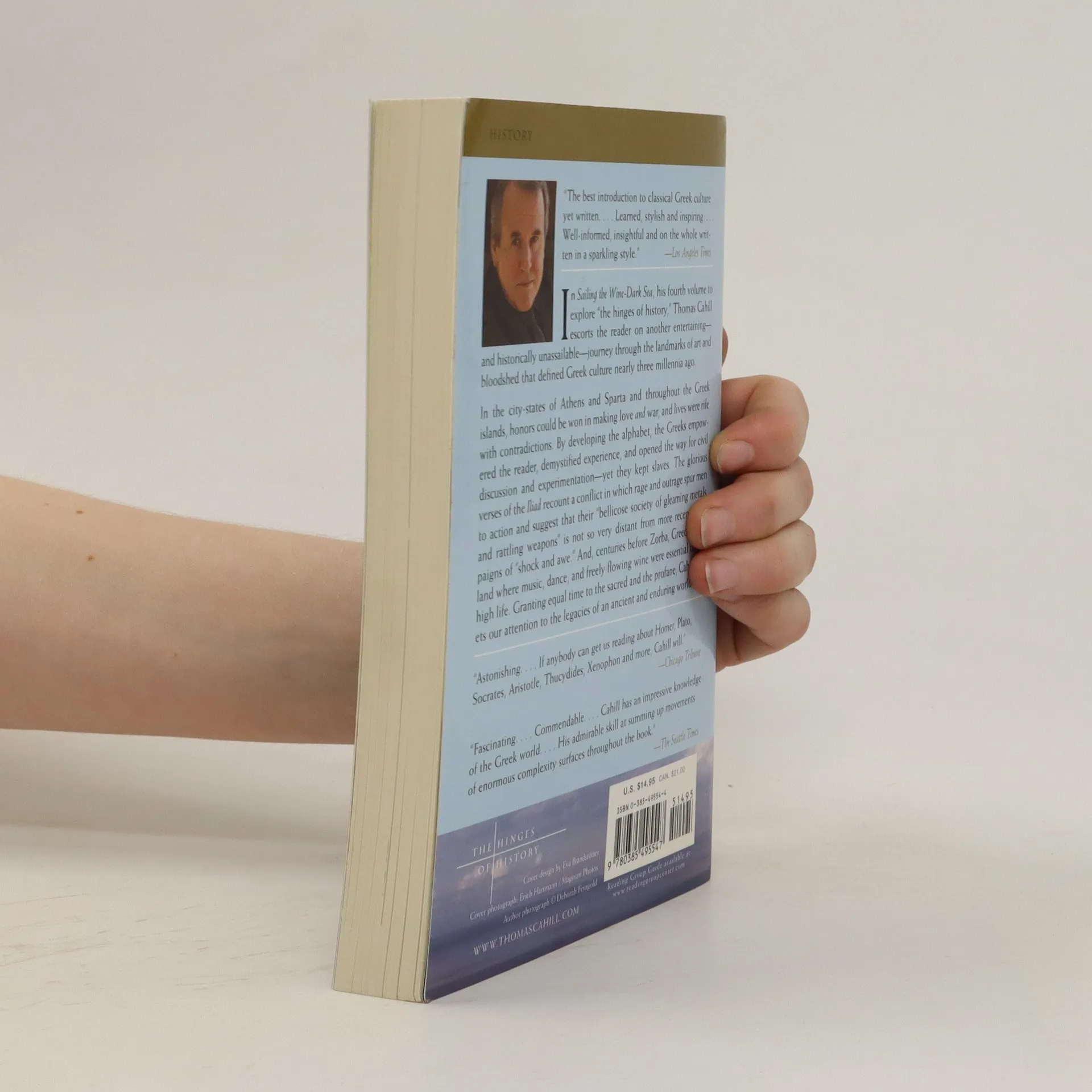
In Sailing the Wine-Dark Sea, his fourth volume to explore "the hinges of history," Thomas Cahill escorts the reader on another entertaining—and historically unassailable—journey through the landmarks of art and bloodshed that defined Greek culture nearly three millennia ago.In the city-states of Athens and Sparta and throughout the Greek islands, honors could be won in making love and war, and lives were rife with contradictions. By developing the alphabet, the Greeks empowered the reader, demystified experience, and opened the way for civil discussion and experimentation—yet they kept slaves. The glorious verses of the Iliad recount a conflict in which rage and outrage spur men to action and suggest that their "bellicose society of gleaming metals and rattling weapons" is not so very distant from more recent campaigns of "shock and awe." And, centuries before Zorba, Greece was a land where music, dance, and freely flowing wine were essential to the high life. Granting equal time to the sacred and the profane, Cahill rivets our attention to the legacies of an ancient and enduring worldview.

Zakup książki
Sailing the wine-dark sea : why the Greeks matter, Thomas Cahill
- Język

- Rok wydania
- 2004
- Oprawa
- (miękka)
Metody płatności
Brakuje nam tutaj Twojej recenzji.
- Tytuł
- Sailing the wine-dark sea : why the Greeks matter
- Język
- angielski
- Autorzy
- Thomas Cahill
- Wydawca
- Nan A. Talese/Anchor Books
- Rok wydania
- 2004
- Oprawa
- miękka
- Liczba stron
- 352
- ISBN10
- 0385495544
- ISBN13
- 9780385495547
- Kategorie
- Tagi
- Tematy historyczne, Tematyka filozoficzna, Starożytność, Historia Europy, Transport wodny & Łodzie, Morza & Oceany, Grecja
- Pierwsze wydanie
- 2003
- Oryginalna nazwa
- Sailing the Wine-Dark Sea
- Ocena
- 3,75 z 5
- Opis
- In Sailing the Wine-Dark Sea, his fourth volume to explore "the hinges of history," Thomas Cahill escorts the reader on another entertaining—and historically unassailable—journey through the landmarks of art and bloodshed that defined Greek culture nearly three millennia ago.In the city-states of Athens and Sparta and throughout the Greek islands, honors could be won in making love and war, and lives were rife with contradictions. By developing the alphabet, the Greeks empowered the reader, demystified experience, and opened the way for civil discussion and experimentation—yet they kept slaves. The glorious verses of the Iliad recount a conflict in which rage and outrage spur men to action and suggest that their "bellicose society of gleaming metals and rattling weapons" is not so very distant from more recent campaigns of "shock and awe." And, centuries before Zorba, Greece was a land where music, dance, and freely flowing wine were essential to the high life. Granting equal time to the sacred and the profane, Cahill rivets our attention to the legacies of an ancient and enduring worldview.