


Więcej o książce
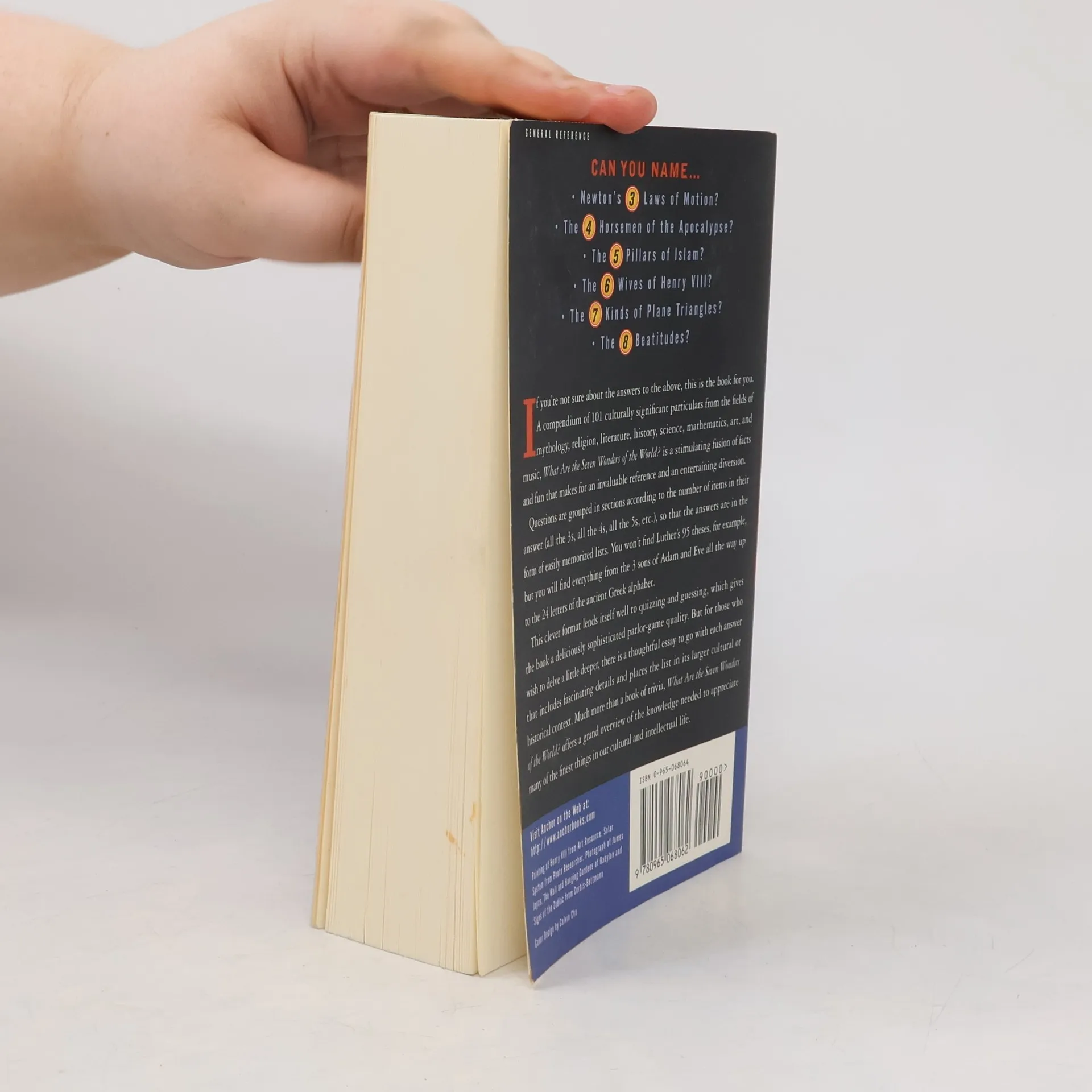
Can you name Newton's 3 laws of motion, the 4 horsemen of the Apocalypse, or the 5 pillars of Islam? If you're unsure, this book is for you. It presents a compendium of 101 culturally significant items from mythology, religion, literature, history, science, mathematics, art, and music. This engaging blend of facts and fun serves as both a valuable reference and an entertaining diversion. Questions are organized by the number of items in their answers, creating easily memorized lists. While it doesn't cover topics like Luther's 95 theses or the 264 Popes, it includes everything from the 3 sons of Adam and Eve to the 24 letters of the ancient Greek alphabet. This clever structure enhances the experience of quizzing and guessing, adding a sophisticated parlor-game quality. For those interested in deeper exploration, each answer is accompanied by thoughtful essays that provide fascinating details and contextualize the lists within broader cultural or historical frameworks. More than just trivia, this book offers a grand overview of essential knowledge, enriching our appreciation of the finest aspects of cultural and intellectual life.



Zakup książki
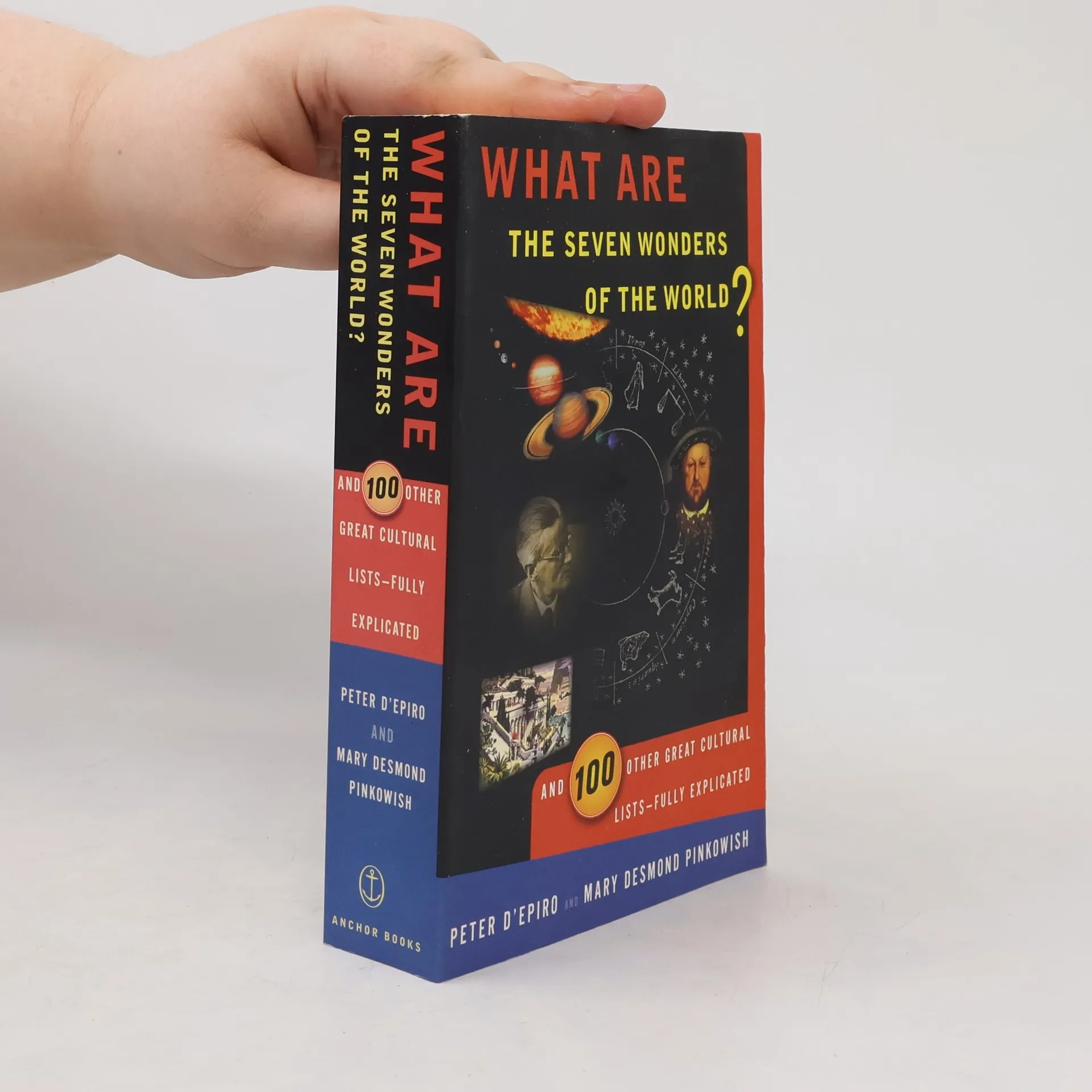
What Are the Seven Wonders of the World?, Peter D'Epiro, Mary Desmond Pinkowish
- Język

- Rok wydania
- 1998
- Oprawa
- (miękka),
- Stan książki
- Dobry
- Cena
- 19,43 zł
Metody płatności
Brakuje nam tutaj Twojej recenzji.
- Tytuł
- What Are the Seven Wonders of the World?
- Język
- angielski
- Autorzy
- Peter D'Epiro, Mary Desmond Pinkowish
- Wydawca
- Doubleday Anchor Book
- Rok wydania
- 1998
- Oprawa
- miękka
- ISBN10
- 0965068064
- ISBN13
- 9780965068062
- Seria
- Kategorie
- Tagi
- Tematy historyczne, Tematy religijne, Poradniki, Tematyka filozoficzna, Polityka, Nauka, Technologia, Kultura & Społeczeństwo, Zagadki
- Ocena
- 3,75 z 5
- Opis
- Can you name Newton's 3 laws of motion, the 4 horsemen of the Apocalypse, or the 5 pillars of Islam? If you're unsure, this book is for you. It presents a compendium of 101 culturally significant items from mythology, religion, literature, history, science, mathematics, art, and music. This engaging blend of facts and fun serves as both a valuable reference and an entertaining diversion. Questions are organized by the number of items in their answers, creating easily memorized lists. While it doesn't cover topics like Luther's 95 theses or the 264 Popes, it includes everything from the 3 sons of Adam and Eve to the 24 letters of the ancient Greek alphabet. This clever structure enhances the experience of quizzing and guessing, adding a sophisticated parlor-game quality. For those interested in deeper exploration, each answer is accompanied by thoughtful essays that provide fascinating details and contextualize the lists within broader cultural or historical frameworks. More than just trivia, this book offers a grand overview of essential knowledge, enriching our appreciation of the finest aspects of cultural and intellectual life.