



Więcej o książce
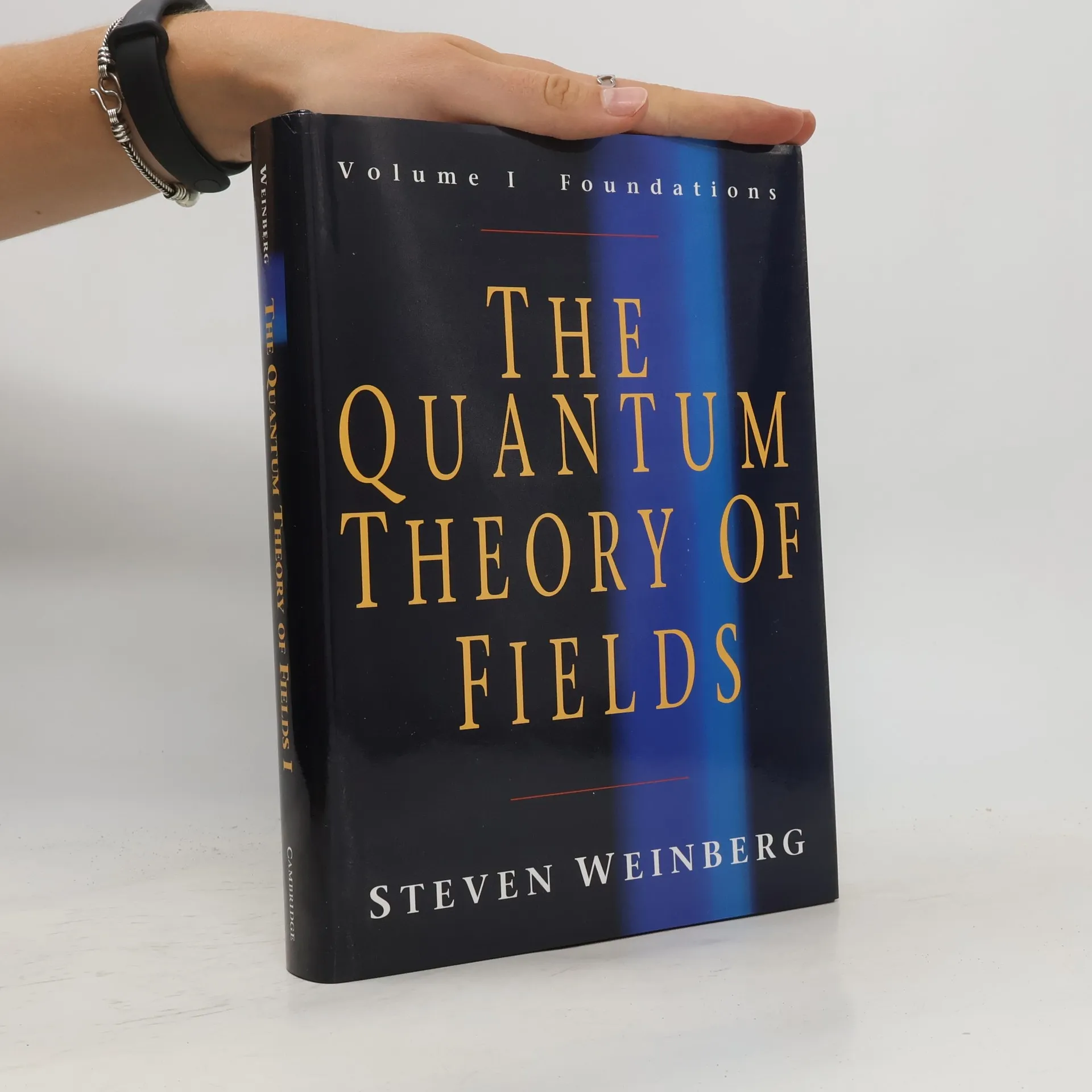
In this two-volume work, Nobel Laureate Steven Weinberg presents a self-contained and comprehensive introduction to quantum field theory, blending exceptional physical insight with clear exposition. Volume I lays the groundwork by logically developing the foundations of quantum field theory, carefully motivating each step and emphasizing its relevance to understanding nature. Starting with a brief historical overview, the text revisits the principles of relativity and quantum mechanics, leading to the natural emergence of quantum field theory. Weinberg modernizes classic calculations of quantum electrodynamics, employing path integrals and dimensional regularization, while his treatment of renormalization reflects evolving perspectives since the introduction of effective field theories. The scope extends beyond quantum electrodynamics to encompass elementary particle and nuclear physics, enriched with original material, examples, and insights from the author’s extensive research experience. Each chapter concludes with problems, making this work an invaluable reference for physicists and mathematicians utilizing quantum field theory. It also serves as an appropriate textbook for graduate students in the field.


Zakup książki
The Quantum Theory of Fields, Steven Weinberg
- Język

- Rok wydania
- 1995
- Oprawa
- (twarda)
Metody płatności
Brakuje nam tutaj Twojej recenzji.
- Tytuł
- The Quantum Theory of Fields
- Podtytuł
- Volume I, Foundations
- Język
- angielski
- Autorzy
- Steven Weinberg
- Wydawca
- Cambridge University Press
- Rok wydania
- 1995
- Oprawa
- twarda
- Liczba stron
- 635
- ISBN10
- 0521550017
- ISBN13
- 9780521550017
- Seria
- Kategorie
- Tagi
- Podręczniki, Nauki przyrodnicze, Nauka, Technologia, Podręczniki matematyki, Podręczniki fizyki, Mechanika kwantowa
- Ocena
- 4,4 z 5
- Opis
- In this two-volume work, Nobel Laureate Steven Weinberg presents a self-contained and comprehensive introduction to quantum field theory, blending exceptional physical insight with clear exposition. Volume I lays the groundwork by logically developing the foundations of quantum field theory, carefully motivating each step and emphasizing its relevance to understanding nature. Starting with a brief historical overview, the text revisits the principles of relativity and quantum mechanics, leading to the natural emergence of quantum field theory. Weinberg modernizes classic calculations of quantum electrodynamics, employing path integrals and dimensional regularization, while his treatment of renormalization reflects evolving perspectives since the introduction of effective field theories. The scope extends beyond quantum electrodynamics to encompass elementary particle and nuclear physics, enriched with original material, examples, and insights from the author’s extensive research experience. Each chapter concludes with problems, making this work an invaluable reference for physicists and mathematicians utilizing quantum field theory. It also serves as an appropriate textbook for graduate students in the field.