


Więcej o książce
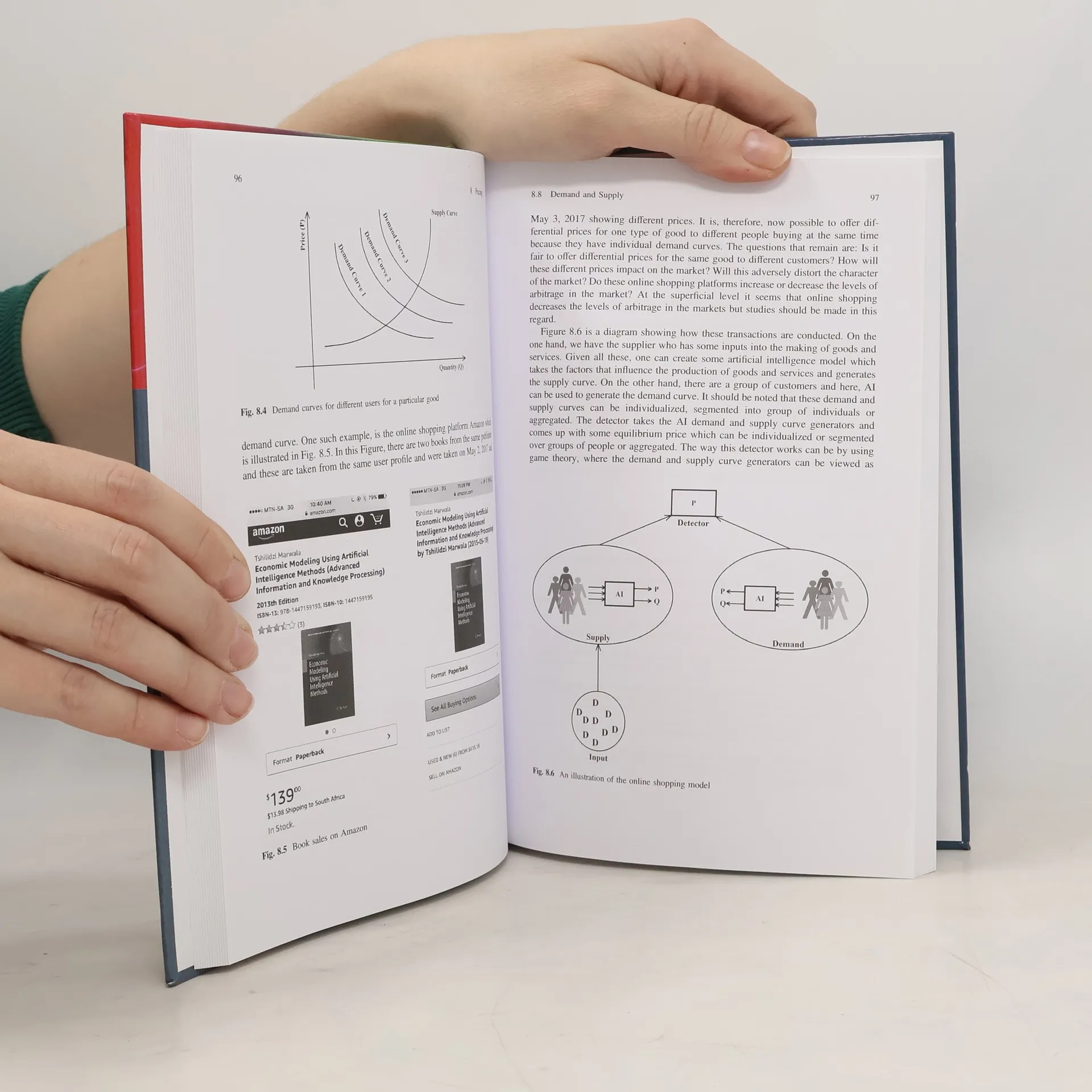
This book theoretically and practically updates major economic ideas such as demand and supply, rational choice and expectations, bounded rationality, behavioral economics, information asymmetry, pricing, efficient market hypothesis, game theory, mechanism design, portfolio theory, causality and financial engineering in the age of significant advances in man-machine systems. The advent of artificial intelligence has changed many disciplines such as engineering, social science and economics. Artificial intelligence is a computational technique which is inspired by natural intelligence concepts such as the swarming of birds, the working of the brain and the pathfinding of the ants. Artificial Intelligence and Economic Theory: Skynet in the Market analyses the impact of artificial intelligence on economic theories, a subject that has not been studied. It also introduces new economic theories and these are rational counterfactuals and rational opportunity costs. These ideas are applied to diverse areas such as modelling of the stock market, credit scoring, HIV and interstate conflict. Artificial intelligence ideas used in this book include neural networks, particle swarm optimization, simulated annealing, fuzzy logic and genetic algorithms. It, furthermore, explores ideas in causality including Granger as well as the Pearl causality models.

Zakup książki
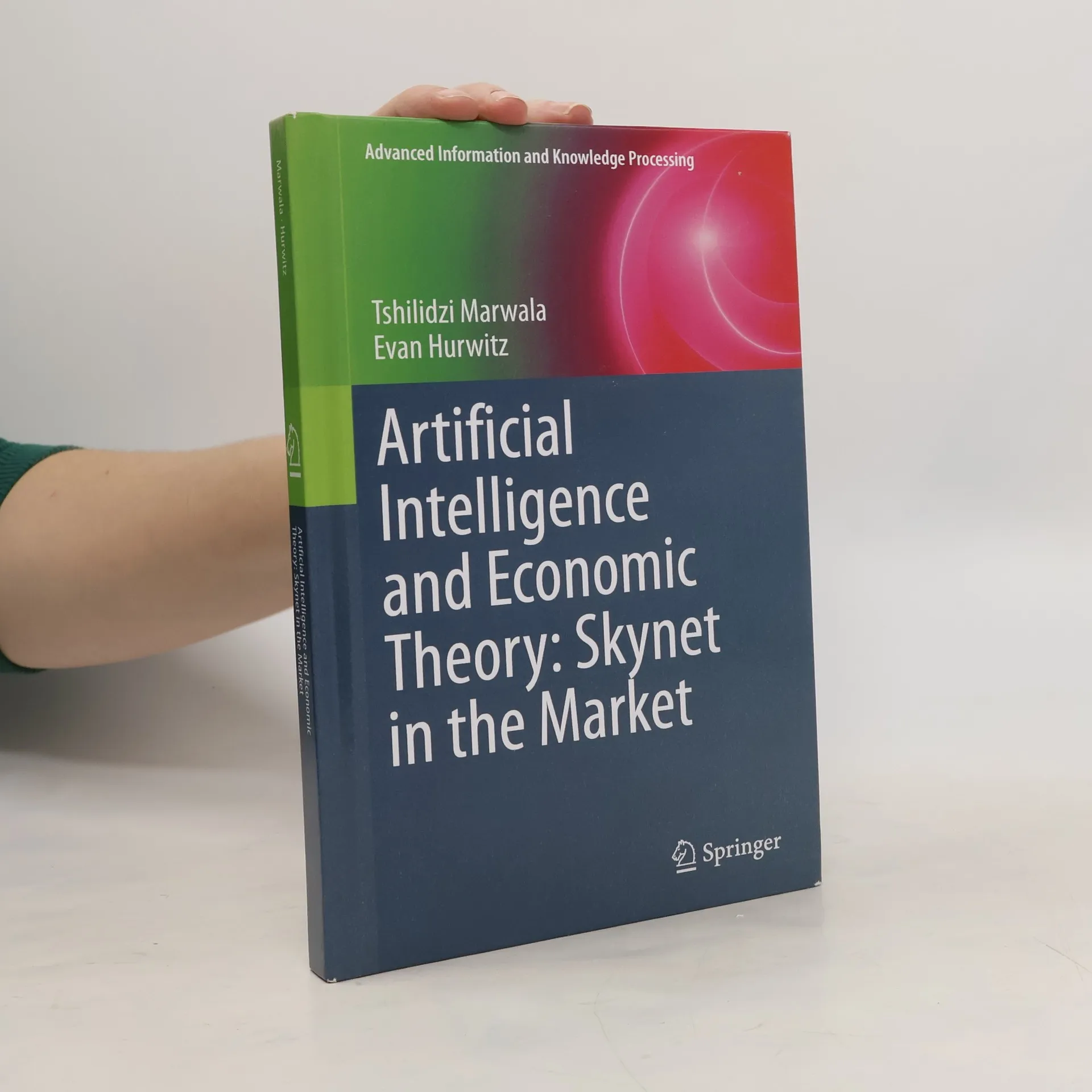
Artificial Intelligence and Economic Theory: Skynet in the Market, Tshilidzi Marwala, Evan Hurwitz
- Język

- Rok wydania
- 2018
- Oprawa
- (twarda)
Metody płatności
Brakuje nam tutaj Twojej recenzji.
- Tytuł
- Artificial Intelligence and Economic Theory: Skynet in the Market
- Język
- angielski
- Autorzy
- Tshilidzi Marwala, Evan Hurwitz
- Wydawca
- Springer
- Rok wydania
- 2018
- Oprawa
- twarda
- Liczba stron
- 216
- ISBN10
- 3319661035
- ISBN13
- 9783319661032
- Seria
- Ocena
- 3,5 z 5
- Opis
- This book theoretically and practically updates major economic ideas such as demand and supply, rational choice and expectations, bounded rationality, behavioral economics, information asymmetry, pricing, efficient market hypothesis, game theory, mechanism design, portfolio theory, causality and financial engineering in the age of significant advances in man-machine systems. The advent of artificial intelligence has changed many disciplines such as engineering, social science and economics. Artificial intelligence is a computational technique which is inspired by natural intelligence concepts such as the swarming of birds, the working of the brain and the pathfinding of the ants. Artificial Intelligence and Economic Theory: Skynet in the Market analyses the impact of artificial intelligence on economic theories, a subject that has not been studied. It also introduces new economic theories and these are rational counterfactuals and rational opportunity costs. These ideas are applied to diverse areas such as modelling of the stock market, credit scoring, HIV and interstate conflict. Artificial intelligence ideas used in this book include neural networks, particle swarm optimization, simulated annealing, fuzzy logic and genetic algorithms. It, furthermore, explores ideas in causality including Granger as well as the Pearl causality models.