

Więcej o książce
"Will always hold an honorable place for bibliophiles." — The University of Chicago Press Written in 1345, Richard De Bury's treatise on the importance of preserving neglected manuscripts, building libraries, and book collecting circulated widely in manuscript form for over a century. The first printed edition appeared in Cologne in 1473, followed by several others as the printing press spread throughout the late Medieval world. The chapter titles reflect the author's deep love for books and their significance, addressing topics such as the value of wisdom contained in books, considerations for purchasing them, who should cherish them, and the etiquette of lending books to students. The Prologue concludes with a promise that this treatise, divided into twenty chapters, will clarify the love for books and articulate the purpose behind this devotion. It aims to illuminate the circumstances of the author's undertaking. The title, inspired by ancient Roman tradition, is derived from a Greek word meaning "love of books." This volume presents modern bibliophiles with a splendid edition of one of the earliest works to explore, define, and celebrate their passion: the all-encompassing love of books.


Zakup książki
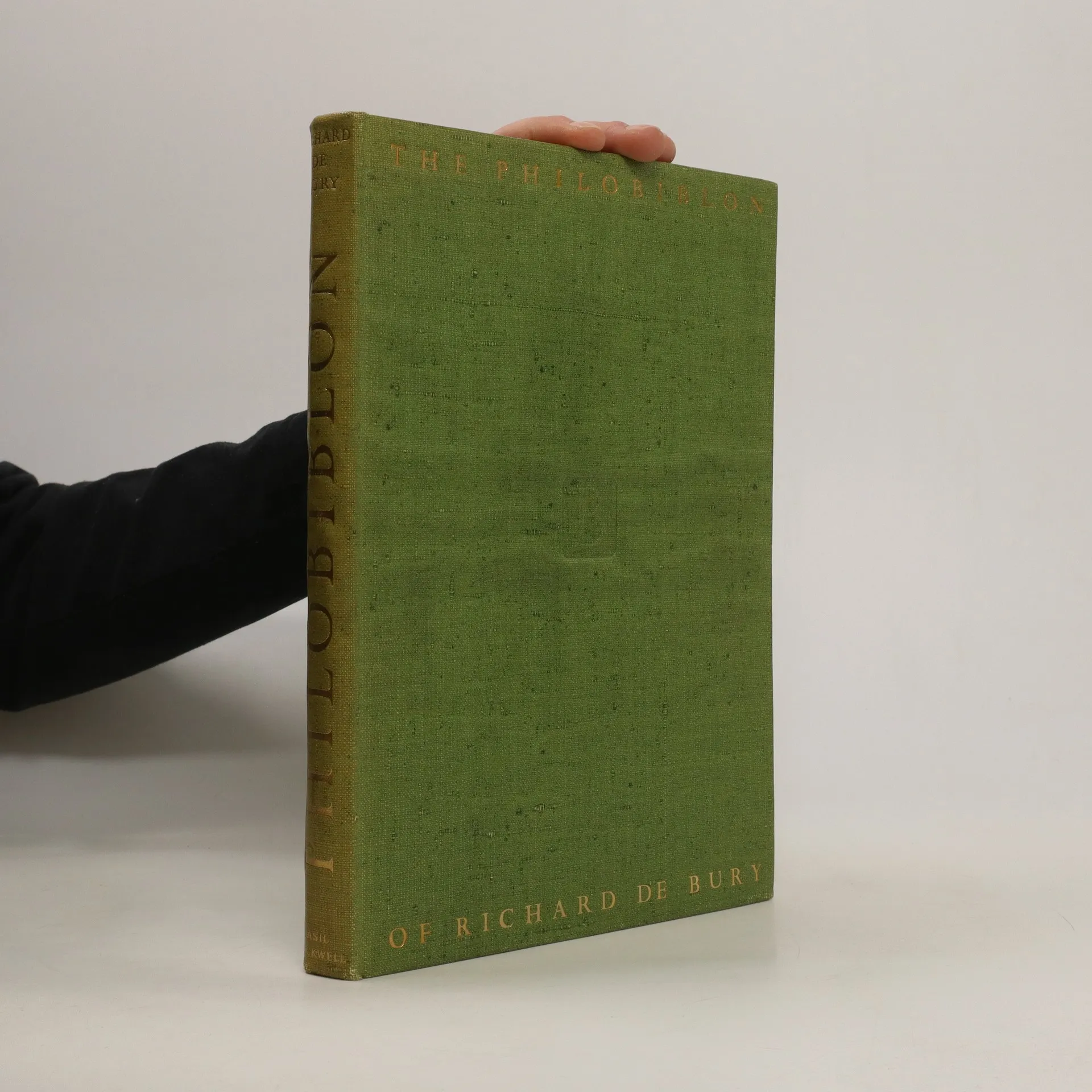
The Philobiblon, Richard de Bury
- Język

- Rok wydania
- 1960
- Oprawa
- (twarda)
Metody płatności
Brakuje nam tutaj Twojej recenzji.
- Tytuł
- The Philobiblon
- Język
- angielski
- Autorzy
- Richard de Bury
- Rok wydania
- 1960
- Oprawa
- twarda
- Seria
- Ocena
- 4,45 z 5
- Opis
- "Will always hold an honorable place for bibliophiles." — The University of Chicago Press Written in 1345, Richard De Bury's treatise on the importance of preserving neglected manuscripts, building libraries, and book collecting circulated widely in manuscript form for over a century. The first printed edition appeared in Cologne in 1473, followed by several others as the printing press spread throughout the late Medieval world. The chapter titles reflect the author's deep love for books and their significance, addressing topics such as the value of wisdom contained in books, considerations for purchasing them, who should cherish them, and the etiquette of lending books to students. The Prologue concludes with a promise that this treatise, divided into twenty chapters, will clarify the love for books and articulate the purpose behind this devotion. It aims to illuminate the circumstances of the author's undertaking. The title, inspired by ancient Roman tradition, is derived from a Greek word meaning "love of books." This volume presents modern bibliophiles with a splendid edition of one of the earliest works to explore, define, and celebrate their passion: the all-encompassing love of books.