



Więcej o książce
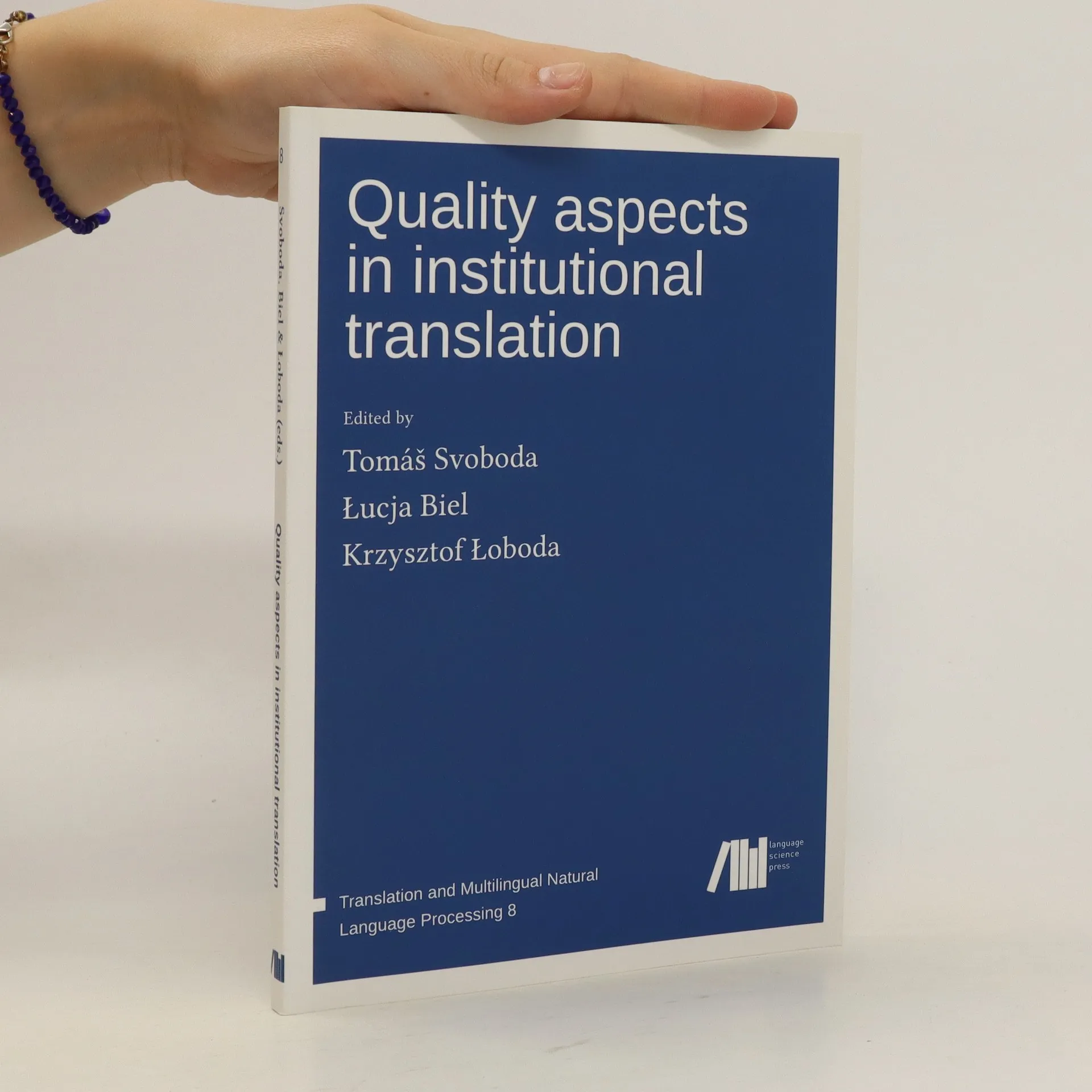
"The purpose of this volume is to explore key issues, approaches and challenges to quality in institutional translation by confronting academics? and practitioners? perspectives. What the reader will find in this book is an interplay of two approaches: academic contributions providing the conceptual and theoretical background for discussing quality on the one hand, and chapters exploring selected aspects of quality and case studies from both academics and practitioners on the other. Our aim is to present these two approaches as a breeding ground for testing one vis-à-vis the other. This book studies institutional translation mostly through the lens of the European Union (EU) reality, and, more specifically, of EU institutions and bodies, due to the unprecedented scale of their multilingual operations and the legal and political importance of translation. Thus, it is concerned with the supranational (international) level, deliberately leaving national and other contexts aside. Quality in supranational institutions is explored both in terms of translation processes and their products ? the translated texts."


Zakup książki
Quality Aspects in Institutional Translation, Łucja Biel, Krzysztof Łoboda, Thomas Svoboda
- Język

- Rok wydania
- 2017
- Oprawa
- (miękka)
Metody płatności
Brakuje nam tutaj Twojej recenzji.
- Tytuł
- Quality Aspects in Institutional Translation
- Język
- angielski
- Autorzy
- Łucja Biel, Krzysztof Łoboda, Thomas Svoboda
- Wydawca
- Language Science Press
- Rok wydania
- 2017
- Oprawa
- miękka
- Liczba stron
- 197
- ISBN10
- 8073741253
- ISBN13
- 9788073741259
- Seria
- Kategorie
- Ocena
- 4 z 5
- Opis
- "The purpose of this volume is to explore key issues, approaches and challenges to quality in institutional translation by confronting academics? and practitioners? perspectives. What the reader will find in this book is an interplay of two approaches: academic contributions providing the conceptual and theoretical background for discussing quality on the one hand, and chapters exploring selected aspects of quality and case studies from both academics and practitioners on the other. Our aim is to present these two approaches as a breeding ground for testing one vis-à-vis the other. This book studies institutional translation mostly through the lens of the European Union (EU) reality, and, more specifically, of EU institutions and bodies, due to the unprecedented scale of their multilingual operations and the legal and political importance of translation. Thus, it is concerned with the supranational (international) level, deliberately leaving national and other contexts aside. Quality in supranational institutions is explored both in terms of translation processes and their products ? the translated texts."