


Więcej o książce
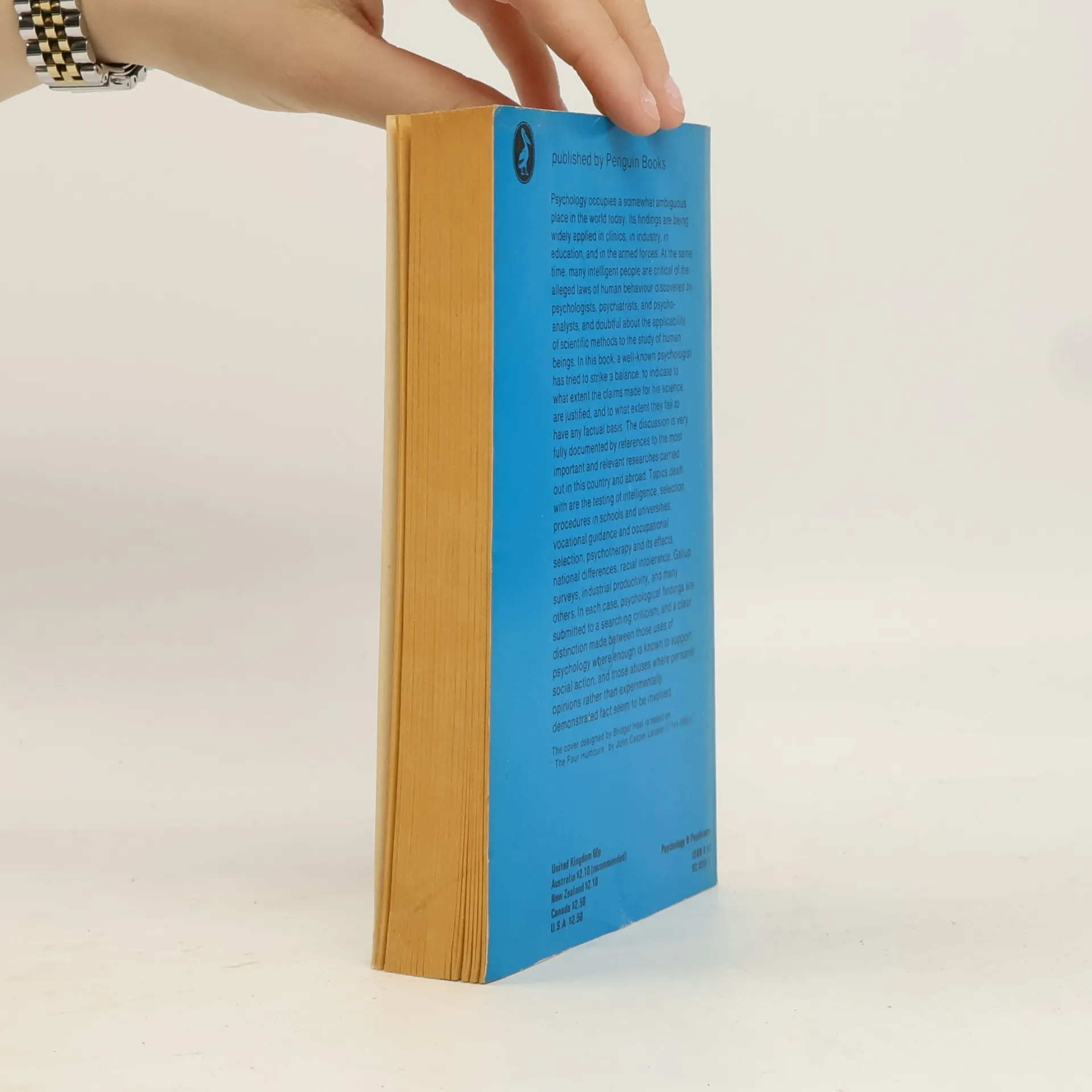
Psychology occupies a somewhat ambiguous-place in the world today. Its findings are being widely applied in clinics, in industry, in education, and in the armed forces. At the same time, many intelligent people are critical of the alleged laws of human behavior discovered by psychologists, psychiatrists, and psychoanalysts, and doubtful about the applicability of scientific methods to the study of human beings. In this book, a well-known psychologist has tried to strike a balance, to indicate to what extent the claims made for his science are justified, and to what extent they fail to have any factual basis. The discussion is very fully documented by references to the most important and relevant researches carried out in this country and abroad. Topics dealt with are the testing of intelligence, selection procedures in schools and universities, vocational guidance and occupational selection, psychotherapy and its effects, national differences, racial intolerance, Gallup surveys, industrial productivity, and many others. In each case, psychological findings are submitted to a searching criticism, and a clear distinction made between those uses of psychology where enough is known to support social action, and those abuses where personal opinions rather than experimentally demonstrated fact seem to be involved.


Zakup książki
Uses and Abuses of Psychology, H. J. Eysenck
- Język

- Rok wydania
- 1970
- Oprawa
- (miękka),
- Stan książki
- Dobry
- Cena
- 15,90 zł
Metody płatności
Nikt jeszcze nie ocenił.
- Tytuł
- Uses and Abuses of Psychology
- Język
- angielski
- Autorzy
- H. J. Eysenck
- Wydawca
- Pelican Penguin
- Rok wydania
- 1970
- Oprawa
- miękka
- Liczba stron
- 320
- ISBN10
- 0140202811
- ISBN13
- 9780140202816
- Seria
- Opis
- Psychology occupies a somewhat ambiguous-place in the world today. Its findings are being widely applied in clinics, in industry, in education, and in the armed forces. At the same time, many intelligent people are critical of the alleged laws of human behavior discovered by psychologists, psychiatrists, and psychoanalysts, and doubtful about the applicability of scientific methods to the study of human beings. In this book, a well-known psychologist has tried to strike a balance, to indicate to what extent the claims made for his science are justified, and to what extent they fail to have any factual basis. The discussion is very fully documented by references to the most important and relevant researches carried out in this country and abroad. Topics dealt with are the testing of intelligence, selection procedures in schools and universities, vocational guidance and occupational selection, psychotherapy and its effects, national differences, racial intolerance, Gallup surveys, industrial productivity, and many others. In each case, psychological findings are submitted to a searching criticism, and a clear distinction made between those uses of psychology where enough is known to support social action, and those abuses where personal opinions rather than experimentally demonstrated fact seem to be involved.