

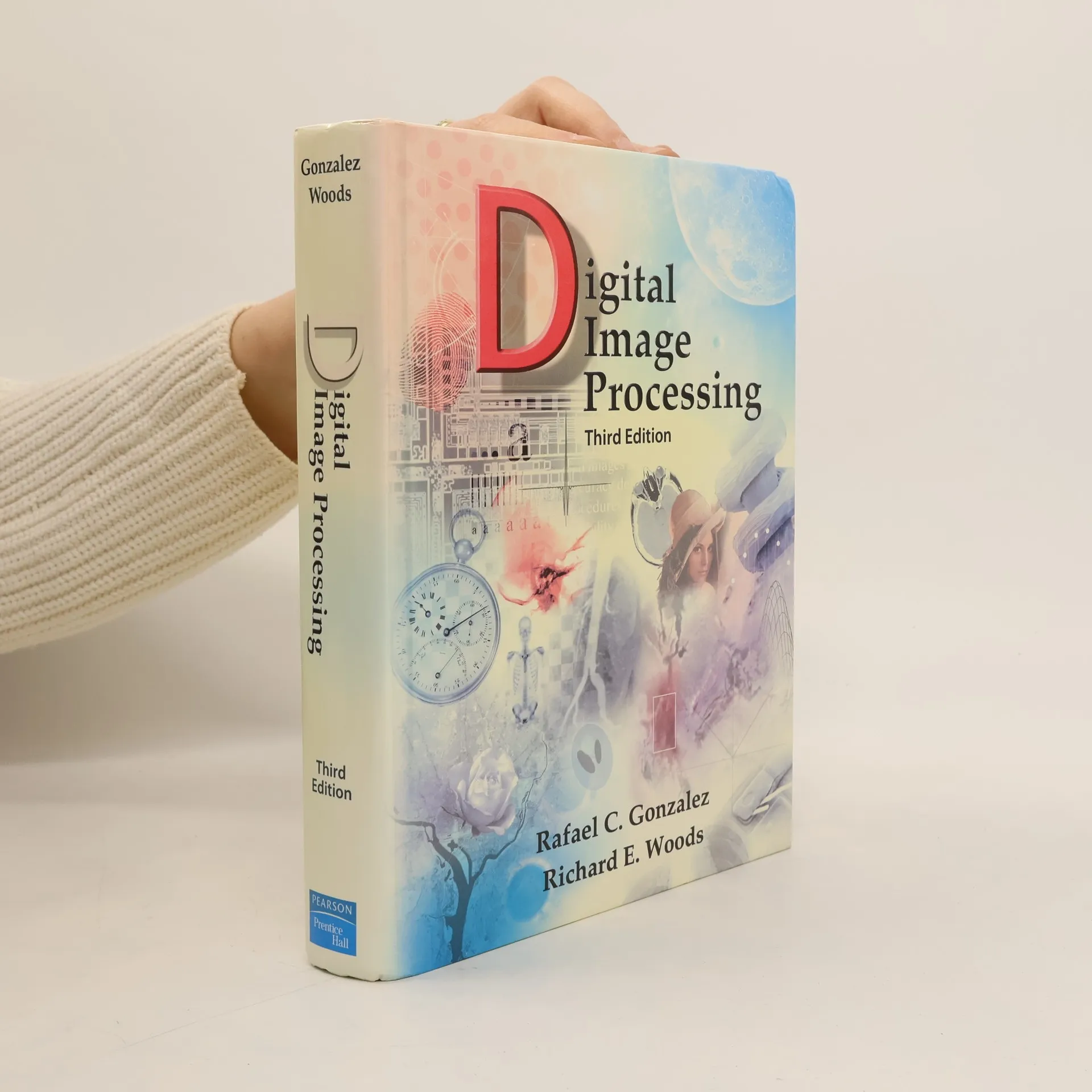
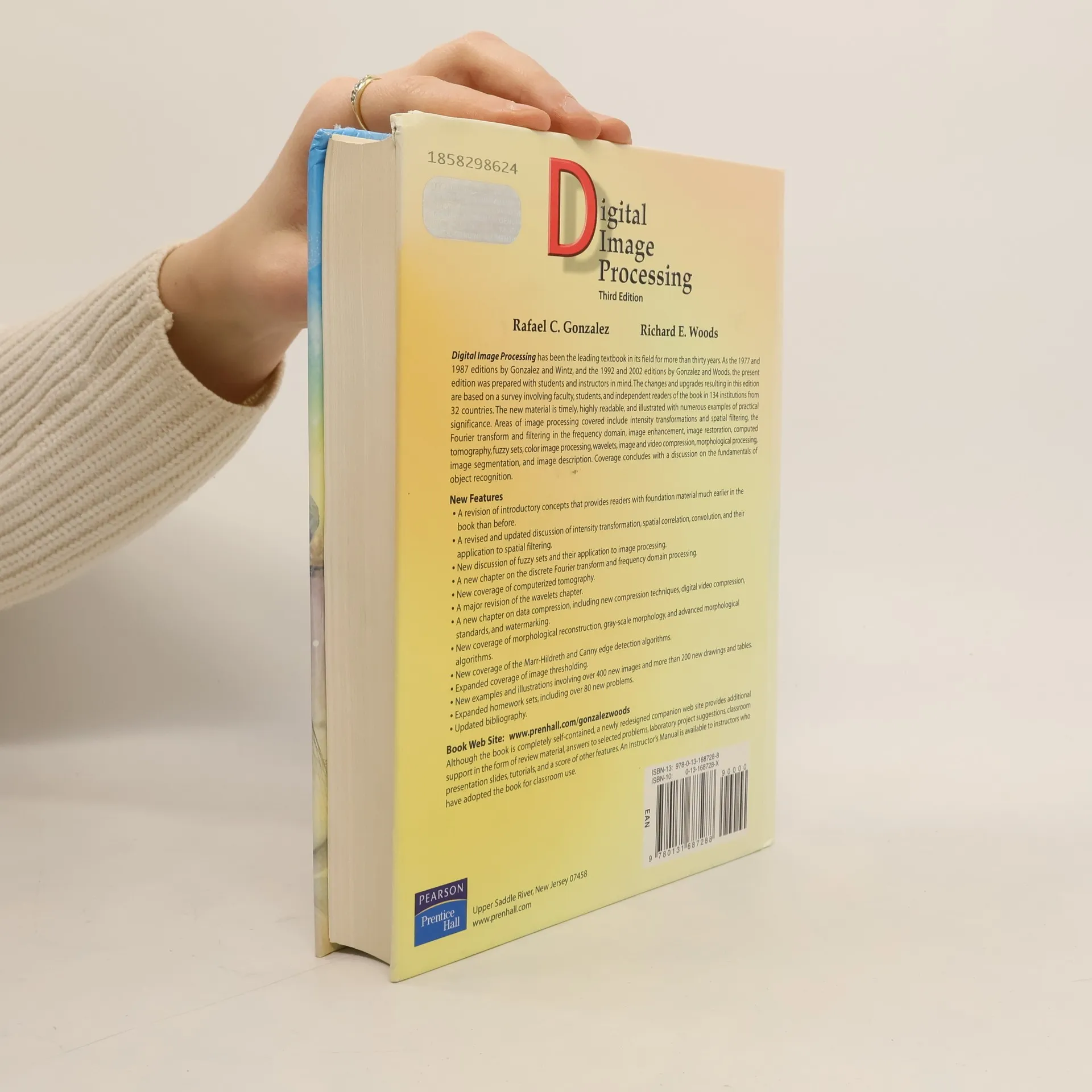


Więcej o książce
Introduce your students to image processing with the industry’s most prized text. For 40 years, this foundational text has been essential for studying digital image processing, catering to college seniors and first-year graduate students with a background in mathematical analysis, vectors, matrices, probability, statistics, linear systems, and computer programming. The focus remains on the fundamentals. The 4th Edition, marking the book’s 40th anniversary, incorporates feedback from faculty, students, and independent readers across 150 institutions in 30 countries. This has resulted in expanded coverage of contemporary topics such as deep learning, deep neural networks, convolutional neural nets, scale-invariant feature transform (SIFT), maximally-stable extremal regions (MSERs), graph cuts, k-means clustering, superpixels, active contours (snakes and level sets), and exact histogram matching. Significant improvements include a more cohesive presentation of image transforms and enhanced discussions on spatial kernels and filtering. Additionally, revisions and new examples and homework exercises have been added throughout. For the first time, MATLAB projects accompany each chapter, along with support packages for students and instructors that include solutions, image databases, and sample code.


Zakup książki
Digital Image Processing, Rafael C. Gonzalez, Richard E. Woods
- Język

- Rok wydania
- Oprawa
- (twarda)
Metody płatności
Brakuje nam tutaj Twojej recenzji.
- Tytuł
- Digital Image Processing
- Język
- angielski
- Autorzy
- Rafael C. Gonzalez, Richard E. Woods
- Wydawca
- Pearson
- Oprawa
- twarda
- Seria
- Kategorie
- Tagi
- Podręczniki, Poradniki, Nauka, Technologia, Inżynieria
- Ocena
- 4,15 z 5
- Opis
- Introduce your students to image processing with the industry’s most prized text. For 40 years, this foundational text has been essential for studying digital image processing, catering to college seniors and first-year graduate students with a background in mathematical analysis, vectors, matrices, probability, statistics, linear systems, and computer programming. The focus remains on the fundamentals. The 4th Edition, marking the book’s 40th anniversary, incorporates feedback from faculty, students, and independent readers across 150 institutions in 30 countries. This has resulted in expanded coverage of contemporary topics such as deep learning, deep neural networks, convolutional neural nets, scale-invariant feature transform (SIFT), maximally-stable extremal regions (MSERs), graph cuts, k-means clustering, superpixels, active contours (snakes and level sets), and exact histogram matching. Significant improvements include a more cohesive presentation of image transforms and enhanced discussions on spatial kernels and filtering. Additionally, revisions and new examples and homework exercises have been added throughout. For the first time, MATLAB projects accompany each chapter, along with support packages for students and instructors that include solutions, image databases, and sample code.