


Ocena książki
Więcej o książce
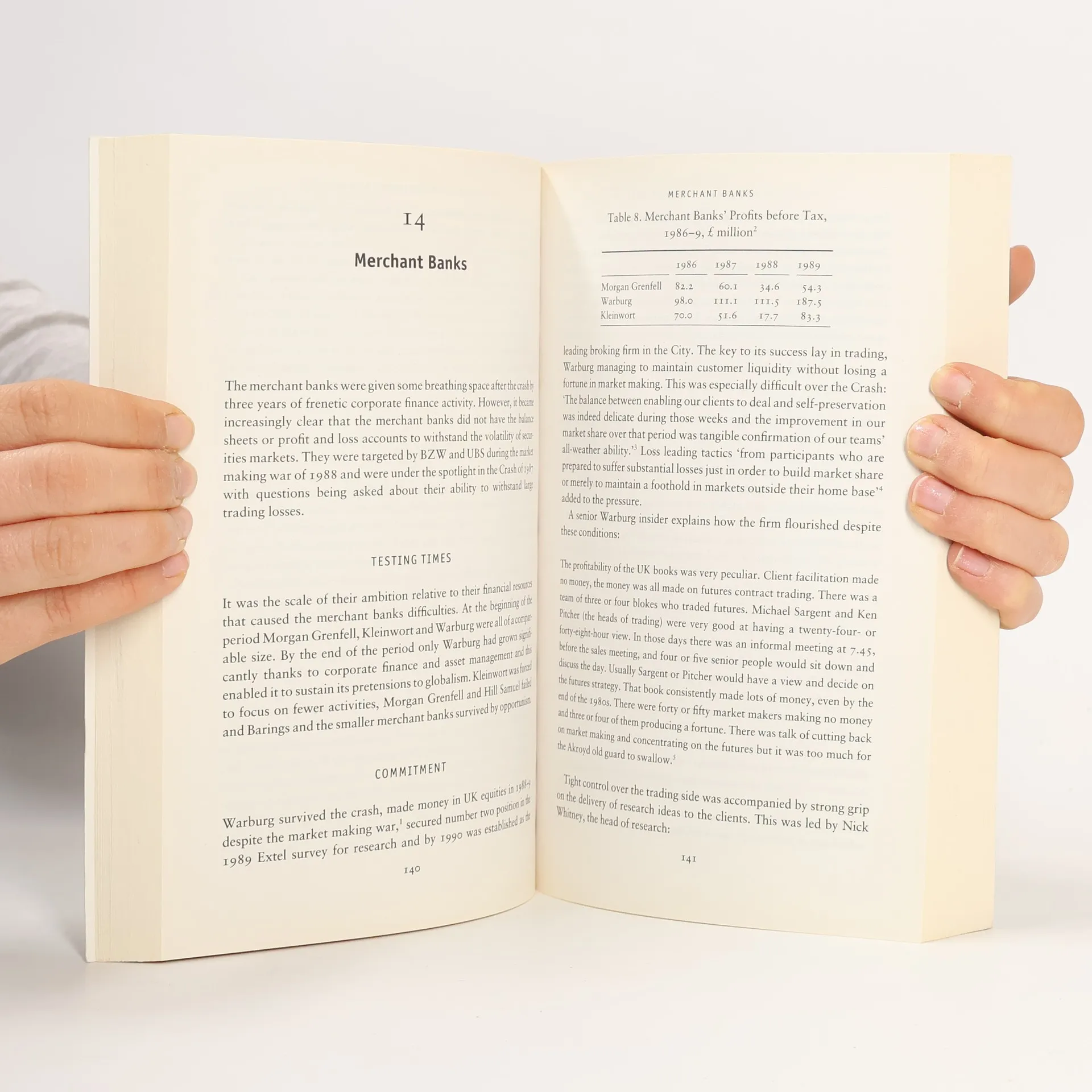
A revolution took place in the City in the 80s and 90s. The cosy club of British merchant banking collapsed in a series of sell-outs, closures and scandals. This left the City dominated by US and European giants. Was this the inevitable result ofglobalization or did mismanagement play a part? This is the first book to look at how and why the British merchant banks and brokers sold out, and where that leaves us. Augar tells this fascinating story with pace and drama, taking us through the Thatcher years, the crash of 1987, Big Bang, and the aggressive invasion of the American banks. He looks at why the British banks failed to keep pace with the Americans, what this says about the way they were run, and what this means for the future.


Zakup książki
The Death of Gentlemanly Capitalism, Philip Augar
- Język

- Rok wydania
- 2008
- Oprawa
- (miękka)
Metody płatności
Brakuje nam tutaj Twojej recenzji.
- Tytuł
- The Death of Gentlemanly Capitalism
- Podtytuł
- The Rise and Fall of London's Investment Banks
- Język
- angielski
- Autorzy
- Philip Augar
- Wydawca
- Penguin Books, Limited (UK)
- Rok wydania
- 2008
- Oprawa
- miękka
- Liczba stron
- 416
- ISBN10
- 0141043393
- ISBN13
- 9780141043395
- Seria
- Ocena
- 3,45 z 5
- Opis
- A revolution took place in the City in the 80s and 90s. The cosy club of British merchant banking collapsed in a series of sell-outs, closures and scandals. This left the City dominated by US and European giants. Was this the inevitable result ofglobalization or did mismanagement play a part? This is the first book to look at how and why the British merchant banks and brokers sold out, and where that leaves us. Augar tells this fascinating story with pace and drama, taking us through the Thatcher years, the crash of 1987, Big Bang, and the aggressive invasion of the American banks. He looks at why the British banks failed to keep pace with the Americans, what this says about the way they were run, and what this means for the future.