



Więcej o książce
Together with Marx and Freud, Friedrich Nietzsche (1844-1900) is one of the main sources of twentieth-century thought. His formulations that God is dead, that the world is the product of the will to power, and that true value lies in a morality of strenuousness, have become part of the European experience in our age. While most of Nietzsche's work takes the form of short 'reflections', he also tried to create a major mythology and attempted, finally, a comprehensive philosophical system. In his often contradictory writings— which are concentrated into the brief time-span 1872-88 — he directs his thought again and again at the function and value of truth. Nietzsche was an anti-systemic thinker, yet he understood and systematically 'unmasked' the ethic of praise and blame, of punishment and reward and of the agony of conscience. The book is an exhilarating examination of Nietzsche's work: in a series of analyses of his 'philosophical experiments' J.P. Stern elucidates Nietzsche's existentialism by reference to the main event of his life, and to his astounding range of styles and vision of language.

Zakup książki
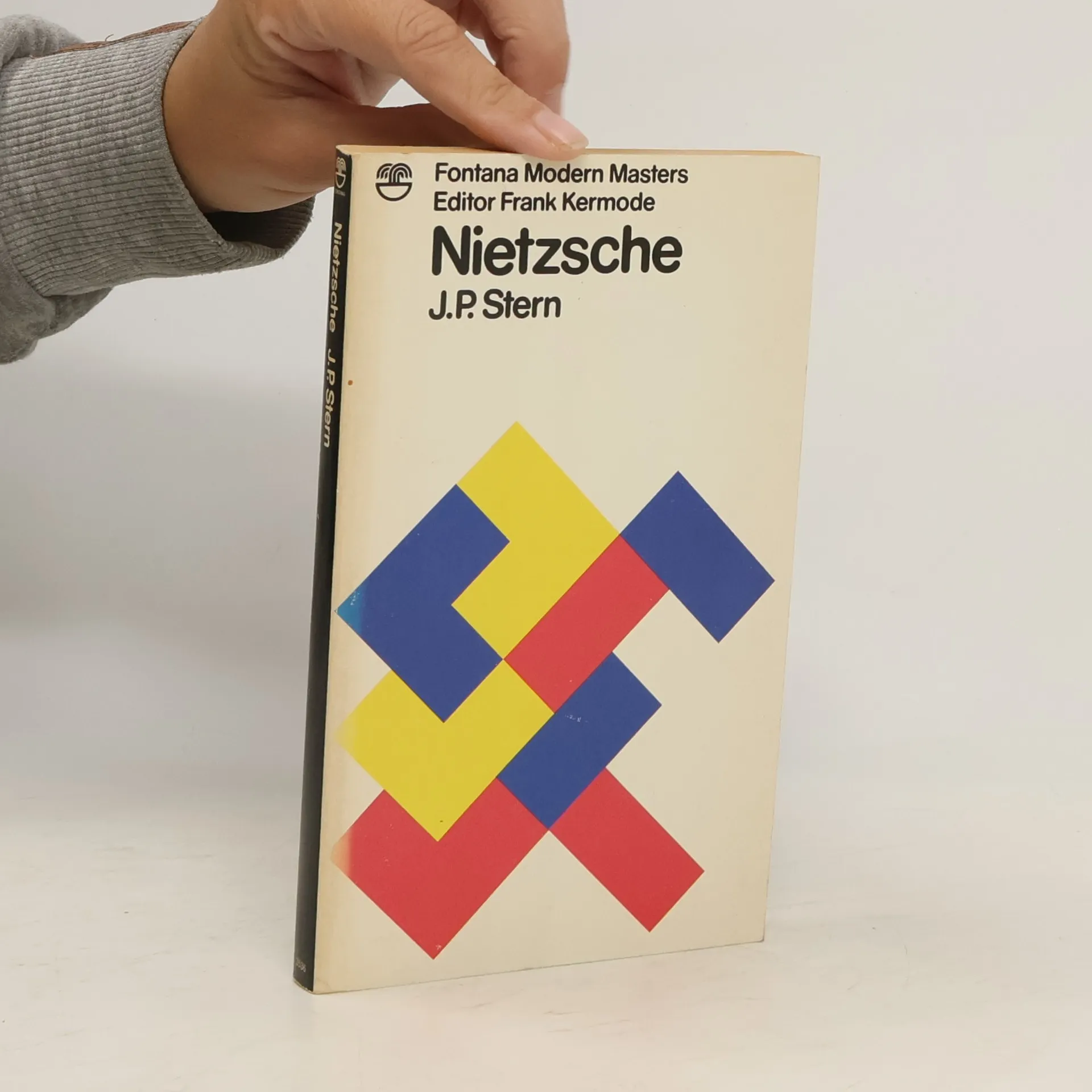
Nietzsche, Joseph Peter Stern
- Język

- Rok wydania
- 1978
- Oprawa
- (miękka)
Metody płatności
Brakuje nam tutaj Twojej recenzji.
- Tytuł
- Nietzsche
- Język
- angielski
- Autorzy
- Joseph Peter Stern
- Wydawca
- Fontana Press
- Rok wydania
- 1978
- Oprawa
- miękka
- Liczba stron
- 158
- ISBN10
- 0006335365
- ISBN13
- 9780006335368
- Seria
- Oryginalna nazwa
- A study of Nietzsche
- Ocena
- 3,35 z 5
- Opis
- Together with Marx and Freud, Friedrich Nietzsche (1844-1900) is one of the main sources of twentieth-century thought. His formulations that God is dead, that the world is the product of the will to power, and that true value lies in a morality of strenuousness, have become part of the European experience in our age. While most of Nietzsche's work takes the form of short 'reflections', he also tried to create a major mythology and attempted, finally, a comprehensive philosophical system. In his often contradictory writings— which are concentrated into the brief time-span 1872-88 — he directs his thought again and again at the function and value of truth. Nietzsche was an anti-systemic thinker, yet he understood and systematically 'unmasked' the ethic of praise and blame, of punishment and reward and of the agony of conscience. The book is an exhilarating examination of Nietzsche's work: in a series of analyses of his 'philosophical experiments' J.P. Stern elucidates Nietzsche's existentialism by reference to the main event of his life, and to his astounding range of styles and vision of language.