

Wyprzedane, ale poszukiwane!
Parametry
- 339 stron
- 12 godzin czytania
Więcej o książce
Part archaeological detective story, part science, and part history, The Archimedes Codex tells the astonishing story of a lost manuscript, from its tenth-century creation in ancient Constantinople to the auction block at Christie’s in New York, and how a team of scholars used the latest imaging technology to reveal and decipher the original text. What they found was the earliest surviving manuscript by Archimedes (287 BC–212 BC), the greatest mathematician of antiquity—a manuscript that established, for the first time, the extent of his mathematical genius, which was two thousand years ahead of modern science.


Zakup książki
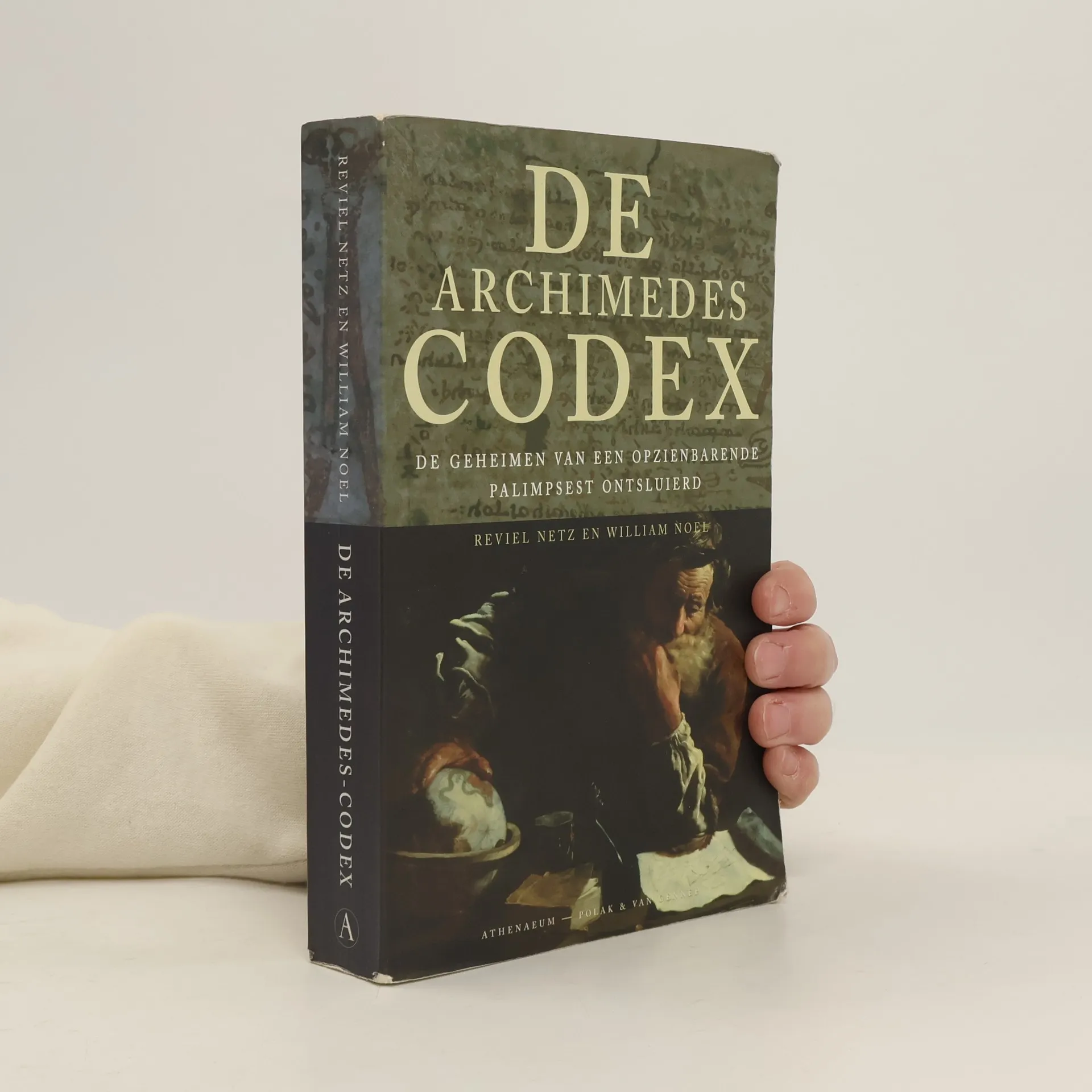
De Archimedescodex, Reviel Netz, William Noel, Boukje Verheij
- Język

- Rok wydania
- 2007
- Oprawa
- (miękka)
Jak tylko się pojawi, wyślemy Ci wiadomość e-mail.
Metody płatności
Brakuje nam tutaj Twojej recenzji.
- Tytuł
- De Archimedescodex
- Podtytuł
- De geheimen van een opzienbarende palimpsest ontsluierd
- Język
- holenderski
- Autorzy
- Reviel Netz, William Noel, Boukje Verheij
- Wydawca
- Athenaeum-Polak & Van Gennep
- Rok wydania
- 2007
- Oprawa
- miękka
- Liczba stron
- 339
- ISBN10
- 9025363229
- ISBN13
- 9789025363222
- Seria
- Kategorie
- Tagi
- Tematy historyczne, Nauka, Technologia, Starożytność, Archeologia, Kultura, Badania naukowe, Muzea, O książkach, Wiedza, Geometria, Historia nauki, Grecki, Archimedes
- Oryginalna nazwa
- Archimedes codex
- Ocena
- 3,9 z 5
- Opis
- Part archaeological detective story, part science, and part history, The Archimedes Codex tells the astonishing story of a lost manuscript, from its tenth-century creation in ancient Constantinople to the auction block at Christie’s in New York, and how a team of scholars used the latest imaging technology to reveal and decipher the original text. What they found was the earliest surviving manuscript by Archimedes (287 BC–212 BC), the greatest mathematician of antiquity—a manuscript that established, for the first time, the extent of his mathematical genius, which was two thousand years ahead of modern science.