


Więcej o książce
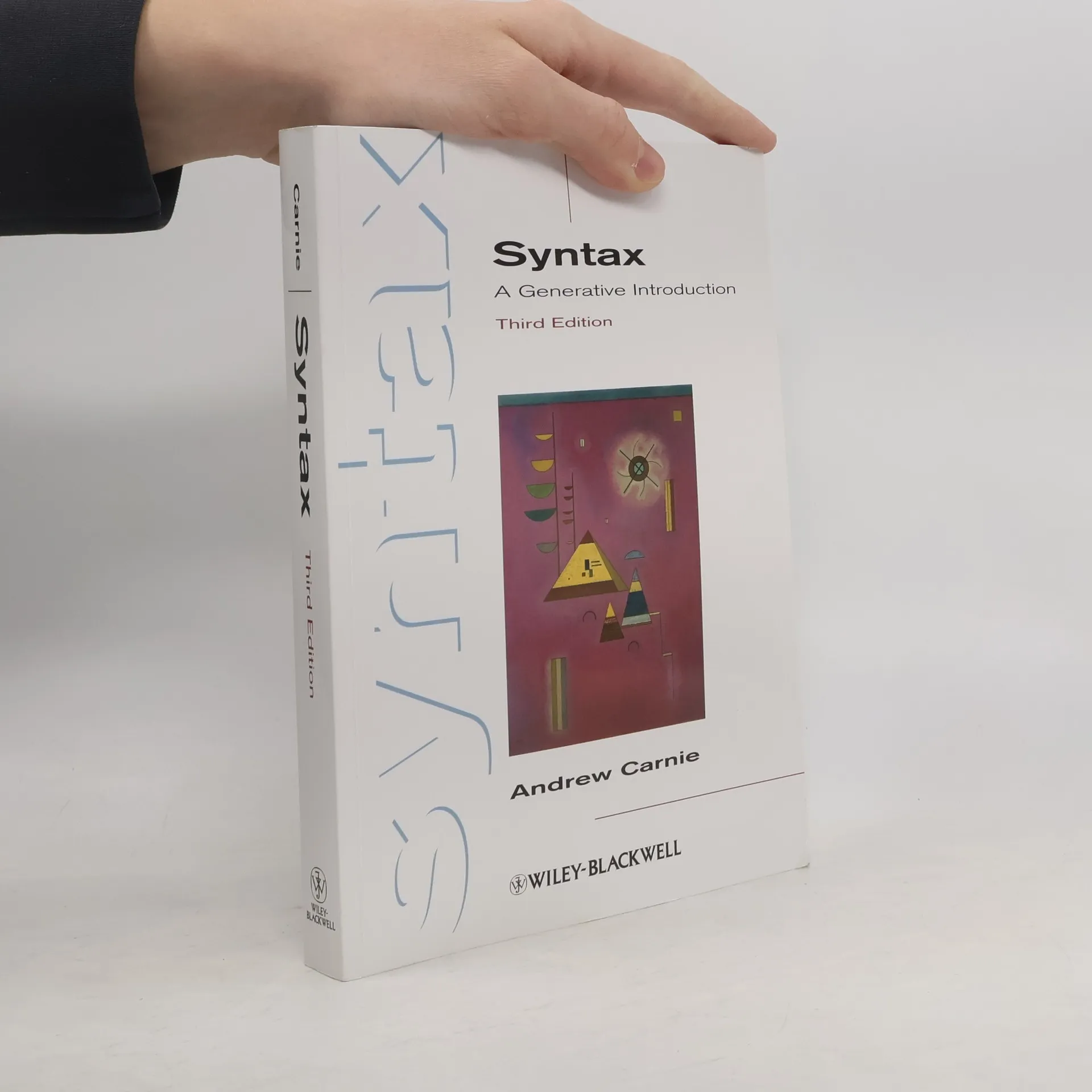
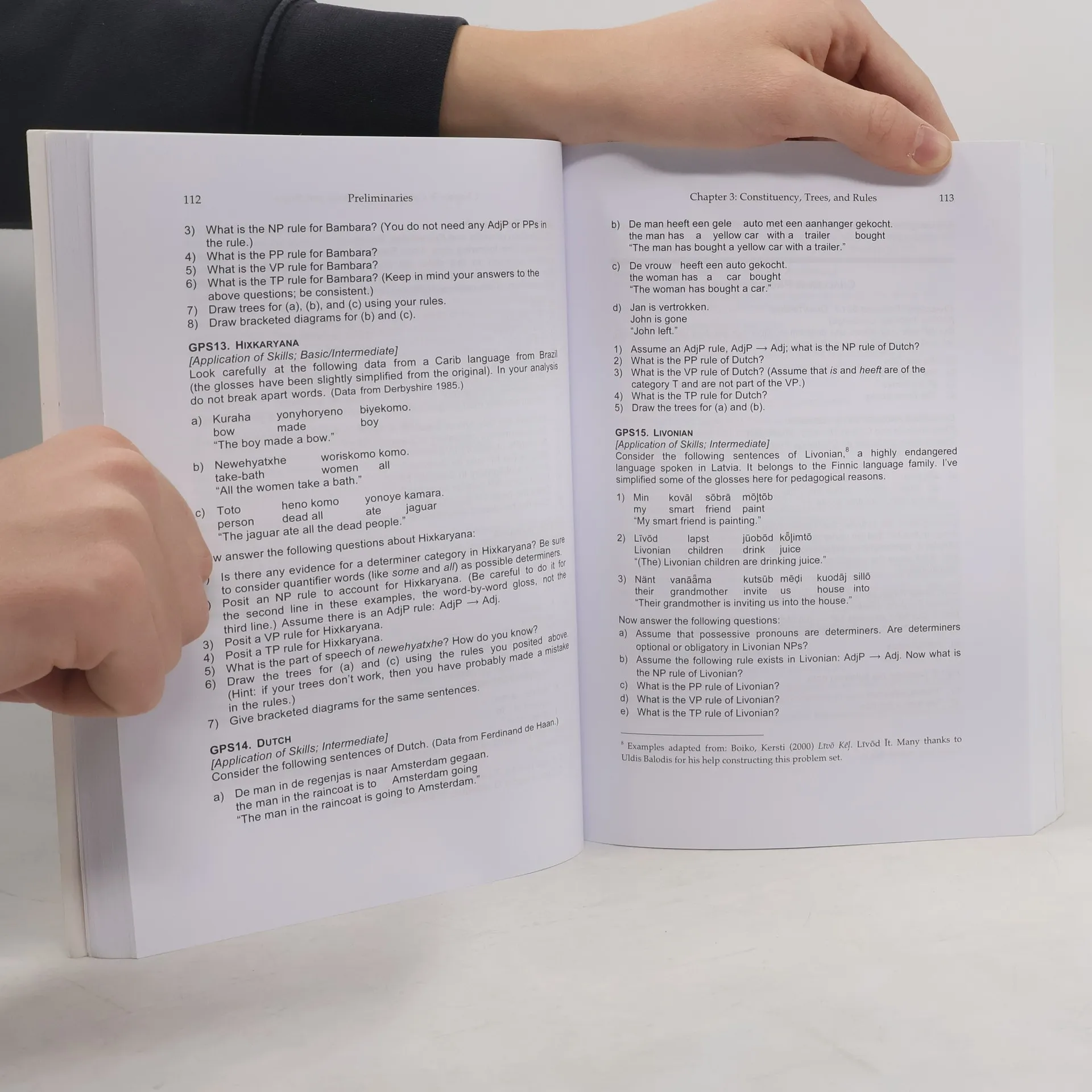
Andrew Carnie's bestselling textbook on syntax has guided thousands of students through the discipline of theoretical syntax; retaining its popularity due to its combination of straightforward language, comprehensive coverage, and numerous exercises. In this third edition, topics have been updated, new exercises added, and the online resources have been expanded. Supported by expanded online student and instructor resources, including extra chapters on HPSG, LFG and time-saving materials for lecturers, including problem sets, PowerPoint slides, and an instructors' manual Features new chapters on ellipsis, auxiliaries, and non-configurational languages Covers topics including phrase structure, the lexicon, Case theory, movement, covert movement, locality conditions, VP shells, and control Accompanied by a new optional workbook, available separately, of sample problem sets which are designed to give students greater experience of analyzing syntactic structure


Zakup książki
Introducing Linguistics - 4: Syntax, Andrew Carnie
- Język

- Rok wydania
- 2012
- Oprawa
- (miękka)
Metody płatności
Brakuje nam tutaj Twojej recenzji.
- Tytuł
- Introducing Linguistics - 4: Syntax
- Podtytuł
- A Generative Introduction - Third Edition
- Język
- angielski
- Autorzy
- Andrew Carnie
- Wydawca
- Wiley-Blackwell
- Rok wydania
- 2012
- Oprawa
- miękka
- Liczba stron
- 542
- ISBN10
- 0470655313
- ISBN13
- 9780470655313
- Seria
- Kategorie
- Tagi
- Podręczniki, Poradniki, USA, Szkoła, Lingwistyka, Uniwersytet, Składnia, kompozycja, szyk zdania
- Ocena
- 3,65 z 5
- Opis
- Andrew Carnie's bestselling textbook on syntax has guided thousands of students through the discipline of theoretical syntax; retaining its popularity due to its combination of straightforward language, comprehensive coverage, and numerous exercises. In this third edition, topics have been updated, new exercises added, and the online resources have been expanded. Supported by expanded online student and instructor resources, including extra chapters on HPSG, LFG and time-saving materials for lecturers, including problem sets, PowerPoint slides, and an instructors' manual Features new chapters on ellipsis, auxiliaries, and non-configurational languages Covers topics including phrase structure, the lexicon, Case theory, movement, covert movement, locality conditions, VP shells, and control Accompanied by a new optional workbook, available separately, of sample problem sets which are designed to give students greater experience of analyzing syntactic structure