

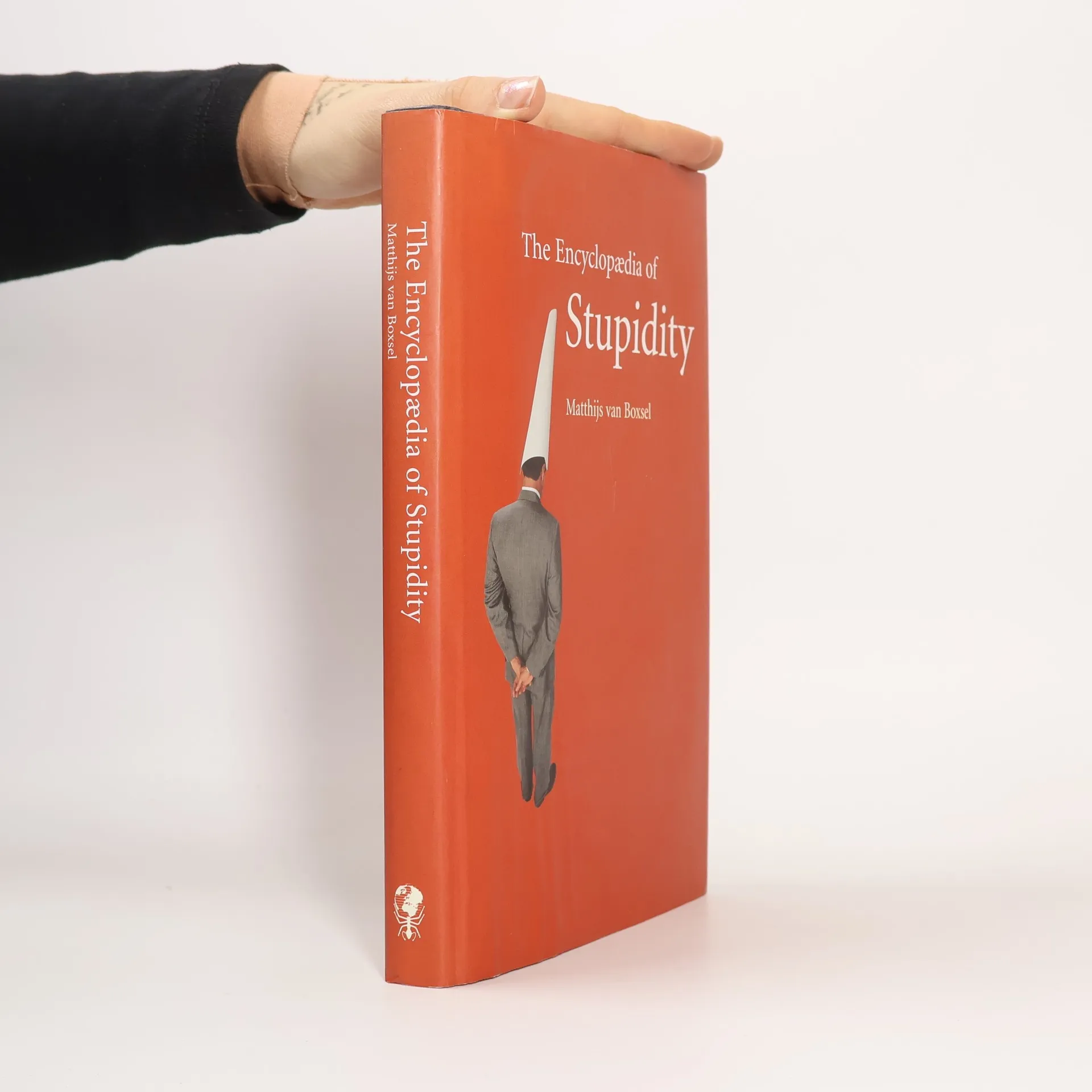
Więcej o książce
Matthijs van Boxsel believes that no one is intelligent enough to understand their own stupidity. In The Encyclopædia of Stupidity he shows how stupidity manifests itself in all areas, in everyone, at all times, proposing that stupidity is the foundation of our civilization. In short sections with such titles as ‘The Blunderers’ Club’, ‘Fools in Hell’, ‘Genealogy of Idiots’, and ‘The Aesthetics of the Empty Gesture’, stupidity is analysed on the basis of fairy tales, cartoons, triumphal arches, garden architecture, Baroque ceilings, jokes, flimsy excuses and science fiction. But Van Boxsel wants to do more than just assemble a ‘shadow cabinet’ of wisdom; he tries to fathom the logic of this opposite world. Where do understanding and intelligence begin and end? He examines mythic fools such as Cyclops and King Midas, cities such as Gotham, archetypes including the dumb blonde, and traditionally stupid animals such as the goose, the donkey and the headless chicken. Van Boxsel posits that stupidity is a condition for intelligence, that blunders stimulate progress, that failure is the basis for success. In this erudite and witty book he maintains that our culture is the product of a series of failed attempts to comprehend stupidity.

Zakup książki
The Encyclopedia of Stupidity, Matthijs van Boxsel, Arnold Pomerans, Erica Pomerans
- Język

- Rok wydania
- 2003
- Oprawa
- (twarda)
Metody płatności
Brakuje nam tutaj Twojej recenzji.
- Tytuł
- The Encyclopedia of Stupidity
- Język
- angielski
- Wydawca
- Reaktion Books
- Rok wydania
- 2003
- Oprawa
- twarda
- Liczba stron
- 248
- ISBN10
- 1861891598
- ISBN13
- 9781861891594
- Seria
- Kategorie
- Ocena
- 3,1 z 5
- Opis
- Matthijs van Boxsel believes that no one is intelligent enough to understand their own stupidity. In The Encyclopædia of Stupidity he shows how stupidity manifests itself in all areas, in everyone, at all times, proposing that stupidity is the foundation of our civilization. In short sections with such titles as ‘The Blunderers’ Club’, ‘Fools in Hell’, ‘Genealogy of Idiots’, and ‘The Aesthetics of the Empty Gesture’, stupidity is analysed on the basis of fairy tales, cartoons, triumphal arches, garden architecture, Baroque ceilings, jokes, flimsy excuses and science fiction. But Van Boxsel wants to do more than just assemble a ‘shadow cabinet’ of wisdom; he tries to fathom the logic of this opposite world. Where do understanding and intelligence begin and end? He examines mythic fools such as Cyclops and King Midas, cities such as Gotham, archetypes including the dumb blonde, and traditionally stupid animals such as the goose, the donkey and the headless chicken. Van Boxsel posits that stupidity is a condition for intelligence, that blunders stimulate progress, that failure is the basis for success. In this erudite and witty book he maintains that our culture is the product of a series of failed attempts to comprehend stupidity.