

Więcej o książce
The Other Rooms" is a sequel to Yoko Ono's "Grapefruit," a now classic artist's book that was first published in 1964 and became a cult classic following its wider distribution after 1970. Matching the satisfyingly compact size of "Grapefruit," and beautifully bound in white cloth, "The Other Rooms" is conceived as a series of rooms that unfold the story of, in the words of the artist, "the life of a woman seeing through the eyes of her son." On page after page, or room after room, Ono walks the reader through her unique expression of motherly utopian pedagogy, providing observations and instruction "pieces" such as the following, for "Balance Piece": a) Politicians should wear pink transparent loose robes or pajama-like outfits without the bottoms at all times. b) A priest should wear a bright red suit with one sleeve and bell-bottom pants with his penis exposed at all times. c) The army should wear drag (cocktail party-type flair skirts) and high-heel shoes with jewelry (earrings, etc.) Other sequences simply describe imaginary rooms, and invite the reader to inhabit them, or suggest new approaches to tasks such as gardening, or to one's hometown, all in the serenely open style for which Ono is so famed. "The Other Rooms" is joyfully interactive in this sense, finding ways "to open doors where there are no doors.

Zakup książki
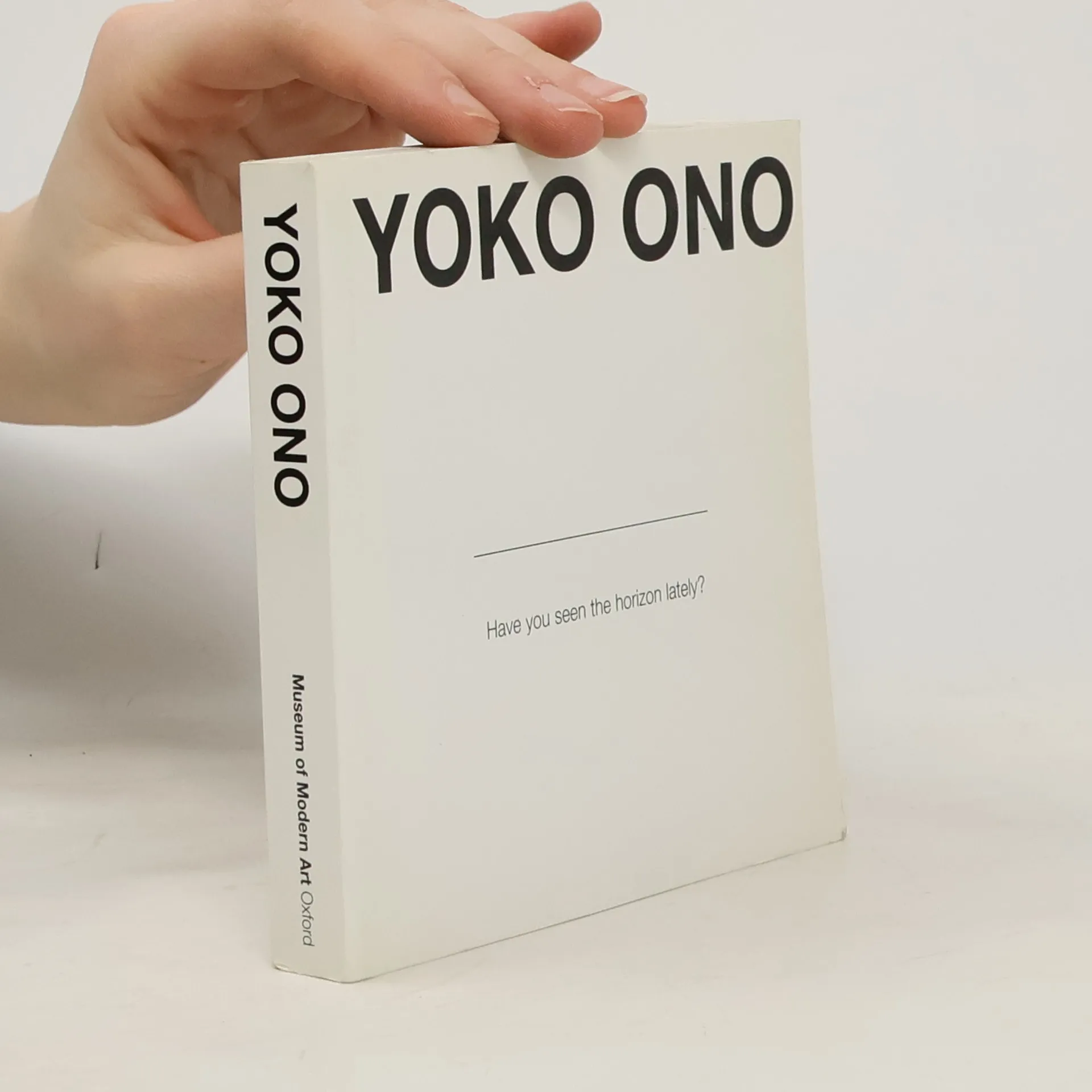
Yoko Ono, Chrissie Iles, Yōko Ono
- Język

- Rok wydania
- 1997
- Oprawa
- (miękka)
Metody płatności
Brakuje nam tutaj Twojej recenzji.
- Tytuł
- Yoko Ono
- Podtytuł
- Have You Seen the Horizon Lately?
- Język
- angielski
- Autorzy
- Chrissie Iles, Yōko Ono
- Wydawca
- Cornerhouse Publications
- Rok wydania
- 1997
- Oprawa
- miękka
- Liczba stron
- 256
- ISBN10
- 1901352021
- ISBN13
- 9781901352023
- Seria
- Kategorie
- Tagi
- Katalogi wystaw
- Ocena
- 4,3 z 5
- Opis
- The Other Rooms" is a sequel to Yoko Ono's "Grapefruit," a now classic artist's book that was first published in 1964 and became a cult classic following its wider distribution after 1970. Matching the satisfyingly compact size of "Grapefruit," and beautifully bound in white cloth, "The Other Rooms" is conceived as a series of rooms that unfold the story of, in the words of the artist, "the life of a woman seeing through the eyes of her son." On page after page, or room after room, Ono walks the reader through her unique expression of motherly utopian pedagogy, providing observations and instruction "pieces" such as the following, for "Balance Piece": a) Politicians should wear pink transparent loose robes or pajama-like outfits without the bottoms at all times. b) A priest should wear a bright red suit with one sleeve and bell-bottom pants with his penis exposed at all times. c) The army should wear drag (cocktail party-type flair skirts) and high-heel shoes with jewelry (earrings, etc.) Other sequences simply describe imaginary rooms, and invite the reader to inhabit them, or suggest new approaches to tasks such as gardening, or to one's hometown, all in the serenely open style for which Ono is so famed. "The Other Rooms" is joyfully interactive in this sense, finding ways "to open doors where there are no doors.