

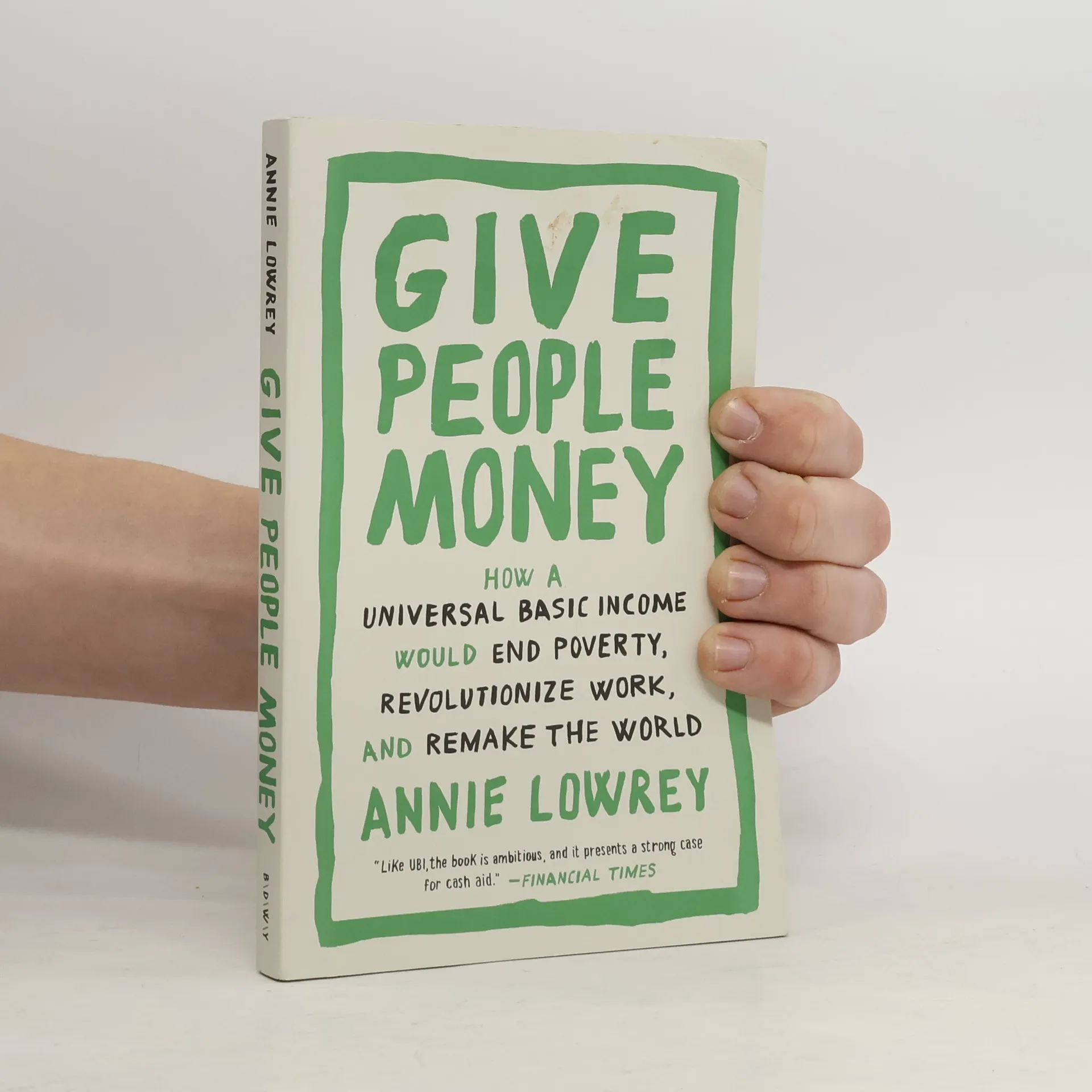
Give People Money
How a Universal Basic Income Would End Poverty, Revolutionize Work, and Remake the World
Autorzy
Ocena książki
Parametry
- 272 strony
- 10 godzin czytania
Więcej o książce
This brilliantly reported exploration delves into universal basic income (UBI)—a stipend given to every citizen—and its potential necessity amid rising inequality, persistent poverty, and advancing technology. Imagine receiving $1,000 monthly from the government with no strings attached. While it may seem radical, UBI has emerged as a hotly debated policy idea, attracting attention from a diverse array of voices, including futurists, socialists, conservatives, and politicians worldwide. The author examines the UBI movement from multiple perspectives, traveling to Kenya to witness its impact on the poorest citizens, India to critique failing government programs, South Korea to investigate UBI's intellectual roots, and Silicon Valley to meet tech leaders funding UBI trials in anticipation of a future with advanced AI and reduced labor needs. Lowrey discusses the potential benefits of UBI, as well as the challenges it faces, such as conflicting goals, financial concerns, and the deep-seated belief that no one should receive something for nothing. Ultimately, she presents UBI as a potential solution to significant economic issues, offering a new vision of citizenship and a stronger societal foundation in an era marked by both turbulence and innovation.

Zakup książki
Give People Money, Annie Lowrey
- Język

- Rok wydania
- 2019
- Oprawa
- (miękka)
Metody płatności
Brakuje nam tutaj Twojej recenzji.
- Tytuł
- Give People Money
- Podtytuł
- How a Universal Basic Income Would End Poverty, Revolutionize Work, and Remake the World
- Język
- angielski
- Autorzy
- Annie Lowrey
- Wydawca
- Crown Archetype
- Rok wydania
- 2019
- Oprawa
- miękka
- Liczba stron
- 272
- ISBN10
- 1524758779
- ISBN13
- 9781524758776
- Seria
- Kategorie
- Tagi
- Biznes, Polityka, Prezenty dla dziadka, Stosunki międzynarodowe, Sprawiedliwość społeczna, Podstawowy dochód (UBI)
- Pierwsze wydanie
- 2018
- Oryginalna nazwa
- Give People Money
- Ocena
- 3,95 z 5
- Opis
- This brilliantly reported exploration delves into universal basic income (UBI)—a stipend given to every citizen—and its potential necessity amid rising inequality, persistent poverty, and advancing technology. Imagine receiving $1,000 monthly from the government with no strings attached. While it may seem radical, UBI has emerged as a hotly debated policy idea, attracting attention from a diverse array of voices, including futurists, socialists, conservatives, and politicians worldwide. The author examines the UBI movement from multiple perspectives, traveling to Kenya to witness its impact on the poorest citizens, India to critique failing government programs, South Korea to investigate UBI's intellectual roots, and Silicon Valley to meet tech leaders funding UBI trials in anticipation of a future with advanced AI and reduced labor needs. Lowrey discusses the potential benefits of UBI, as well as the challenges it faces, such as conflicting goals, financial concerns, and the deep-seated belief that no one should receive something for nothing. Ultimately, she presents UBI as a potential solution to significant economic issues, offering a new vision of citizenship and a stronger societal foundation in an era marked by both turbulence and innovation.