


Parametry
- 96 stron
- 4 godziny czytania
Więcej o książce
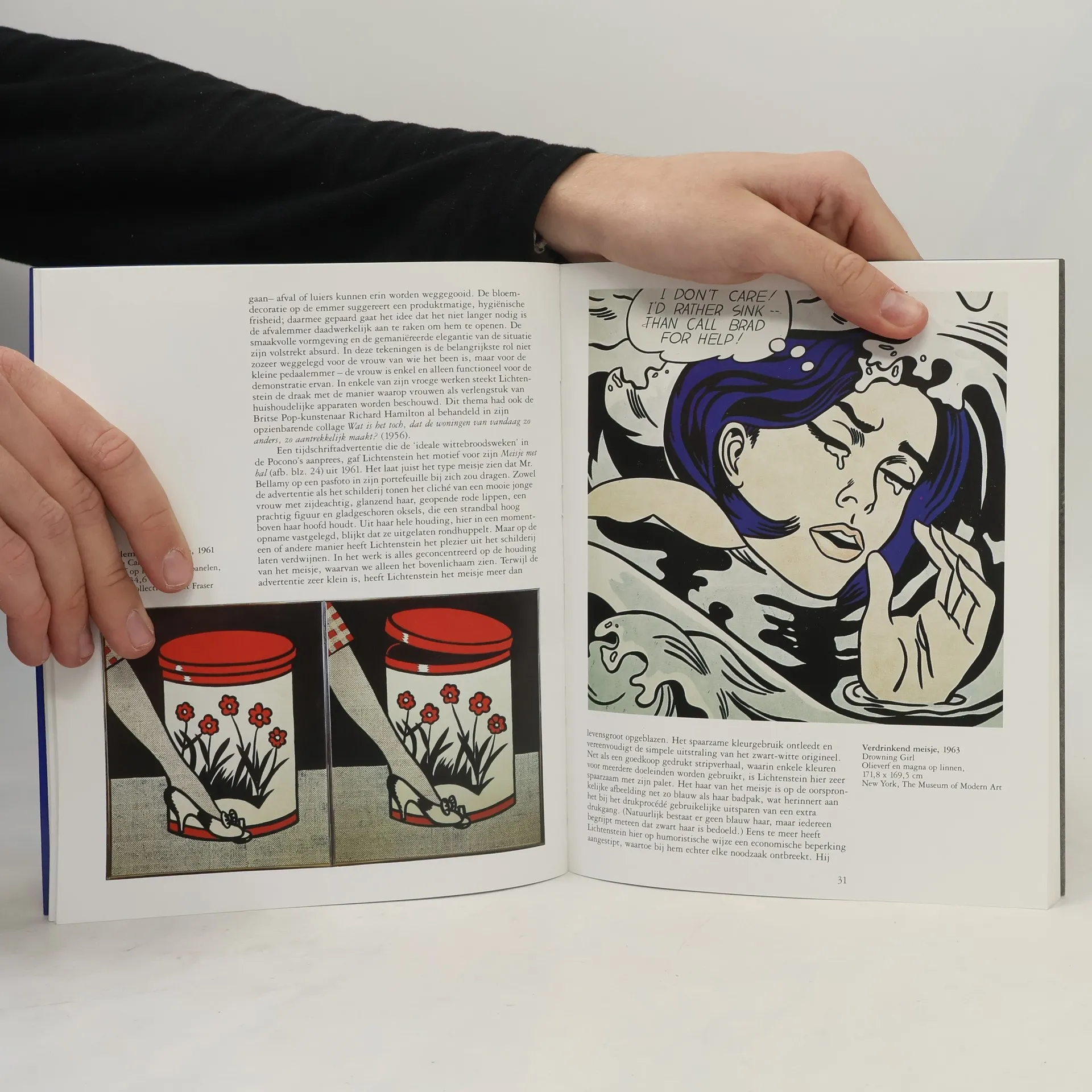
The American painter Roy Lichtenstein (1923–1997) found his own visual language in the late 1950s through a coincidence that contributed to the emergence of Pop Art. A colorful gum image from his childhood inspired him to create his iconic images featuring speech bubbles, which initially shocked the cultural establishment but soon established him as a star of the young Pop Art movement alongside Warhol, Rauschenberg, and Wesselmann. Lichtenstein used trivial everyday images from comic strips and advertising, connecting him with contemporaries like Andy Warhol and James Rosenquist, who also addressed the visual worlds of American mass media and consumer culture. Works such as Look, Mickey! (1961), Drowning Girl (1963), and Whaam! (1963) imitated industrial printing techniques with dot patterns, known as Benday dots, and were enlarged to monumental proportions; a style that is inseparably linked to Lichtenstein. This book provides an overview of Lichtenstein's work, from his earliest Pop Art statements to his later responses to abstract expressionism and his dotted reinterpretations of masterpieces by Picasso, Mondrian, and Dalí.

Zakup książki
Roy Lichtenstein, Janis Hendrickson
- Język


- Rok wydania
- 2001
- Oprawa
- (miękka)
Metody płatności
Brakuje nam tutaj Twojej recenzji.
- Tytuł
- Roy Lichtenstein
- Język
- angielski, holenderski
- Autorzy
- Janis Hendrickson
- Wydawca
- Taschen
- Rok wydania
- 2001
- Oprawa
- miękka
- Liczba stron
- 96
- ISBN10
- 3822809101
- ISBN13
- 9783822809105
- Seria
- Kategorie
- Ocena
- 4,05 z 5
- Opis
- The American painter Roy Lichtenstein (1923–1997) found his own visual language in the late 1950s through a coincidence that contributed to the emergence of Pop Art. A colorful gum image from his childhood inspired him to create his iconic images featuring speech bubbles, which initially shocked the cultural establishment but soon established him as a star of the young Pop Art movement alongside Warhol, Rauschenberg, and Wesselmann. Lichtenstein used trivial everyday images from comic strips and advertising, connecting him with contemporaries like Andy Warhol and James Rosenquist, who also addressed the visual worlds of American mass media and consumer culture. Works such as Look, Mickey! (1961), Drowning Girl (1963), and Whaam! (1963) imitated industrial printing techniques with dot patterns, known as Benday dots, and were enlarged to monumental proportions; a style that is inseparably linked to Lichtenstein. This book provides an overview of Lichtenstein's work, from his earliest Pop Art statements to his later responses to abstract expressionism and his dotted reinterpretations of masterpieces by Picasso, Mondrian, and Dalí.