

Parametry
- 325 stron
- 12 godzin czytania
Więcej o książce
"The Pillow Book of Sei Shonagon" is a fascinating, detailed account of Japanese court life in the eleventh century. Written by a lady of the court at the height of Heian culture, this book enthralls with its lively gossip, witty observations, and subtle impressions. Lady Shonagon was an erstwhile rival of Lady Murasaki, whose novel, "The Tale of Genji," fictionalized the elite world Lady Shonagon so eloquently relates. Featuring reflections on royal and religious ceremonies, nature, conversation, poetry, and many other subjects, "The Pillow Book" is an intimate look at the experiences and outlook of the Heian upper class, further enriched by Ivan Morris's extensive notes and critical contextualization.


Zakup książki
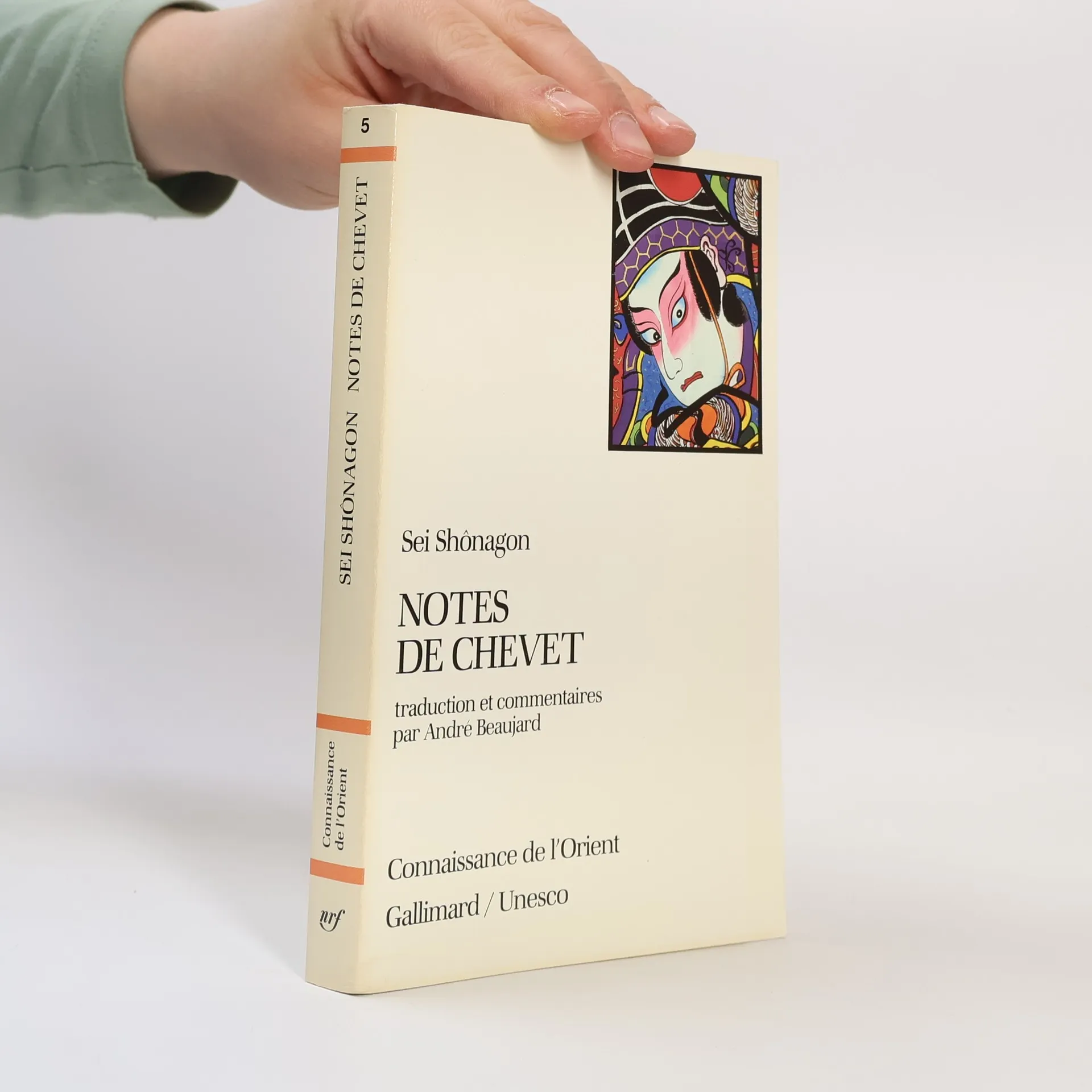
Connaissance de l'Orient - 5: Notes de chevet, Sei Shōnagon, André Beaujard
- Język

- Rok wydania
- 1966
- Oprawa
- (miękka)
Metody płatności
Brakuje nam tutaj Twojej recenzji.
- Tytuł
- Connaissance de l'Orient - 5: Notes de chevet
- Język
- francuski
- Autorzy
- Sei Shōnagon, André Beaujard
- Wydawca
- Gallimard
- Rok wydania
- 1966
- Oprawa
- miękka
- Liczba stron
- 325
- ISBN10
- 2070705331
- ISBN13
- 9782070705337
- Seria
- Kategorie
- Tagi
- Tematy historyczne, Tematy religijne, Opowiadania, Społeczeństwo, Japonia, Chiny, Dzienniki, Liryka, Literatura japońska, Refleksje & Przemyślenia, Arystokracja & Szlachta, Cesarze
- Ocena
- 4 z 5
- Opis
- "The Pillow Book of Sei Shonagon" is a fascinating, detailed account of Japanese court life in the eleventh century. Written by a lady of the court at the height of Heian culture, this book enthralls with its lively gossip, witty observations, and subtle impressions. Lady Shonagon was an erstwhile rival of Lady Murasaki, whose novel, "The Tale of Genji," fictionalized the elite world Lady Shonagon so eloquently relates. Featuring reflections on royal and religious ceremonies, nature, conversation, poetry, and many other subjects, "The Pillow Book" is an intimate look at the experiences and outlook of the Heian upper class, further enriched by Ivan Morris's extensive notes and critical contextualization.