

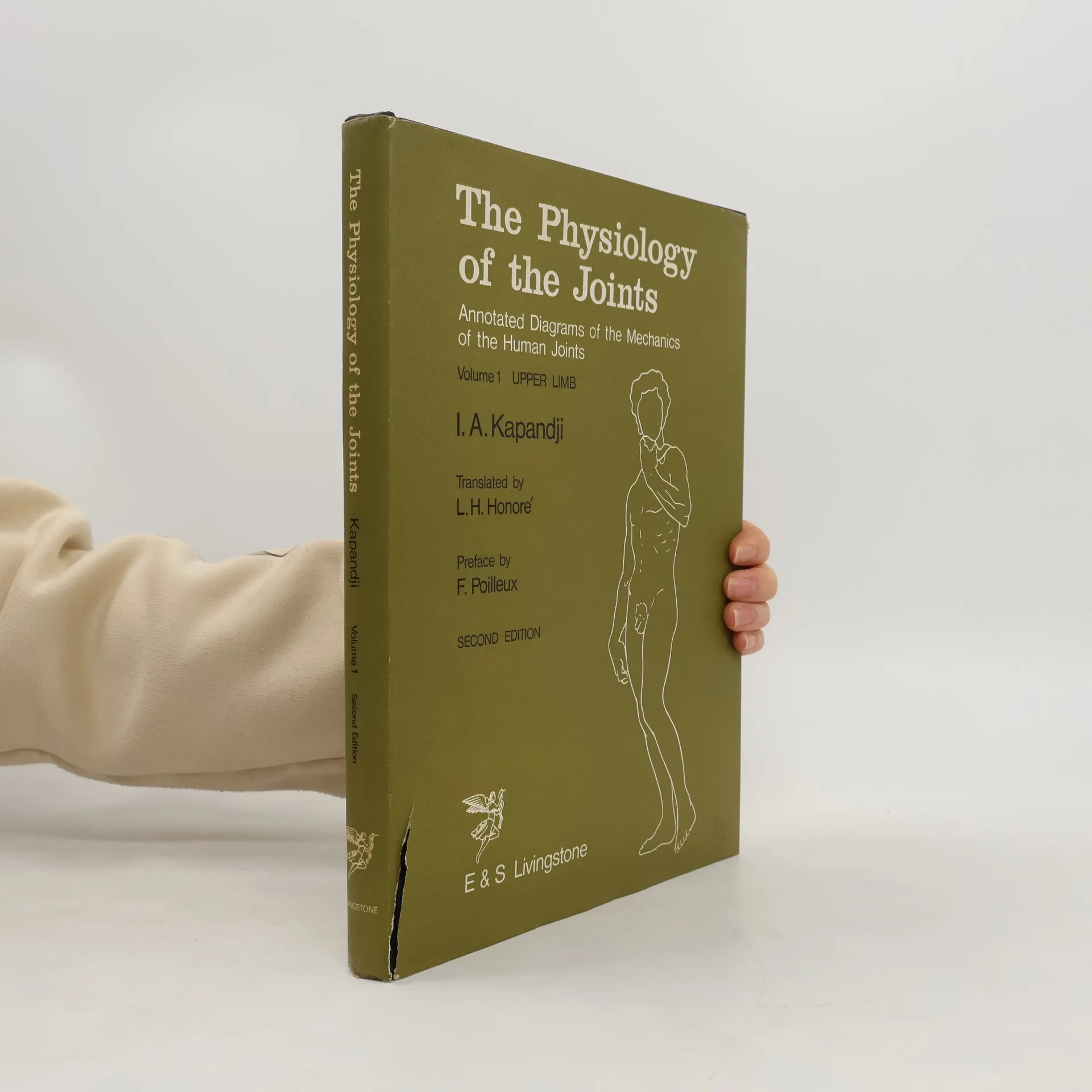
The Physiology of the Joints, Volume One
Upper Limb - Annotated Diagrams of the Mechanics of the Human Joints - Second Edition
Ocena książki
Więcej o książce
This text provides the reader an understanding of the mechanics of the joints with the help of diagrams rather than text. The commentaries are short; the quality, clarity, and simplicity of the drawings and diagrams are such that they could be understood without any verbal explanation. The drawings are unusually clear: everything which could hinder understanding has been removed and one feels that the author has foreseen the difficulties which the student could encounter. Each time a problem arises it is explained by a diagram which, though simplified, is extremely clear. New functional tests for the shoulder, the elbow, and the hand Explanation of why the forearm has two bones A logical and mathematical explanation of the so-called CODMANN Paradox New conceptions of the physiology of the carpus Clear explanation of notions as DISI and VISI for the pathology of the carpus New cotation of the thumb opposition and counter-opposition, presently integrated in the International Evaluation Fundamental notion of the complex grip-plus-action, very important for the evaluation of the function of the hand Symbolic and affective value of the hand A comprehensive board of the motor nerves of the upper limb New test to detect an ulnar palsy at the forearm

Zakup książki
The Physiology of the Joints, Volume One, Adalbert I. Kapandji, L. H. Honoré, F. Poilleux
- Język

- Rok wydania
- 1970
- Oprawa
- (twarda)
Metody płatności
Brakuje nam tutaj Twojej recenzji.
- Tytuł
- The Physiology of the Joints, Volume One
- Podtytuł
- Upper Limb - Annotated Diagrams of the Mechanics of the Human Joints - Second Edition
- Język
- angielski
- Autorzy
- Adalbert I. Kapandji, L. H. Honoré, F. Poilleux
- Rok wydania
- 1970
- Oprawa
- twarda
- Liczba stron
- 203
- ISBN10
- 0443006547
- ISBN13
- 9780443006548
- Seria
- Kategorie
- Ocena
- 1 z 5
- Opis
- This text provides the reader an understanding of the mechanics of the joints with the help of diagrams rather than text. The commentaries are short; the quality, clarity, and simplicity of the drawings and diagrams are such that they could be understood without any verbal explanation. The drawings are unusually clear: everything which could hinder understanding has been removed and one feels that the author has foreseen the difficulties which the student could encounter. Each time a problem arises it is explained by a diagram which, though simplified, is extremely clear. New functional tests for the shoulder, the elbow, and the hand Explanation of why the forearm has two bones A logical and mathematical explanation of the so-called CODMANN Paradox New conceptions of the physiology of the carpus Clear explanation of notions as DISI and VISI for the pathology of the carpus New cotation of the thumb opposition and counter-opposition, presently integrated in the International Evaluation Fundamental notion of the complex grip-plus-action, very important for the evaluation of the function of the hand Symbolic and affective value of the hand A comprehensive board of the motor nerves of the upper limb New test to detect an ulnar palsy at the forearm