

Parametry
- 341 stron
- 12 godzin czytania
Więcej o książce
It is such an all-American story. A lanky kid from Plano, Texas, is raised by a feisty, single parent who sacrifices for her son, who becomes one of our country's greatest athletes. Given that background, it is understandable why Armstrong was able to channel his boundless energy toward athletic endeavors. By his senior year in high school, he was already a professional triathlete and was training with the U.S. Olympic cycling developmental team. In 1993, Armstrong secured a position in the ranks of world-class cyclists by winning the World Championship and a Tour de France stage, but in 1996, he was diagnosed with testicular cancer. Armstrong entered an unknown battlefield and challenged it as if climbing through the Alps: aggressive yet tactical. He beat the cancer and proceeded to stun all the pundits by winning the 1999 Tour de France. In this memoir, Armstrong covers his early years swiftly with a blunt matter-of-factness, but the main focus is on his battle with cancer. Readers will respond to the inspirational recovery story, and they will appreciate the behind-the-scenes cycling information. After he won the Tour, his mother was quoted as saying that her son's whole life has been a fight against the odds; we see here that she was not exaggerating. Brenda Barrera


Zakup książki
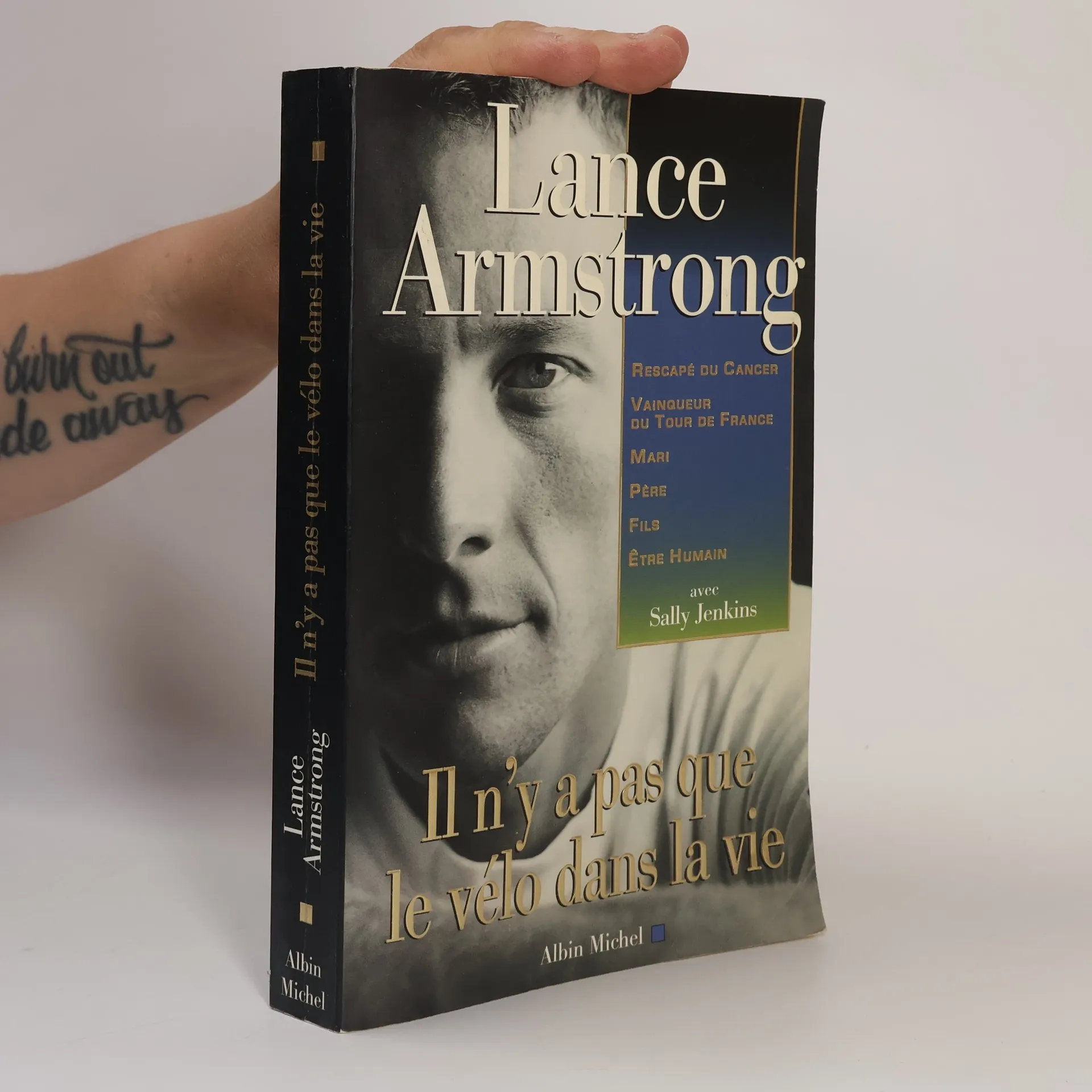
Il n'y a pas que le vélo dans la vie, Lance Armstrong, Sally Jenkins, Dominique Rinaudo
- Język

- Rok wydania
- 2000
- Oprawa
- (miękka)
Metody płatności
Brakuje nam tutaj Twojej recenzji.
- Tytuł
- Il n'y a pas que le vélo dans la vie
- Język
- francuski
- Wydawca
- Albin Michel
- Rok wydania
- 2000
- Oprawa
- miękka
- Liczba stron
- 341
- ISBN10
- 2226115722
- ISBN13
- 9782226115720
- Seria
- Kategorie
- Tagi
- Sport, Francja, Choroby, Rak & Nowotwory, Kolarstwo, Rower, Wyścigi rowerowe, Chemioterapia, Doping, Tour de France
- Oryginalna nazwa
- It's not about the bike
- Ocena
- 3,7 z 5
- Opis
- It is such an all-American story. A lanky kid from Plano, Texas, is raised by a feisty, single parent who sacrifices for her son, who becomes one of our country's greatest athletes. Given that background, it is understandable why Armstrong was able to channel his boundless energy toward athletic endeavors. By his senior year in high school, he was already a professional triathlete and was training with the U.S. Olympic cycling developmental team. In 1993, Armstrong secured a position in the ranks of world-class cyclists by winning the World Championship and a Tour de France stage, but in 1996, he was diagnosed with testicular cancer. Armstrong entered an unknown battlefield and challenged it as if climbing through the Alps: aggressive yet tactical. He beat the cancer and proceeded to stun all the pundits by winning the 1999 Tour de France. In this memoir, Armstrong covers his early years swiftly with a blunt matter-of-factness, but the main focus is on his battle with cancer. Readers will respond to the inspirational recovery story, and they will appreciate the behind-the-scenes cycling information. After he won the Tour, his mother was quoted as saying that her son's whole life has been a fight against the odds; we see here that she was not exaggerating. Brenda Barrera