



Więcej o książce
For a brief but explosive period in the mid-seventies, the young, the unemployed and the homeless of Italy’s cities came together in an unexpectedly militant movement known simply as Autonomy. Against the austerity programmes and social discipline of the ruling Christian Democrats and their would-be partners in the Communist Party, the movement developed a “politics of refusal”—expressed in school occupations and factory sabotage, mass shoplifting and violent street protest, combined with carnivalesque creativity. But the movement was soon divided, especially over the issue of armed struggle, while its opponents united behind the most repressive measures ever seen in postwar Italy.Nanni Balestrini, himself a victim of that repression, follows in spare but vivid unpunctuated prose Autonomy’s trajectory through the eyes of one working-class protagonist—from high-school rebellion, squatting and attempts to set up a free radio station, to arrest and the brutalities of imprisonment. This is a powerful and gripping novel: a rare evocation of the intensity of commitment, the passion of politics.



Zakup książki
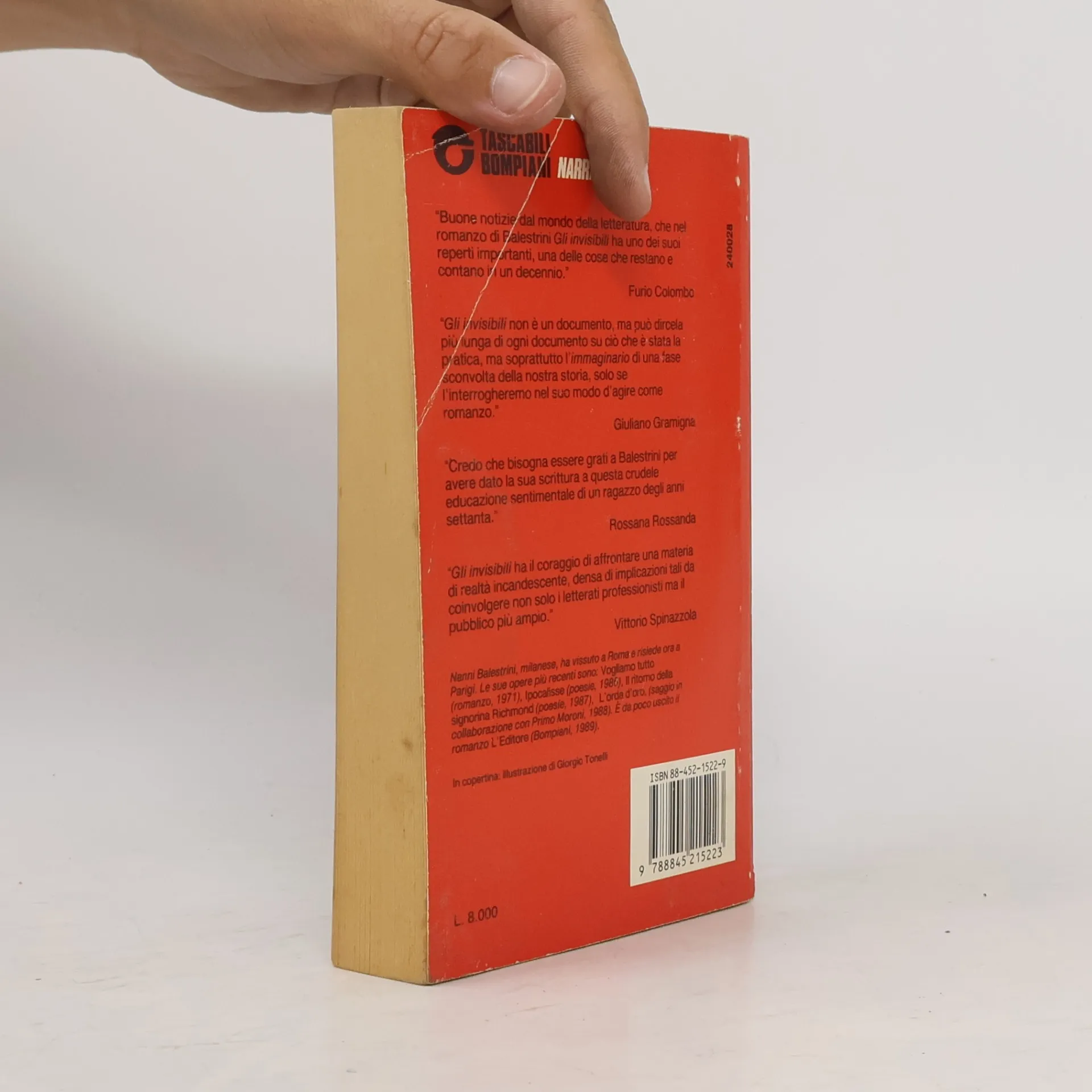
Gli invisibili, Nanni Balestrini
- Język

- Rok wydania
- 1990
- Oprawa
- (miękka)
Metody płatności
Brakuje nam tutaj Twojej recenzji.
- Tytuł
- Gli invisibili
- Język
- włoski
- Autorzy
- Nanni Balestrini
- Wydawca
- Bompiani
- Rok wydania
- 1990
- Oprawa
- miękka
- Liczba stron
- 280
- ISBN10
- 8845215229
- ISBN13
- 9788845215223
- Seria
- Tagi
- Polityka, Południowa Europa, Włochy
- Ocena
- 4,35 z 5
- Opis
- For a brief but explosive period in the mid-seventies, the young, the unemployed and the homeless of Italy’s cities came together in an unexpectedly militant movement known simply as Autonomy. Against the austerity programmes and social discipline of the ruling Christian Democrats and their would-be partners in the Communist Party, the movement developed a “politics of refusal”—expressed in school occupations and factory sabotage, mass shoplifting and violent street protest, combined with carnivalesque creativity. But the movement was soon divided, especially over the issue of armed struggle, while its opponents united behind the most repressive measures ever seen in postwar Italy.Nanni Balestrini, himself a victim of that repression, follows in spare but vivid unpunctuated prose Autonomy’s trajectory through the eyes of one working-class protagonist—from high-school rebellion, squatting and attempts to set up a free radio station, to arrest and the brutalities of imprisonment. This is a powerful and gripping novel: a rare evocation of the intensity of commitment, the passion of politics.