



Parametry
- 128 stron
- 5 godzin czytania
Więcej o książce
The first priniciple of humanitarian assistance is "do no harm." The second might be, "do better!" Enter the evaluation of emergency and disaster management. This issue consolidates reflections from evaluation practices in disaster and emergency management. Our humanitarian impulse, as in the aftermaths of the Rwandan genocide, Hurricane Katrina, the Indian Ocean tsunami, and the January 2010 earthquake in Haiti, is an enduring quality. The route from donor to affected population is long and varied. When sudden, unprecedented needs are juxtaposed with expectional levels of charitable responses, the question is whether the responses were good enough. Did supply meet demand? Was it the right thing? Was it done well? Who received support? Was it appropriate? Was the timing right? Can it be improved? All are questions for evaluation. For populations traumatized by disaster, the answers have consequences for protection, for restoration of individual and community efficacy, and ultimately for hope and dignity.
Zakup książki
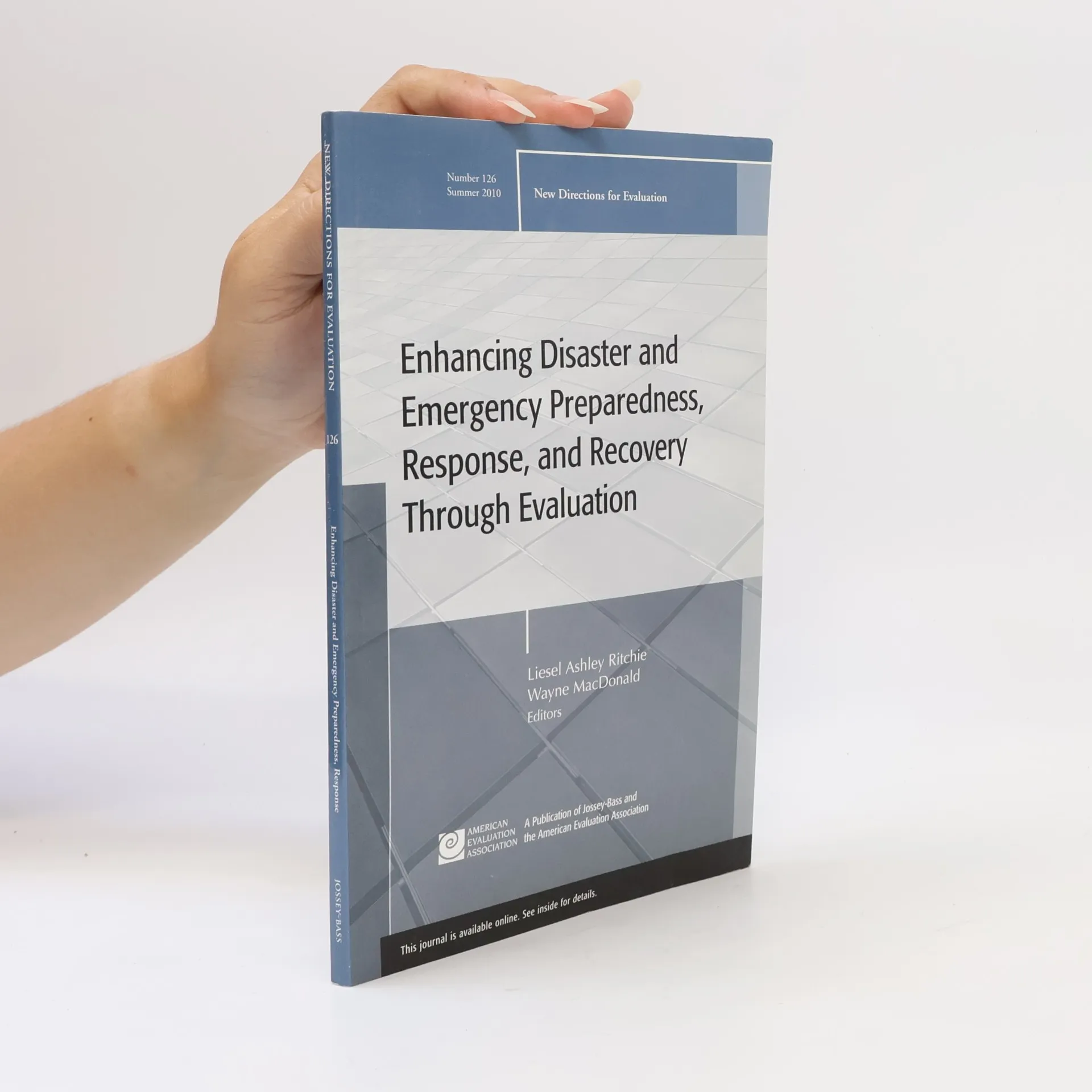
New Directions for Evaluation - 126: Enhancing Disaster and Emergency Preparedness, Response, and Recovery Through Evaluation, Liesel Ashley Ritchie, Wayne MacDonald
- Język

- Rok wydania
- 2010
- Oprawa
- (miękka),
- Stan książki
- Dobry
- Cena
- 24,85 zł
Metody płatności
Nikt jeszcze nie ocenił.
- Tytuł
- New Directions for Evaluation - 126: Enhancing Disaster and Emergency Preparedness, Response, and Recovery Through Evaluation
- Język
- angielski
- Autorzy
- Liesel Ashley Ritchie, Wayne MacDonald
- Wydawca
- Jossey-Bass
- Rok wydania
- 2010
- Oprawa
- miękka
- Liczba stron
- 128
- ISBN10
- 0470769122
- ISBN13
- 9780470769126
- Seria
- Tagi
- Opis
- The first priniciple of humanitarian assistance is "do no harm." The second might be, "do better!" Enter the evaluation of emergency and disaster management. This issue consolidates reflections from evaluation practices in disaster and emergency management. Our humanitarian impulse, as in the aftermaths of the Rwandan genocide, Hurricane Katrina, the Indian Ocean tsunami, and the January 2010 earthquake in Haiti, is an enduring quality. The route from donor to affected population is long and varied. When sudden, unprecedented needs are juxtaposed with expectional levels of charitable responses, the question is whether the responses were good enough. Did supply meet demand? Was it the right thing? Was it done well? Who received support? Was it appropriate? Was the timing right? Can it be improved? All are questions for evaluation. For populations traumatized by disaster, the answers have consequences for protection, for restoration of individual and community efficacy, and ultimately for hope and dignity.