



Ocena książki
Więcej o książce
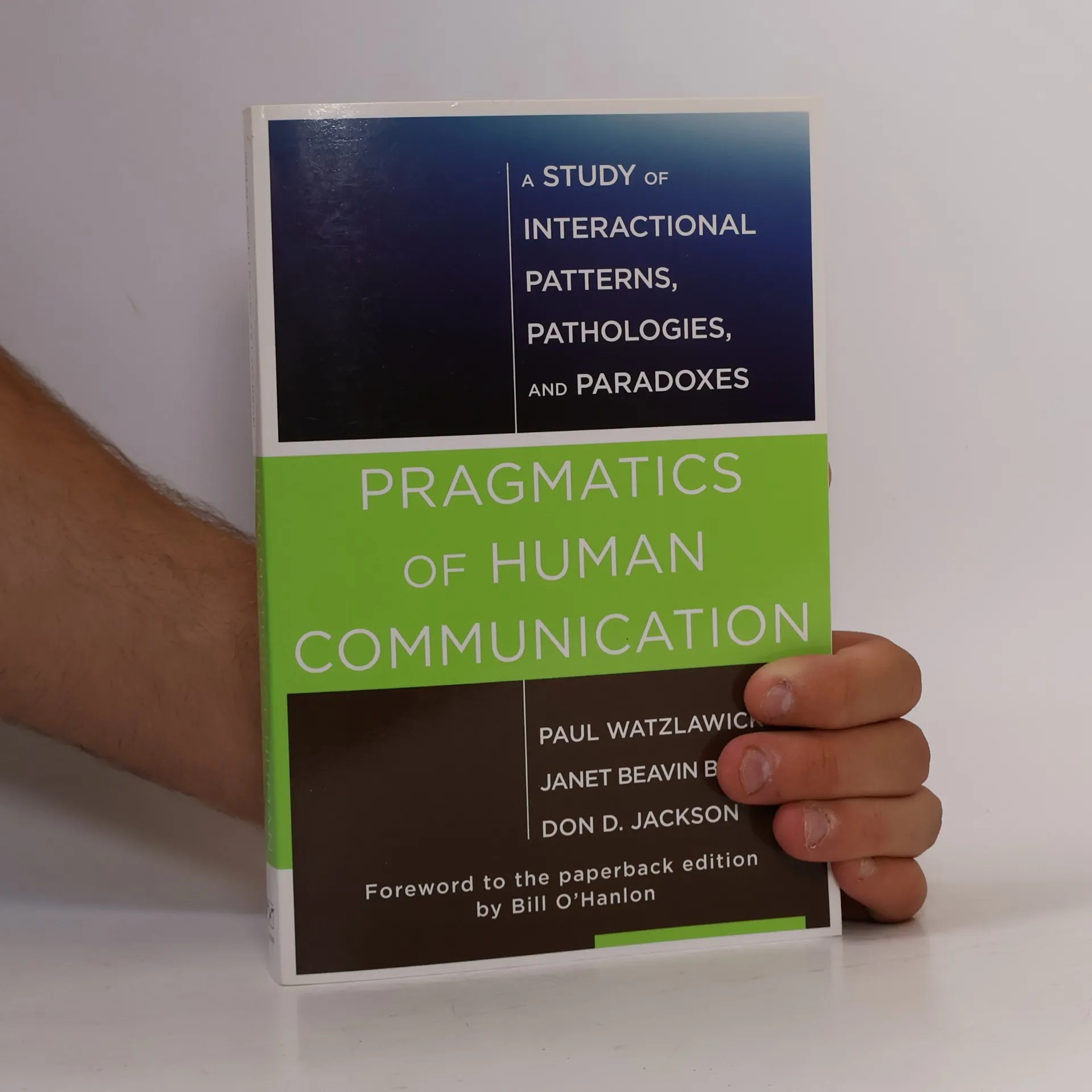
Called “one of the best books ever about human communication,” and a perennial bestseller, Pragmatics of Human Communication has formed the foundation of much contemporary research into interpersonal communication, in addition to laying the groundwork for context-based approaches to psychotherapy. The authors present the simple but radical idea that problems in life often arise from issues of communication, rather than from deep psychological disorders, reinforcing their conceptual explorations with case studies and well-known literary examples. Written with humor and for a variety of readers, this book identifies simple properties and axioms of human communication and demonstrates how all communications are actually a function of their contexts. Topics covered in this wide-ranging book include: the origins of communication; the idea that all behavior is communication; meta-communication; the properties of an open system; the family as a system of communication; the nature of paradox in psychotherapy; existentialism and human communication.




Zakup książki
Pragmatics of Human Communication, Bill O. Hanlon, Janet Beavin Bavelas, Paul Watzlawick, Don D. Jackson
- Język

- Rok wydania
- 2011
- Oprawa
- (miękka)
Metody płatności
Brakuje nam tutaj Twojej recenzji.
- Tytuł
- Pragmatics of Human Communication
- Podtytuł
- A Study of Interactional Patterns, Pathologies and Paradoxes
- Język
- angielski
- Wydawca
- W. W. Norton & Company
- Rok wydania
- 2011
- Oprawa
- miękka
- Liczba stron
- 304
- ISBN10
- 0393707075
- ISBN13
- 9780393707076
- Seria
- Tagi
- Nauka, Literatura fachowa, Lingwistyka, Komunikacja, Studia, Psychoterapia, Studia, Psychopatologia, Komunikacja werbalna, Semiotyka, Lingwistyka pragmatyczna
- Oryginalna nazwa
- Pragmatics of human communication
- Ocena
- 4,05 z 5
- Opis
- Called “one of the best books ever about human communication,” and a perennial bestseller, Pragmatics of Human Communication has formed the foundation of much contemporary research into interpersonal communication, in addition to laying the groundwork for context-based approaches to psychotherapy. The authors present the simple but radical idea that problems in life often arise from issues of communication, rather than from deep psychological disorders, reinforcing their conceptual explorations with case studies and well-known literary examples. Written with humor and for a variety of readers, this book identifies simple properties and axioms of human communication and demonstrates how all communications are actually a function of their contexts. Topics covered in this wide-ranging book include: the origins of communication; the idea that all behavior is communication; meta-communication; the properties of an open system; the family as a system of communication; the nature of paradox in psychotherapy; existentialism and human communication.