

Więcej o książce
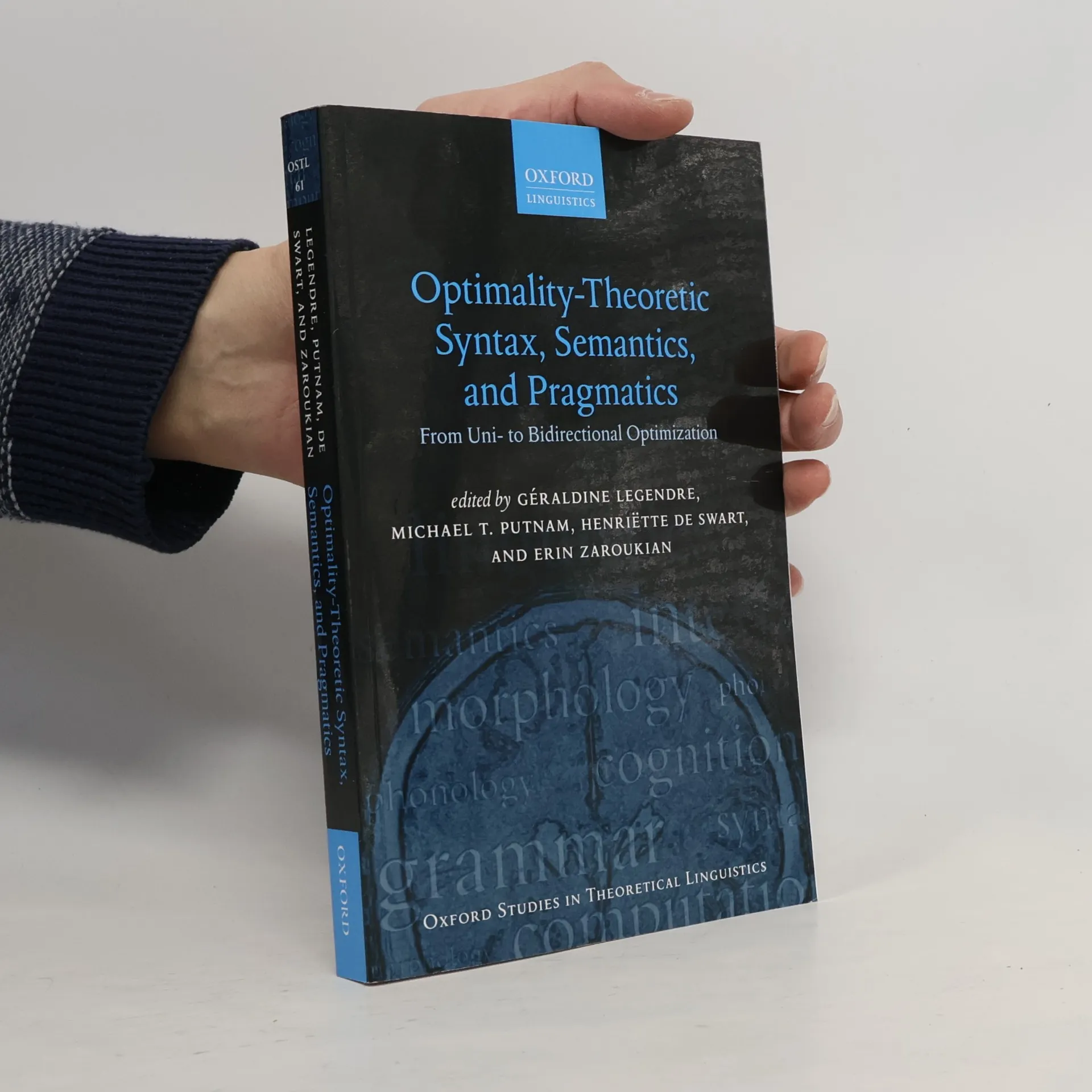
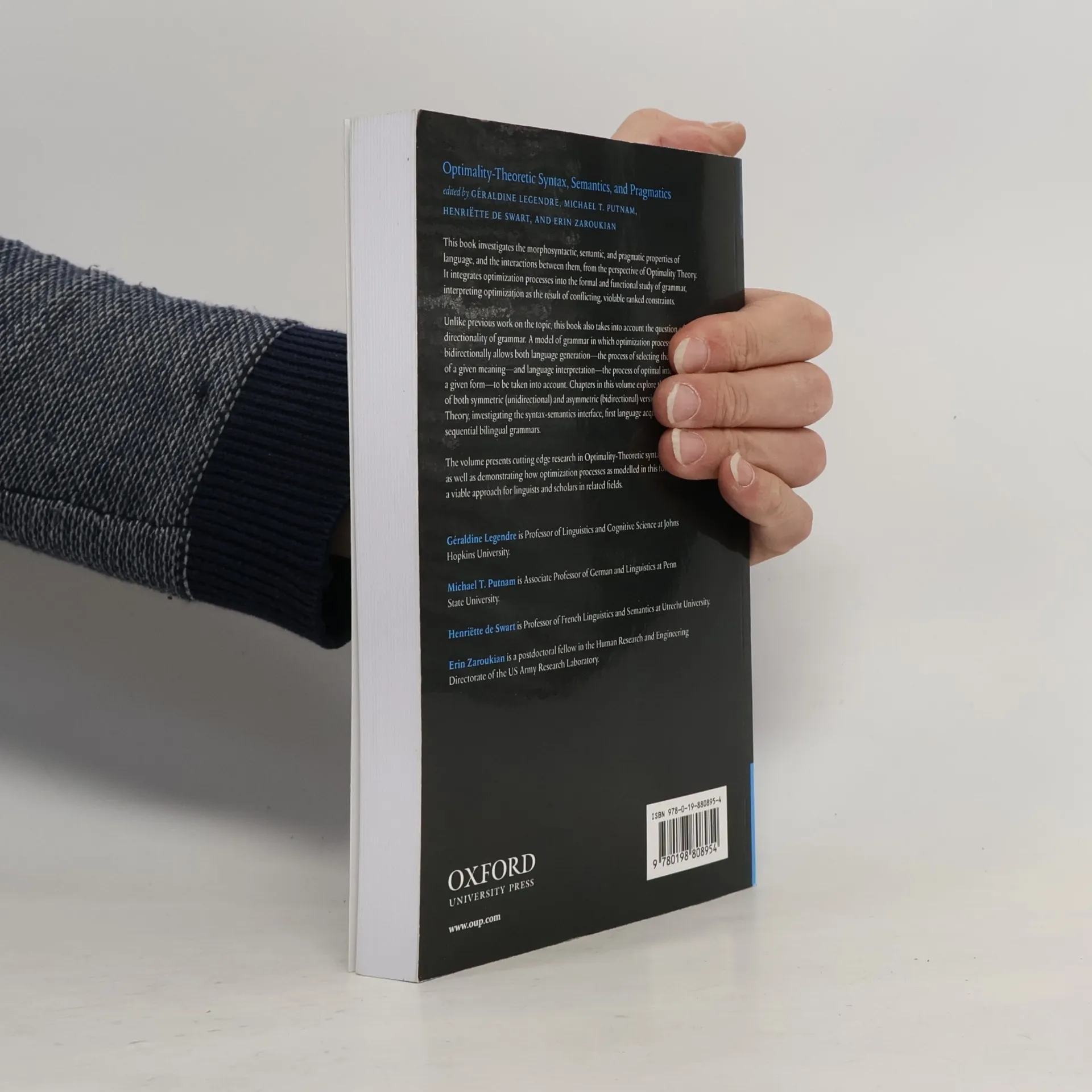
This book investigates the morphosyntactic, semantic, and pragmatic properties of language, and the interactions between them, from the perspective of Optimality Theory. It integrates optimization processes into the formal and functional study of grammar, interpreting optimization as the result of conflicting, violable ranked constraints. Unlike previous work on the topic, this book also takes into account the question of directionality of grammar. A model of grammar in which optimization processes interact bidirectionally allows both language generation-the process of selecting the optimal form of a given meaning-and language interpretation-the process of optimal interpretation of a given form-to be taken into account. Chapters in this volume explore the consequences of both symmetric (unidirectional) and asymmetric (bidirectional) versions of Optimality Theory, investigating the syntax-semantics interface, first language acquisition, and sequential bilingual grammars. The volume presents cutting edge research in Optimality-Theoretic syntax and semantics, as well as demonstrating how optimization processes as modelled in this formalism serve as a viable approach for linguists and scholars in related fields.
Zakup książki
Optimality Theoretic Syntax, Semantics, and Pragmatics, Géraldine Legendre, Michael T. Putnam, Henriëtte de Swart, Erin Zaroukian
- Język

- Rok wydania
- 2018
- Oprawa
- (miękka),
- Stan książki
- Bardzo dobry
- Cena
- 174,79 zł
Metody płatności
Nikt jeszcze nie ocenił.
- Tytuł
- Optimality Theoretic Syntax, Semantics, and Pragmatics
- Podtytuł
- From Uni- to Bidirectional Optimization
- Język
- angielski
- Wydawca
- Oxford University Press
- Rok wydania
- 2018
- Oprawa
- miękka
- Liczba stron
- 384
- ISBN10
- 019880895X
- ISBN13
- 9780198808954
- Seria
- Opis
- This book investigates the morphosyntactic, semantic, and pragmatic properties of language, and the interactions between them, from the perspective of Optimality Theory. It integrates optimization processes into the formal and functional study of grammar, interpreting optimization as the result of conflicting, violable ranked constraints. Unlike previous work on the topic, this book also takes into account the question of directionality of grammar. A model of grammar in which optimization processes interact bidirectionally allows both language generation-the process of selecting the optimal form of a given meaning-and language interpretation-the process of optimal interpretation of a given form-to be taken into account. Chapters in this volume explore the consequences of both symmetric (unidirectional) and asymmetric (bidirectional) versions of Optimality Theory, investigating the syntax-semantics interface, first language acquisition, and sequential bilingual grammars. The volume presents cutting edge research in Optimality-Theoretic syntax and semantics, as well as demonstrating how optimization processes as modelled in this formalism serve as a viable approach for linguists and scholars in related fields.