

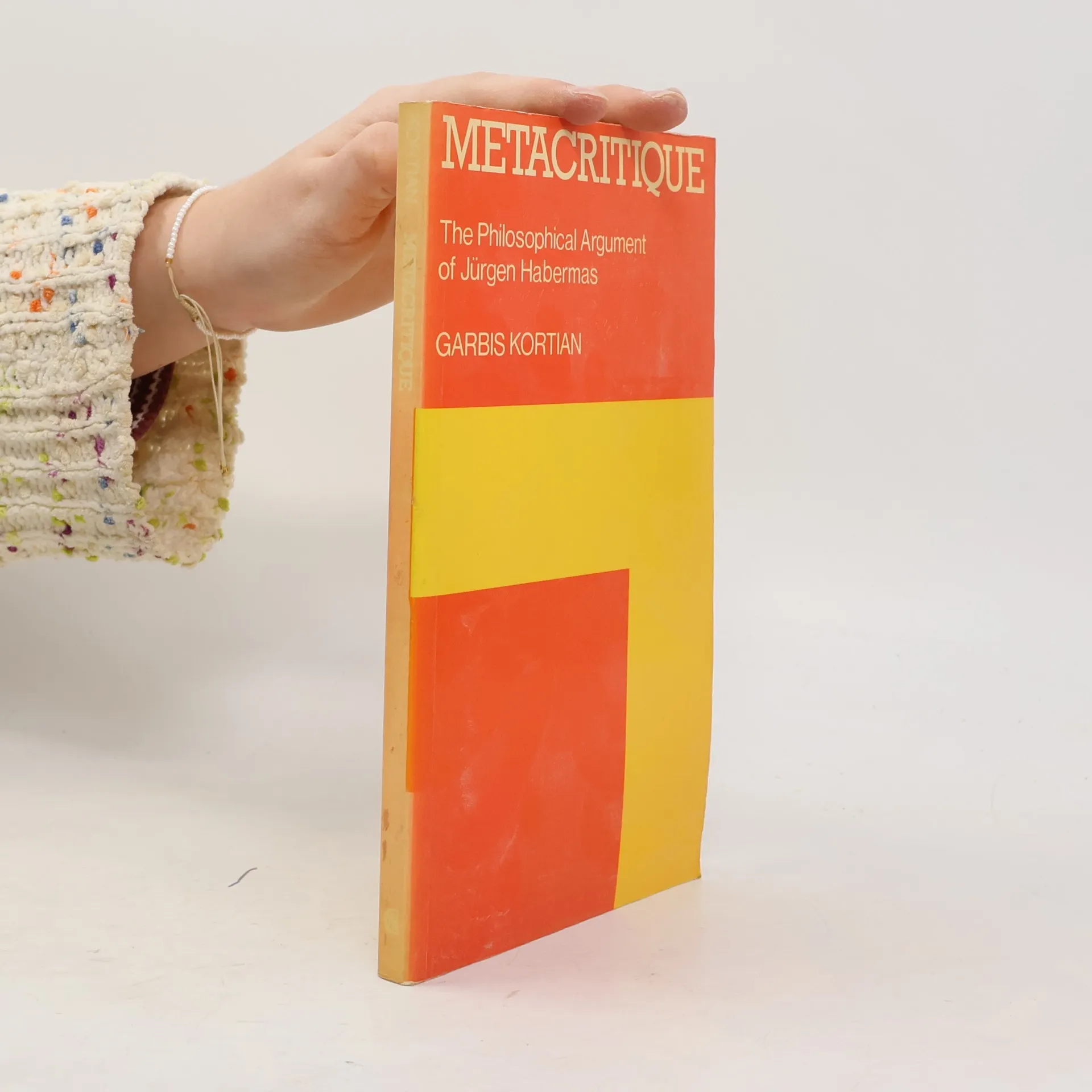


Metacritique
The Philosophical Argument of Jürgen Habermas
Autorzy
Więcej o książce
J�rgen Habermas asserts, in the Preface to Knowledge and Human Interests, that a radical critique of knowledge, that is a metacritique of epistemology, is only possible as a social theory. In this essay, Garbin Kortian discusses the implications and philosophical import of this thesis, which is central to Habermas's work, through a critical account of the German philosophical tradition in which it stands. He relates the 'metacritical dimension' of Haberbas's thought to Hegel's critique of Kant, Marx's critique of Hegel, and the Frankfurt school's critique of positivism. Kortian presents his perspective on the philosophical problems Habermas's argument faces: the primacy of practice, this philosophy of understanding and the hermeneutic concept of understanding. This book, which was originally published in French, will interest students of philosophy and of the social and political sciences.
Zakup książki
Metacritique, Garbis Kortian
- Język

- Rok wydania
- 1980
- Oprawa
- (miękka),
- Stan książki
- Bardzo dobry
- Cena
- 28,79 zł
Metody płatności
Nikt jeszcze nie ocenił.
- Tytuł
- Metacritique
- Podtytuł
- The Philosophical Argument of Jürgen Habermas
- Język
- angielski
- Autorzy
- Garbis Kortian
- Wydawca
- Cambridge University Press
- Rok wydania
- 1980
- Oprawa
- miękka
- Liczba stron
- 144
- ISBN10
- 0521296188
- ISBN13
- 9780521296182
- Seria
- Opis
- J�rgen Habermas asserts, in the Preface to Knowledge and Human Interests, that a radical critique of knowledge, that is a metacritique of epistemology, is only possible as a social theory. In this essay, Garbin Kortian discusses the implications and philosophical import of this thesis, which is central to Habermas's work, through a critical account of the German philosophical tradition in which it stands. He relates the 'metacritical dimension' of Haberbas's thought to Hegel's critique of Kant, Marx's critique of Hegel, and the Frankfurt school's critique of positivism. Kortian presents his perspective on the philosophical problems Habermas's argument faces: the primacy of practice, this philosophy of understanding and the hermeneutic concept of understanding. This book, which was originally published in French, will interest students of philosophy and of the social and political sciences.