

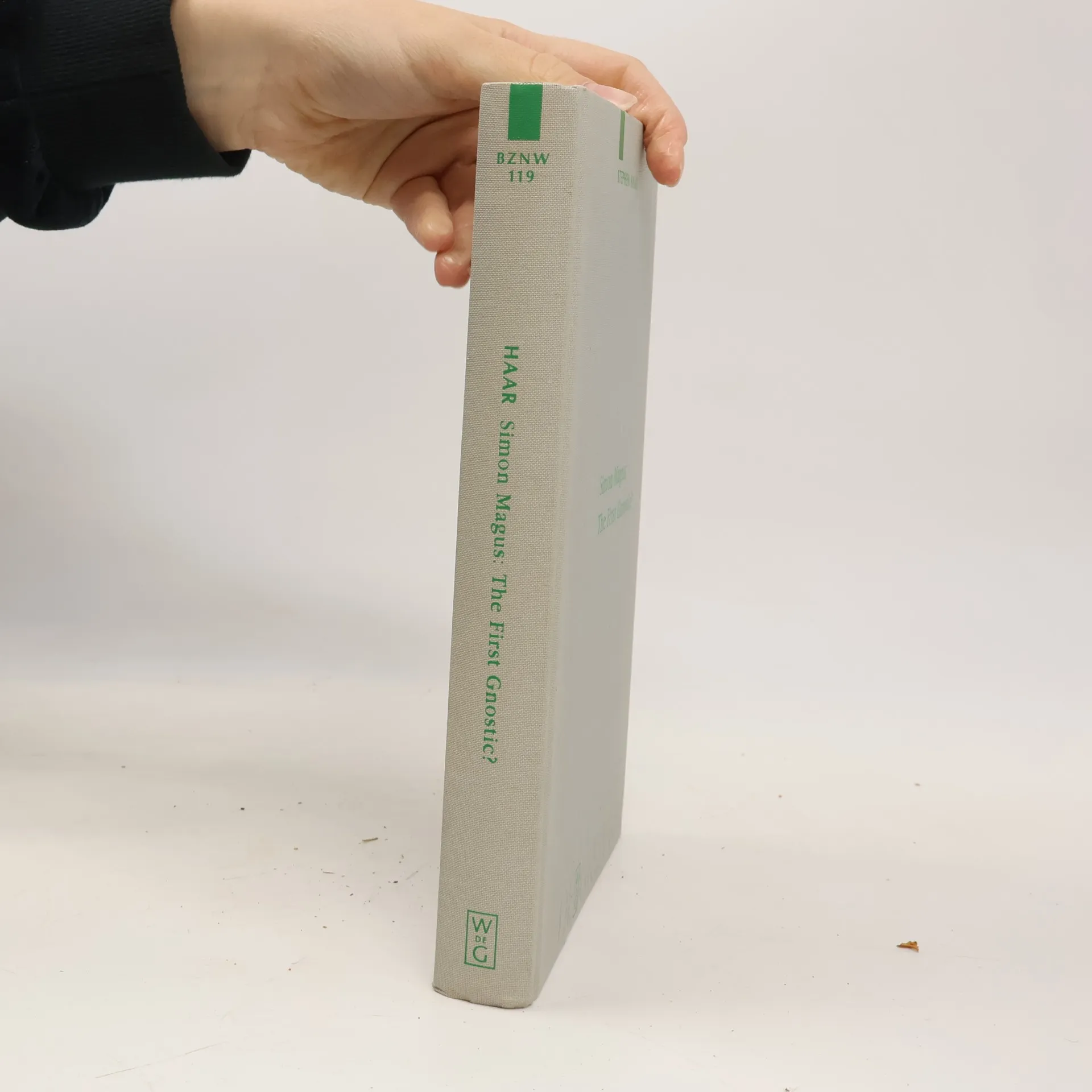

Beihefte zur Zeitschrift für die Neutestamentliche Wissenschaft und die Kunde der Älteren Kirche - 119: Simon Magus
The First Gnostic?
Autorzy
Więcej o książce
This latest comprehensive work on Simon Magus lends new impetus to the investigation of Early Christianity and questions surrounding the origin and nature of Gnosticism. Major contributions of this study (1), a departure from thetraditional exegesis of Acts 8, 5-24 (the first narrative source of Simon), and the later following reports of ancient Christianwriters; (2), an overview of the literature of Graeco-Roman antiquity to determine the contribution of "magic" and"the Magoi" in the development of perceptions and descriptions of Simon; and (3), the inclusion of social scienceexplanation models and modern estimations of "identity", in a creative approach to questions surrounding the phenomenon of Simon.
Zakup książki
Beihefte zur Zeitschrift für die Neutestamentliche Wissenschaft und die Kunde der Älteren Kirche - 119: Simon Magus, Stephen Charles Haar
- Język

- Rok wydania
- 2003
- Oprawa
- (twarda),
- Stan książki
- Uszkodzony
- Cena
- 559,99 zł
Metody płatności
Nikt jeszcze nie ocenił.
- Tytuł
- Beihefte zur Zeitschrift für die Neutestamentliche Wissenschaft und die Kunde der Älteren Kirche - 119: Simon Magus
- Podtytuł
- The First Gnostic?
- Język
- angielski
- Autorzy
- Stephen Charles Haar
- Wydawca
- De Gruyter
- Rok wydania
- 2003
- Oprawa
- twarda
- Liczba stron
- 408
- ISBN10
- 3110176890
- ISBN13
- 9783110176896
- Seria
- Tagi
- Tematy historyczne, Tematy religijne, Tematy chrześcijańskie, Czary & Magia, Teologia, Biblia, Inspiracje, Etyka, Nowy Testament, Sekty, Historia religii, Wczesne chrześcijaństwo, Gnostycyzm, Fonetyka, Fonologia
- Opis
- This latest comprehensive work on Simon Magus lends new impetus to the investigation of Early Christianity and questions surrounding the origin and nature of Gnosticism. Major contributions of this study (1), a departure from thetraditional exegesis of Acts 8, 5-24 (the first narrative source of Simon), and the later following reports of ancient Christianwriters; (2), an overview of the literature of Graeco-Roman antiquity to determine the contribution of "magic" and"the Magoi" in the development of perceptions and descriptions of Simon; and (3), the inclusion of social scienceexplanation models and modern estimations of "identity", in a creative approach to questions surrounding the phenomenon of Simon.